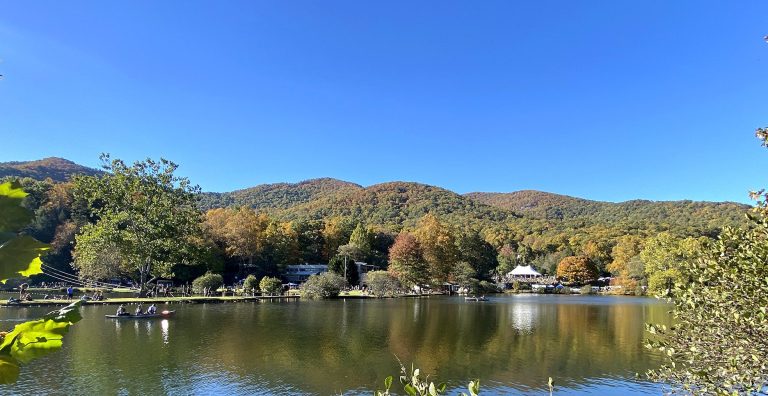
West Cove and Haywood County Line

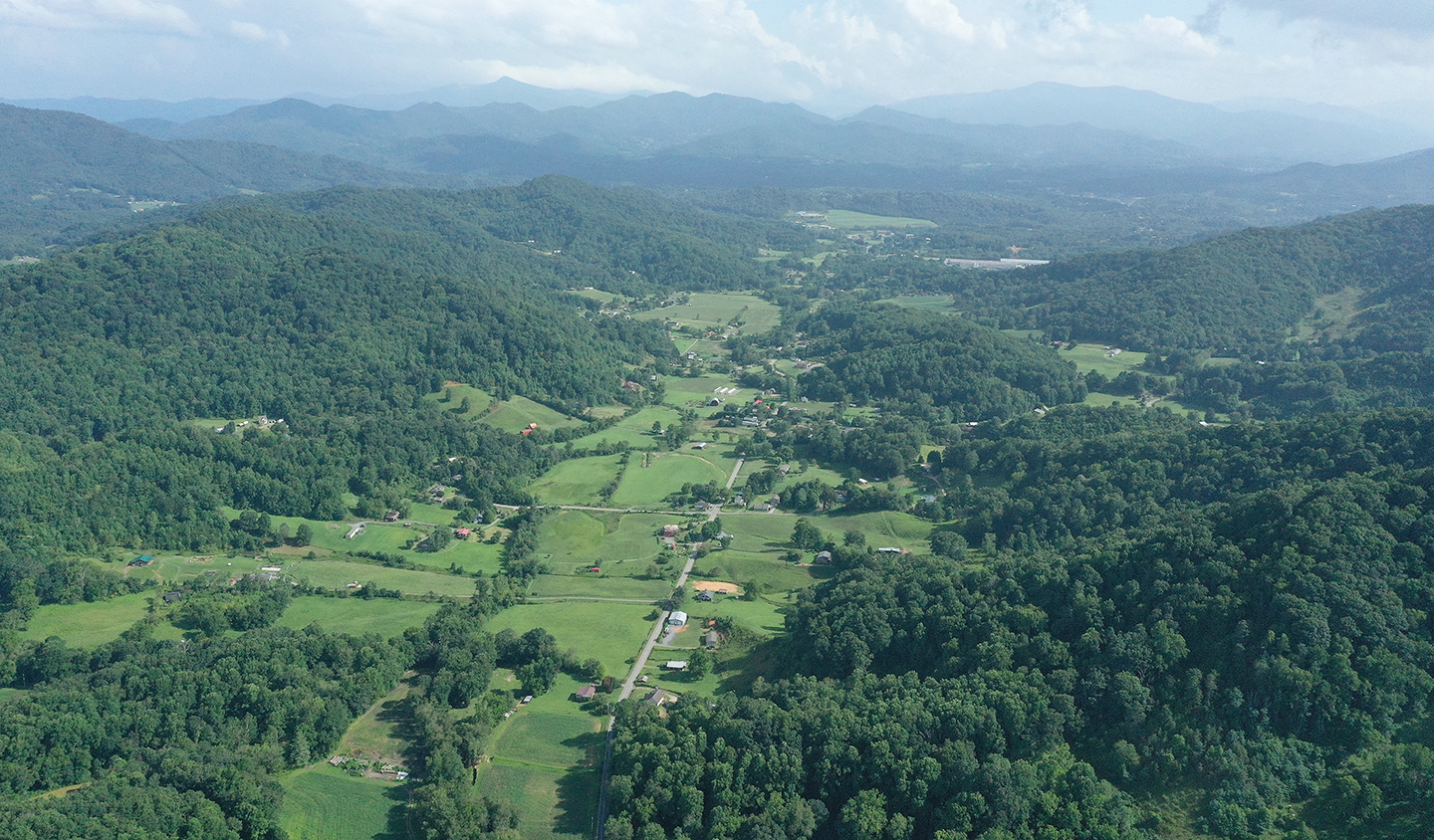
West Cove sits near the top of the Beaverdam community of Haywood County, a beautiful forested mountain haven near the Haywood/Buncombe County lines. Here, land has passed through the hands of various members of the West family since the late 1800s, until the joint owners decided to put it up for sale on the real estate market. This year, Southern Appalachian Highlands Conservancy (SAHC) purchased two large tracts totaling 221 acres to permanently protect forested slopes, plant and wildlife habitat, and water sources.
“These 221 acres add to an assemblage of protected land that we have been fortunate to conserve around upper Beaverdam,” explains Conservation Director Hanni Muerdter. “Overall, SAHC has preserved over 1,200 acres on both sides of Beaverdam Valley and in the surrounding area, helping to protect the mountains that define the corner where Haywood and Buncombe County meet.”
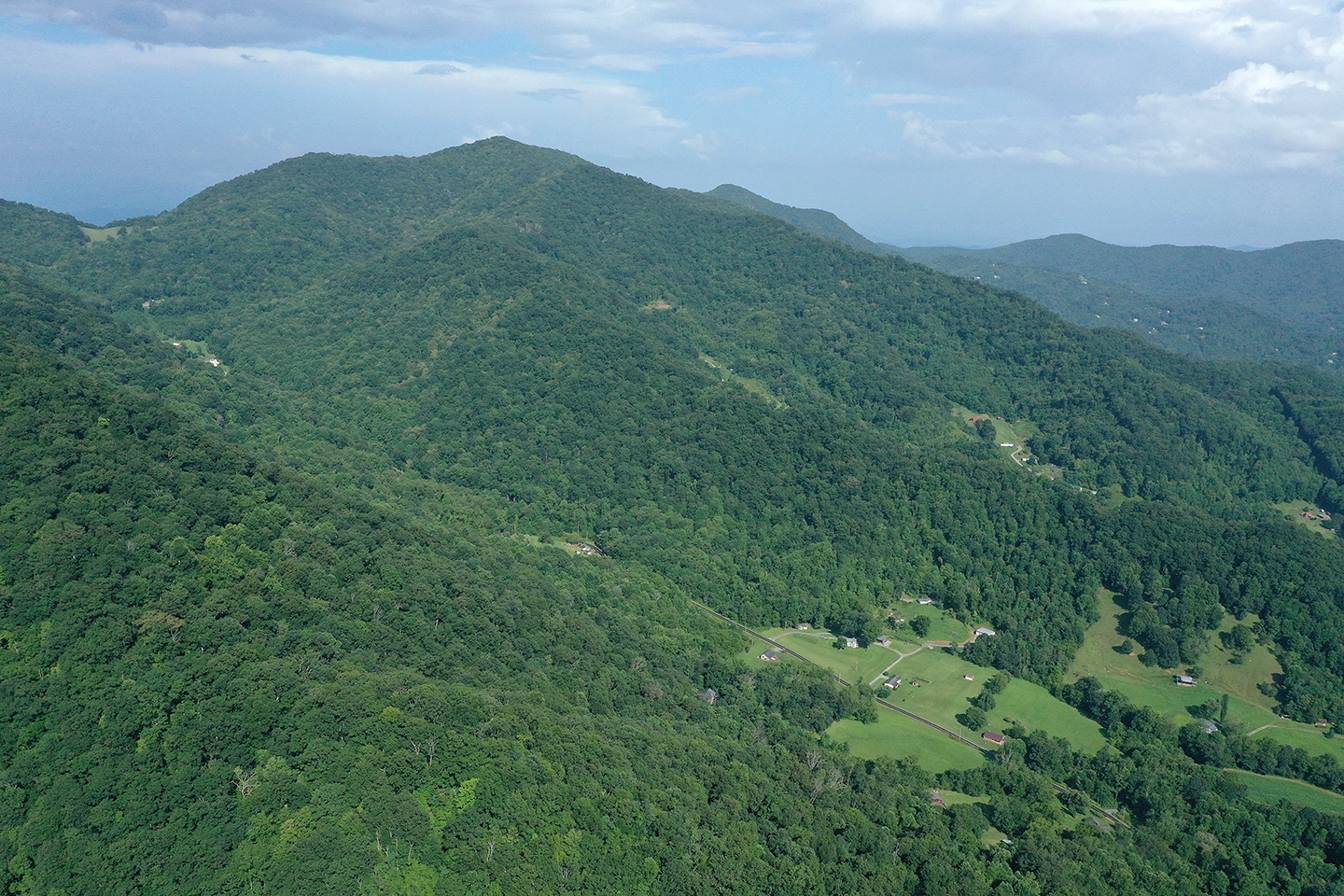
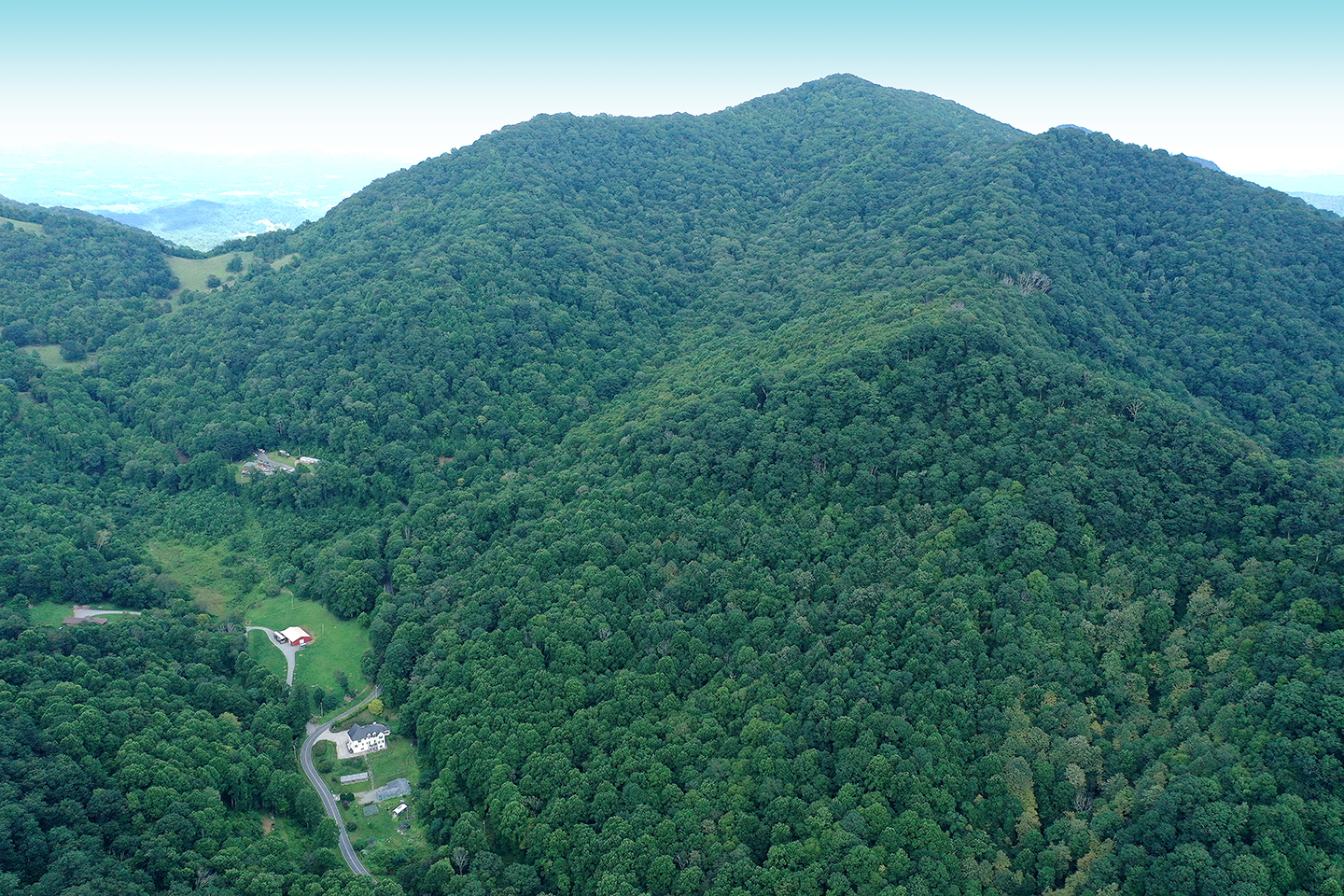
(Photo credit all aerial images – Adams J. Wood Photography)

The newly conserved land stretches over two slightly separated parcels – one situated right on the Haywood and Buncombe County boundary and the other rising on either side of Dark Cove Branch and West Cove Road, touching the crest of Doubleside Knob.
“Preserving the significant conservation values of this land – including forests, tributaries of Beaverdam Creek, connectivity of wildlife corridors, and undeveloped open space – will benefit our communities and region at large,” continues Hanni. “Large tracts like these are important in helping to solidify wildlife corridors and provide unbroken space for animals to roam – and such tracts are becoming more scarce.”
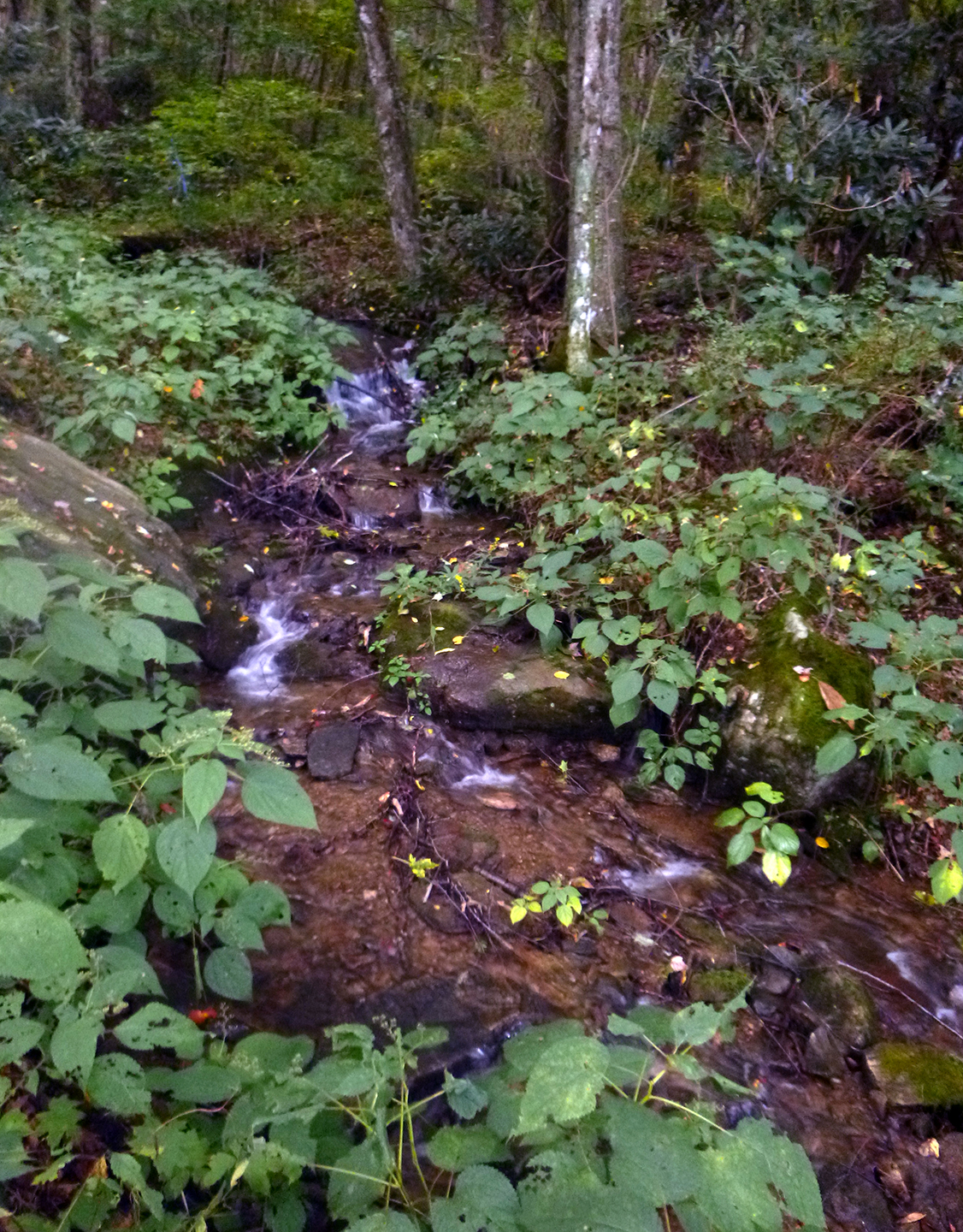
At least four creeks cross the land, draining into Dark Cove Branch and then flowing to Beaverdam Creek in the Pigeon River basin. Both tracts are characterized by undeveloped, steeply sloping forested terrain which rises to more than 4,000 ft. elevation and adjoin other SAHC-protected nature preserves and conservation easements. Preserving the land also helps protect scenic views in the region, including views from public trails on the Town of Canton’s Rough Creek Watershed (also protected by SAHC). In addition to clean water sources and forested habitat on the property, the newly conserved land likely includes low elevation basic glade habitat, a natural community type characterized by shallow soils on rocky terrain with limited trees but wide ground cover. SAHC will manage the land as a nature preserve to best protect these conservation values.
“We are thankful that families who have owned this land for generations are thinking about conservation and want to preserve it as their legacy for future generations,” adds Hanni. “The land is part of the fabric and history of the community. Landowners we’ve worked with in Beaverdam share their pride in preserving the rural landscape. We are thankful to be a part of that legacy and to help conserve the places that people love.”
That sense of pride of place, love for the land, and honor of heritage are evident in the West family.

Many Hands Make More Work…
The “West Cove” name is not a cardinal direction but rather a moniker tied to the long-term presence of West family members who inhabited Haywood County.
As large parcels of land pass down through generations of a family, they may become fragmented and split into smaller pieces, or ownership becomes complex – with multiple landowners jointly coordinating management and paying bills.
Cooperatively managing land presents a monumental task. Ownership of the two large tracts that SAHC purchased this year had been split into multiple interests. As a point of contact for all the joint owners, Marcus Holland West shepherded the family through the process of selling the land. When Holland’s great-grandfather, Marcus Lafayette (M.L.) West, passed away in 1935, he had five heirs to inherit the land – his children Faraday August (Gus) West, Linton (Lint) Troy West, Grace Ethel (Ethel) West, John Marvin West Sr., and William Henry West Sr. (Holland’s grandfather). By the time the land was sold, it was jointly owned by 13 different individuals and entities, including several charitable organizations. In addition to ownership by Holland’s father (Marcus Rhymer West), his heirs, and other West family members (cousins Gary and Mark West), Holland’s Uncle Marvin had conveyed his interest in the land to one individual and to the Alzheimer’s Association – Western Carolina Chapter, Baptist Children’s Homes of NC, Calvary Baptist Church, Haywood Community College Foundation, Parkinson Association of the Carolinas, and Plains United Methodist Church.
Although the land remains close to his heart, Holland and the other collective owners decided that it would be best to sell the land. No one had lived on the property for decades, and the organizations could better use the proceeds from the sale to further their missions.
“We were surprised and delighted when we got the call that Southern Appalachian Highlands Conservancy was interested in purchasing the land,” Holland recalls. The landowners were pleased that the land would be protected for future generations, rather than being developed.
“We are deeply grateful to the Stanback family for making a gift that enabled us to purchase the land, and to SAHC’s generous members whose support empowers our staff to pursue such projects,” says Executive Director Carl Silverstein. “The protected coves and mountaintops of this land will help shelter diverse species, control runoff, prevent erosion, and provide stability in the landscape.”
Heritage and Connections in Haywood County
The property that SAHC purchased in West Cove had been in the West family since the late 1800s. They traced ownership of the land to Marcus Lafayette West, born in 1854 to William Riley West and Mary Elizabeth Scott, but the family had been in the area prior to that time period.
“We have a handwritten, recorded deed for the property,” Holland remarks. “It’s interesting to see a recorded document so old.”
His voice resonates with respect for both the land and the generations of the family who cared for it, a sense of connection to Haywood County palpable.
Holland remembers growing up in Canton, where both his mother and father’s families had deep roots. He attended Pisgah High School before moving on to the University of the South at Sewanee in TN, then pursued his law degree and a successful career as an attorney on Wall Street in New York. The call of the land of his ancestors was strong, and he often returned to visit North Carolina, moving back to the state as he neared retirement. This has always been home, he notes.


“Wests lived on the land in West Cove and farmed there until the mid-1970s,” Holland recalls. During his childhood, Holland’s great uncles and great aunt – Gus, Ethel, and Lint – lived on the property and worked the land together. They never married, and the last of the three passed away in 1974.
“They didn’t have running water to the house, but there was a spring with the most wonderful, fresh drinking water,” remembers Holland. “When I think about it, I can still taste that water now. I loved going for a hike on the property, target shooting, or just sitting on the top of the mountain.”
The family had electricity available since the 1960s but chose to cook with wood-fired stoves and ovens. There was no indoor plumbing; instead, they used the spring well for drinking water and an outhouse. Like many NC farmers, they had a tobacco allotment and grew tobacco and raised cattle to make money. They also kept vegetable plots, hogs, and other livestock to supply most of their needs. They would periodically go into town – to Canton – to stock up on anything they couldn’t produce on the homestead.
“They really lived off the land,” says Holland.
However, their world wasn’t limited to the mountains that ringed the cove. Gus, Ethel, and Lint subscribed to a wide variety of periodicals that brought the world into their quiet corner of the county every day – from the local and Atlanta papers to the New York Times and Washington Post. Although they had not attended college, they were all highly educated and knowledgeable.
“They kept up with the world even though they were in a remote location,” says Holland. “I wouldn’t say Canton is necessarily rural, but when you got to the property in the cove, it felt like you were in the wilderness. I remember going up there to visit, and they would be surrounded by national publications and have conversations about what was going on in the world at large. That was distinctive and admirable.”
“I would go up there with my father to visit, and we would sit around the fireplace in a dimly lit living room and be part of discussions with those older generations of the family,” he recalls. “When I was a kid – a young child and teen – life seemed simpler. We enjoyed those simple gatherings, with no social media or television. They had a radio and electricity but not a television. You just sat and talked with family members – about their farming, about life. It was one of those things that we have so few opportunities to experience anymore, just to sit and talk and look at people eye-to-eye – or at their knee, as a young child. To hear them talk about the good old days and life values, and also about politics and the world around them.”
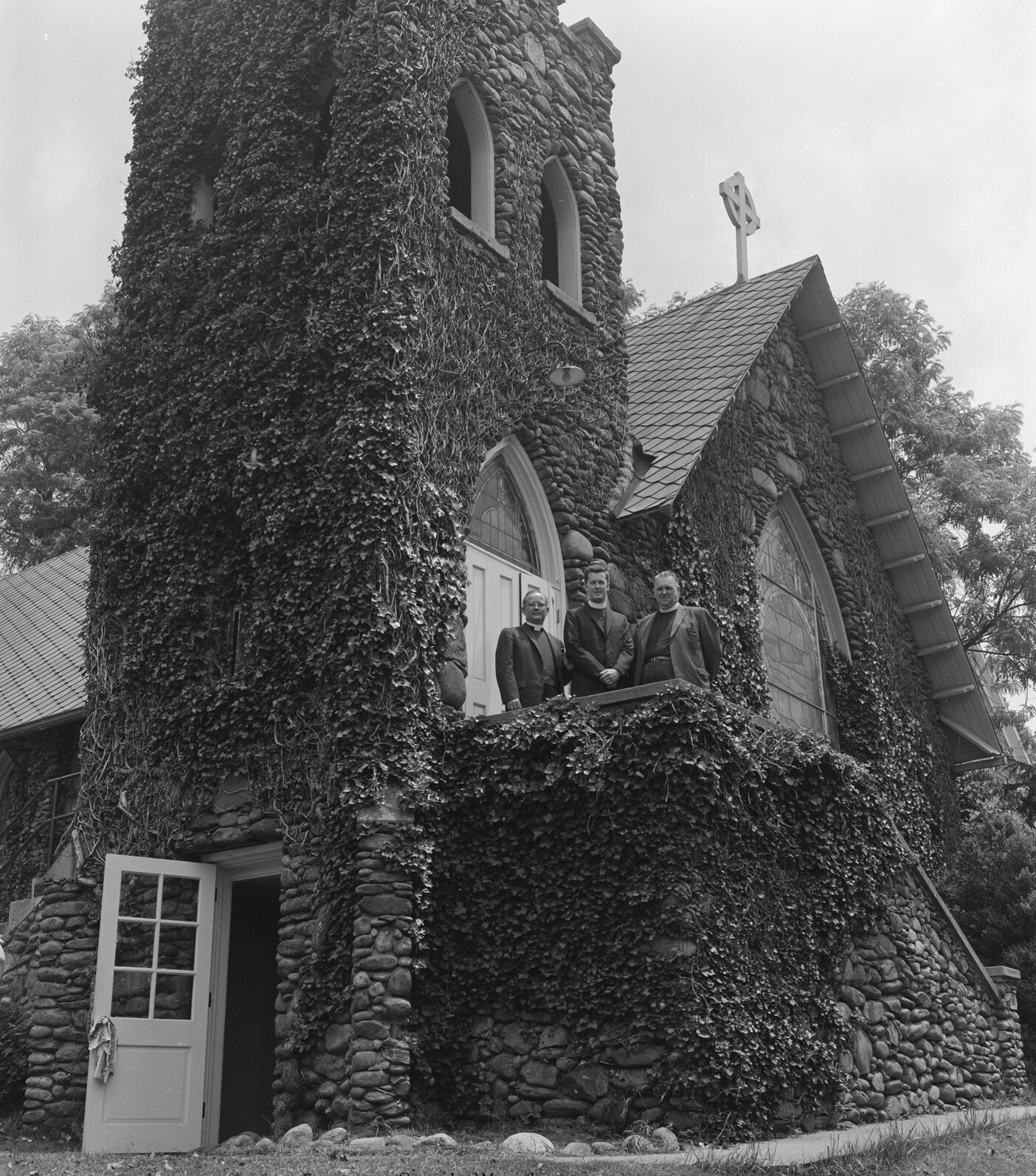
The West family members possessed a variety of skills. Long before Holland’s mother and father met, their families intersected in an interesting way. Gus and Lint worked as stonemasons on the construction of St. Andrew’s Episcopal Church in Canton. The church was founded by the Bell family, Holland’s mother’s family.
“It’s just a beautiful, small stone church,” adds Holland. “I was baptized and confirmed there, and one of my daughters was baptized there.” The extended Bell and West families have a long association with St. Andrew’s, including attendance, vestry, baptisms, confirmations, funerals, etc.
(Photo of St. Andrew’s Episcopal Church 1960, credit Southern Appalachian Digital Collections, Western Carolina University & Canton Area Historical Museum).

“Beaverdam is near Canton, close to the Asheville area,” he continues, reflecting on the fate of West Cove. “It would’ve been possible to develop and build houses there, but none of us wanted to see that. We’d like to see Canton revitalized, but it’s also important to stem development in some places. This land in the cove is really special, and we’re so pleased that it will be preserved in perpetuity. We weren’t interested in developing it, but with so many owners and no one living there, it just didn’t make sense to hold onto it. We wanted to sell it as one piece. When we first learned that the Southern Appalachian Highlands Conservancy was interested in buying the land, I began researching the organization. I couldn’t be happier that SAHC is now the caretaker of this property.”
“The land really meant something to us – to myself, to my father and the rest of his heirs, and to my cousins,” adds Holland. “We feel strongly about it. This land has been in our family for as long as anyone can remember, and the cove is even named for us. It’s like a part of us, and selling it is like selling a part of yourself. However, we’re thrilled that it will be preserved and stay as it is.”