North McDaris Ridge

As a clay and cork artist, Kathy Triplett finds inspiration and source materials within the natural world. Her studio space melds her excitement about exploration and creativity with the setting of the southern Appalachian mountains she calls home.
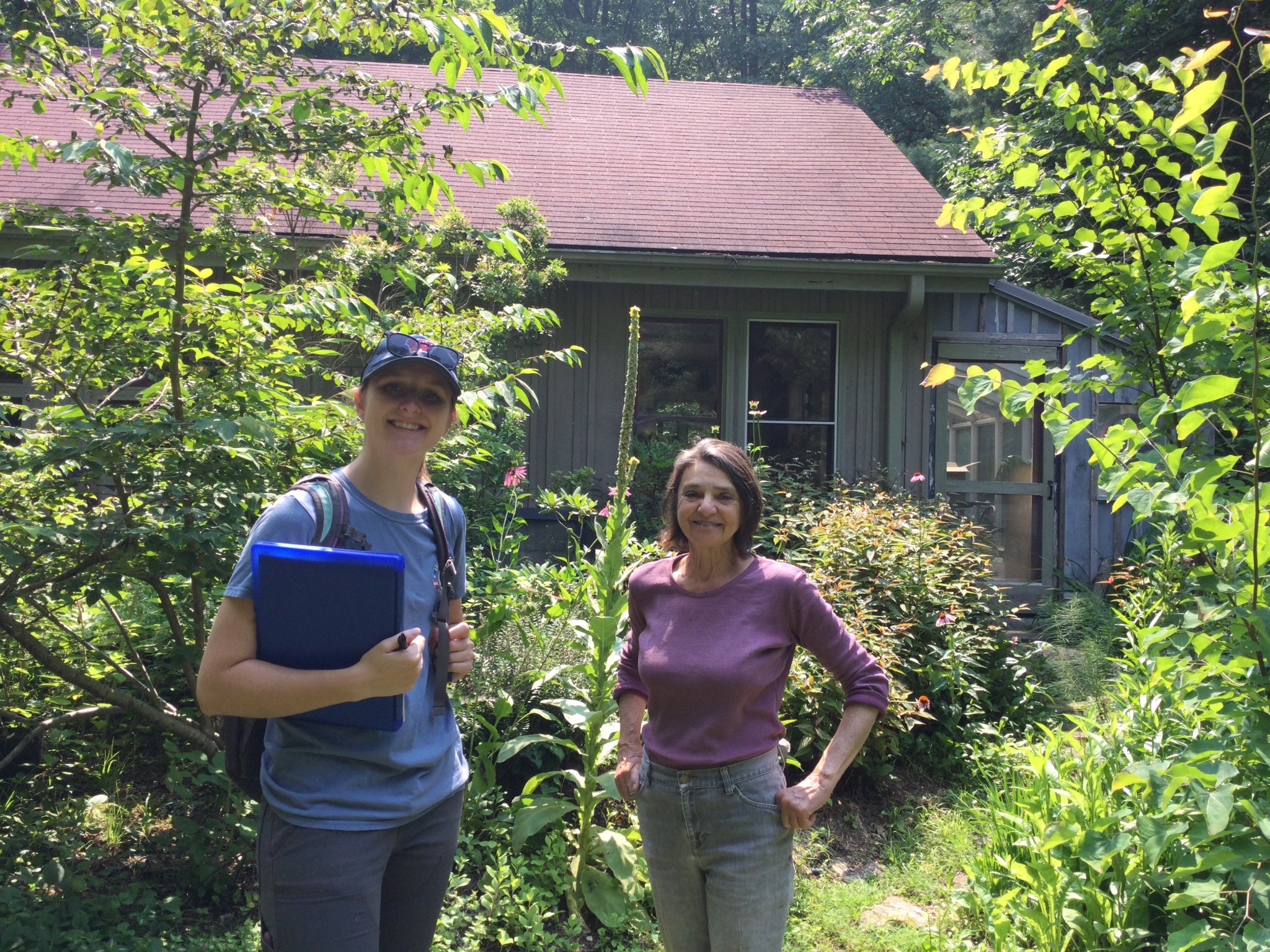
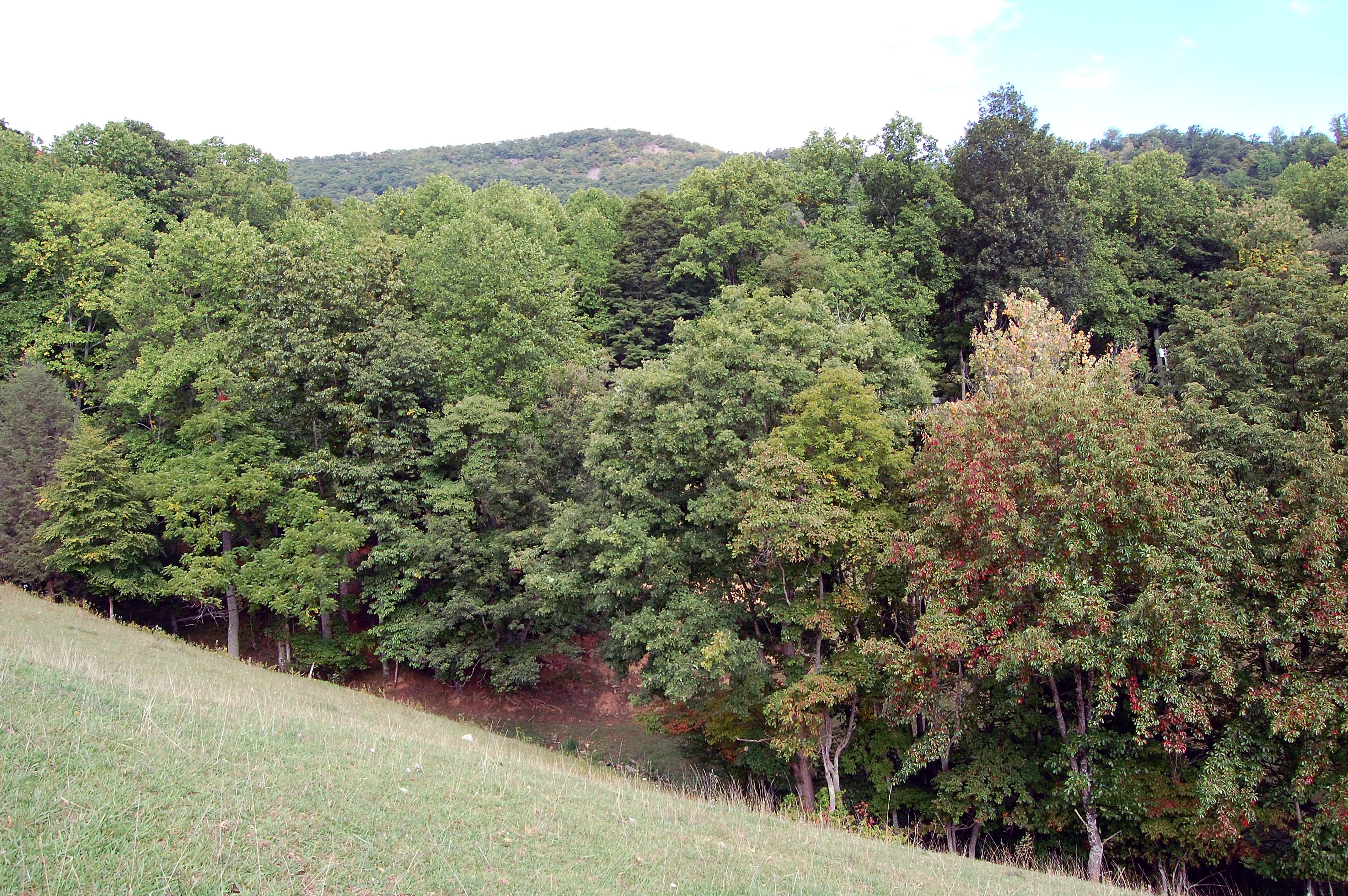
Tucked away in a pocket of the Beech Community in northeast Buncombe County, surrounded by the Craggy Mountains and headwater sources of Reems Creek, Kathy has created a haven for herself amidst varied plant and wildlife species. Now, she has generously donated a conservation easement on 51 acres of her land, permanently protecting the forest, habitat, and water resources for future generations.
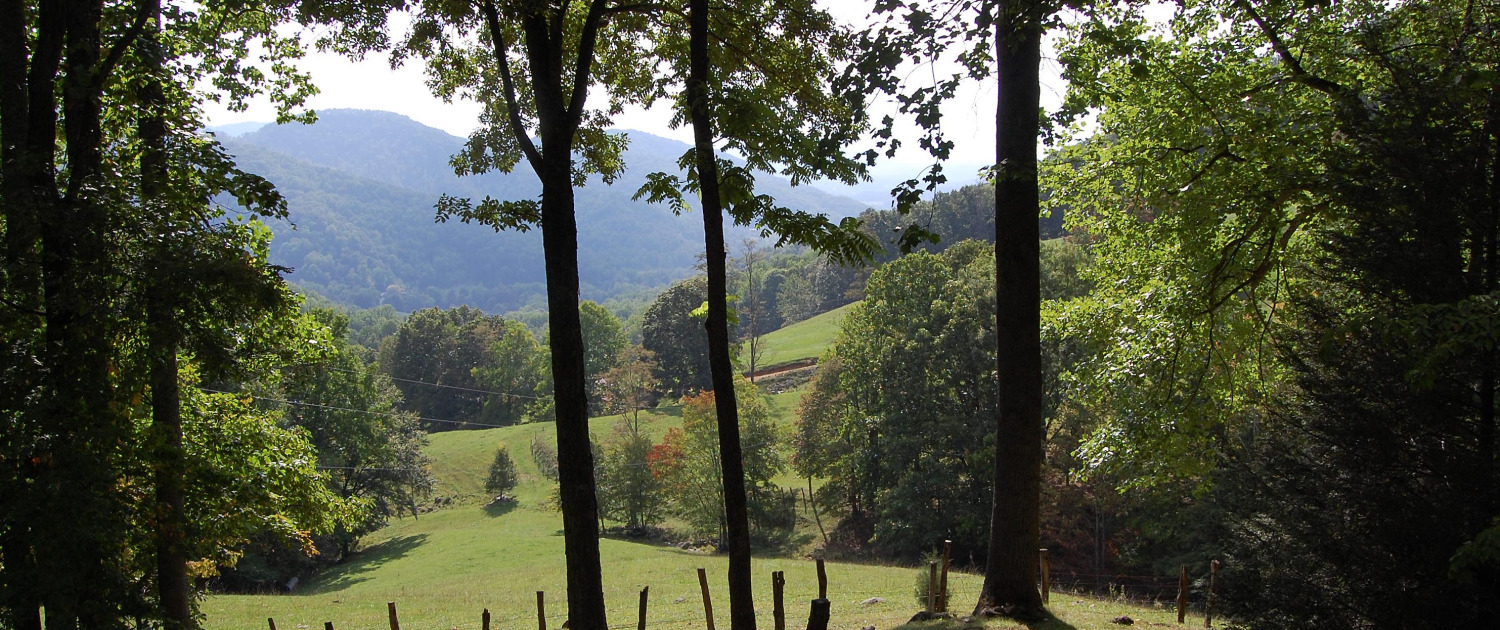
“I have lived on this land for more than 38 years,” says Kathy. “In that time, I’ve gotten to know all the trees around and watched them grow. Some have been lost over the years, but others have matured and filled in the space. As I learned about how trees communicate and share resources through root networks and underground networks of mycorrhizal fungi, I’ve felt even more acutely that I’m surrounded by a community of trees. I realized that when I’m gone, there would be nothing to stop someone from logging or pulling down all of these trees. With the conservation easement, I know that the forest on my land will now be permanently protected.”
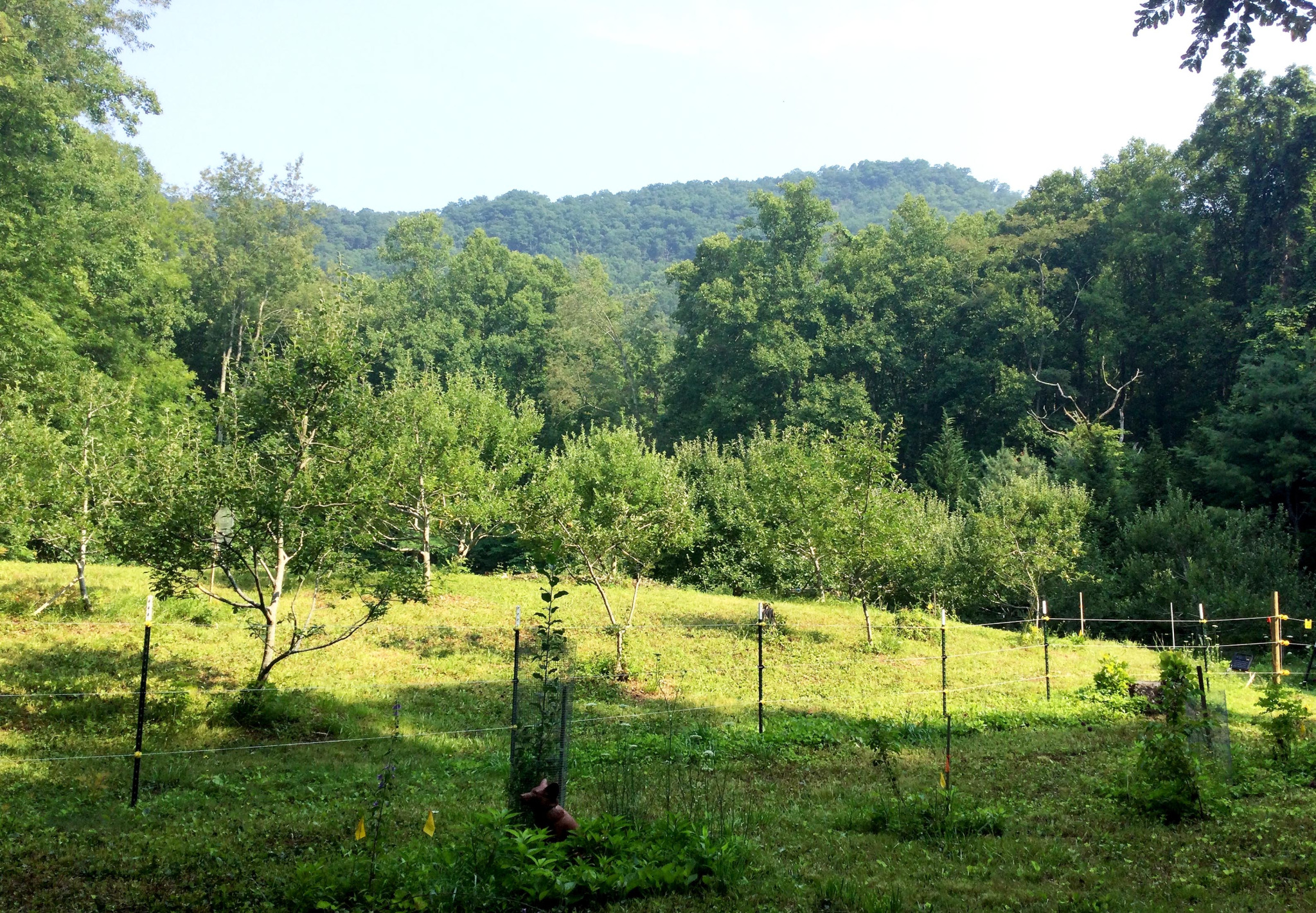
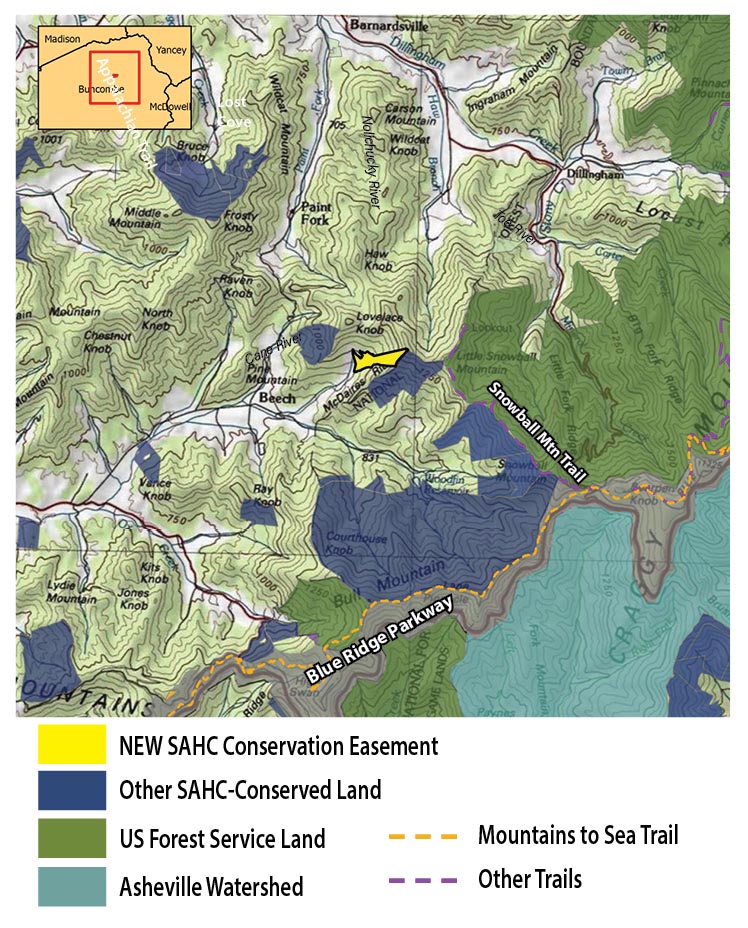
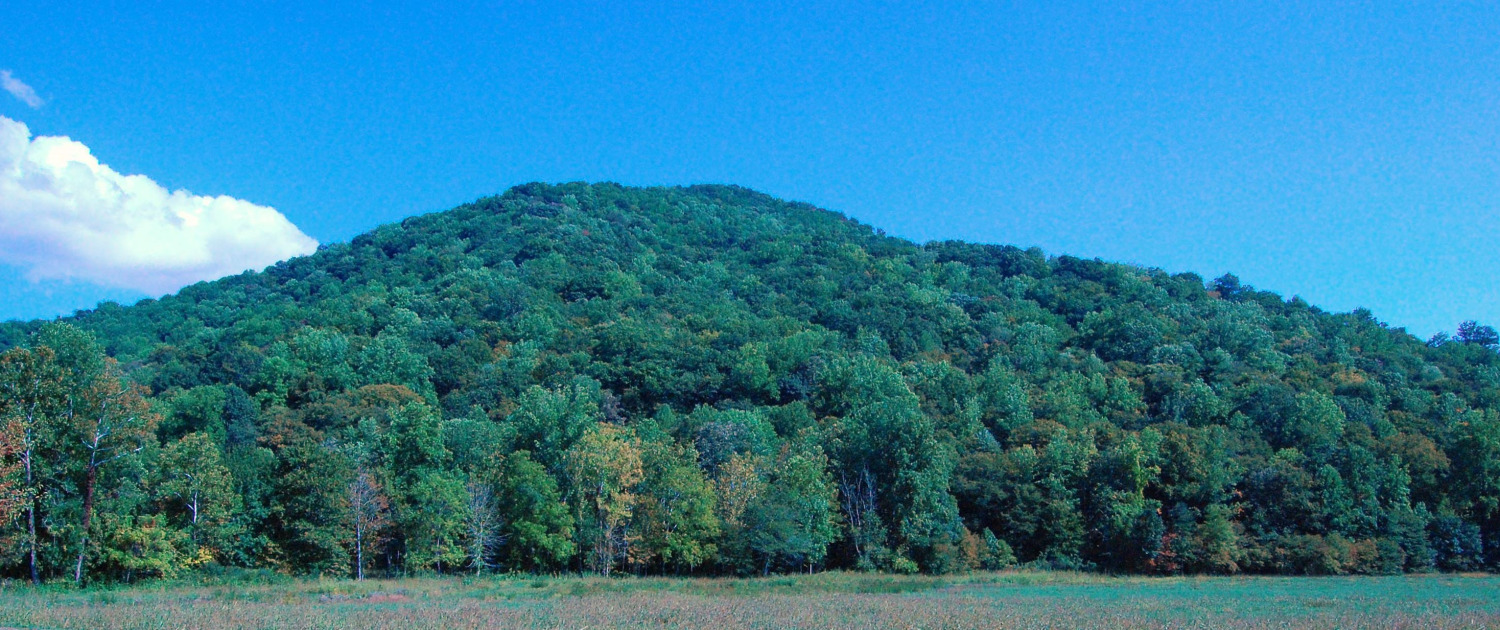
The donated conservation easement adjoins 172 acres SAHC protected by conservation easement with a neighboring landowner in 2023. Together, the tracts preserve a large portion of the ridgeline, including habitat and water sources flowing in Reems Creek. Four tributary streams of Reems Creek flow across the recently conserved land, which is located within the Audubon Society’s Black and Great Craggy Mountains Important Bird Area.
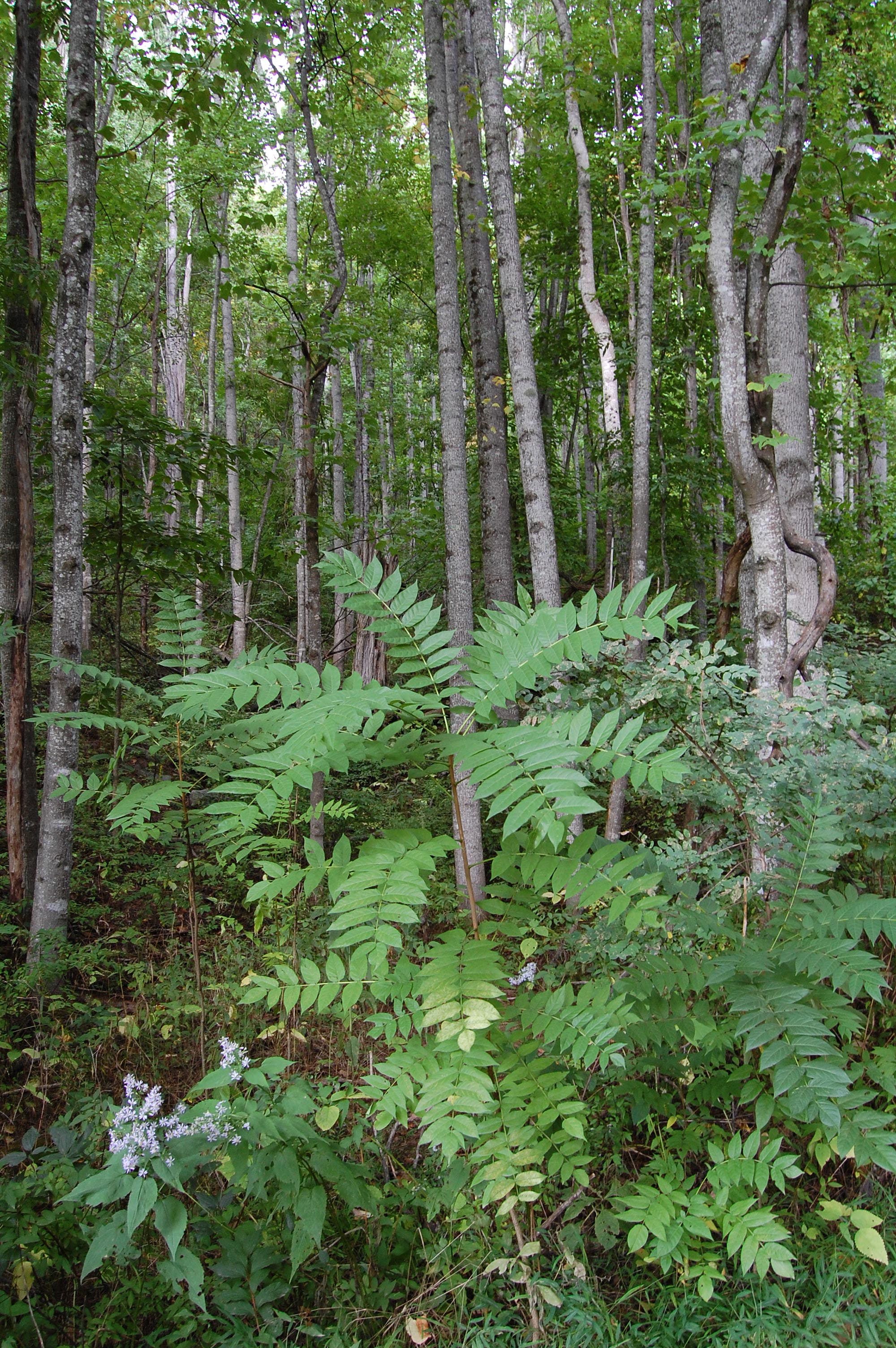
“I wanted to protect my land from development because I believe nature heals us psychically, spiritually, and physically,” continues Kathy. “A healthy environment is essential to combat climate change and to keep our water clean. As I watched the results of destructive logging practices, I realized that preserving my little stand of timber seemed to be the only way to act against it. I’m not opposed to all logging; with the help of a forester and forestry management plan, it can be done to aid the health of the forest, as well as be more profitable for the landowner. But large-scale removal of the forest replaces a healthy ecosystem with a monoculture of fast-growing trees. When visiting the Joyce Kilmer Memorial Forest and seeing the stands of old growth trees growing, you realize that the forests we have now pale in comparison to what once stood on these mountains. I hope future generations will be able to see something like that again.”
After watching logging operations in the surrounding region, Kathy felt inspired to donate the conservation easement to protect the trees and other species on her property. She and her late husband Jim McElduff, environmental engineer and co-founder of Altamont Environmental (now Anchor QEA), had discussed land conservation options more than twenty years ago. They both wanted to see the land preserved in the long term.
Although Kathy donated the value of the conservation easement so that the land could be permanently protected, land conservation projects like this still require a number of due diligence steps – such as appraisal, survey, and title work.
This project was made possible by a grant from Buncombe County to cover transaction costs, leveraged by the conservation easement donation and generous contributions from supporters of SAHC’s conservation work.
Supporters like YOU make conservation success stories possible. If you are not already a member, please consider donating or renewing your membership today!
Art and Nature
“I find a deep sense of solace being in a quiet space,” says Kathy. “This land has been a part of my artwork and influenced it over the years.”
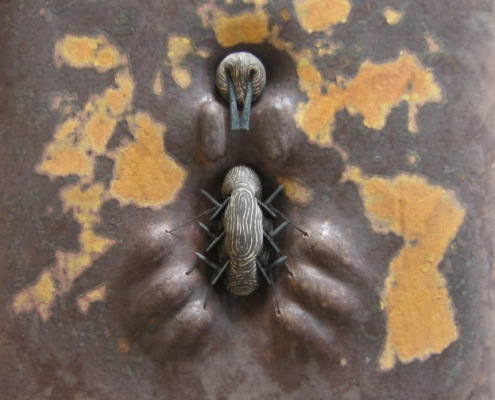
Her work has incorporated seed pots and insects. An avid gardner who has always spent time outdoors, she draws inspiration from studying the form of the world around her – on both microscopic and macroscopic levels.
“I love looking at the shapes of insects,” she elaborates. “Have you ever really looked at the way a grasshopper is formed? It’s almost mechanical.”
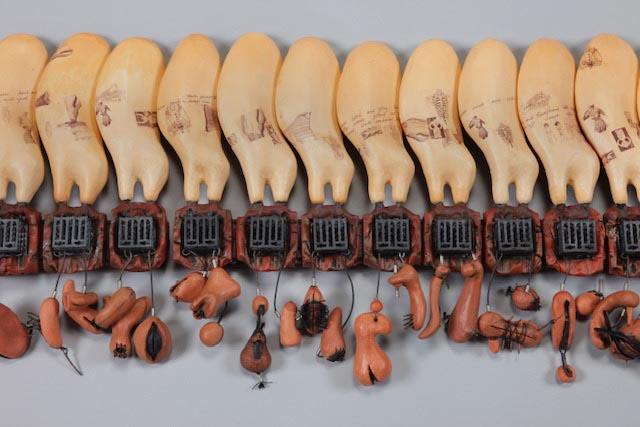
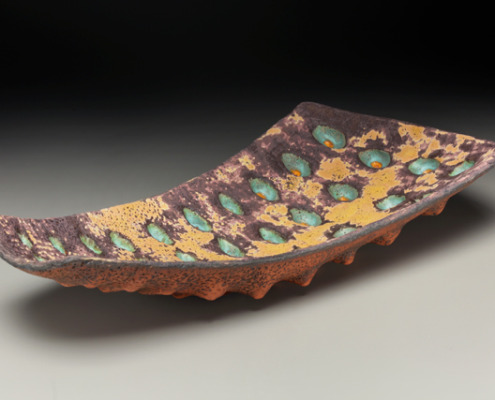
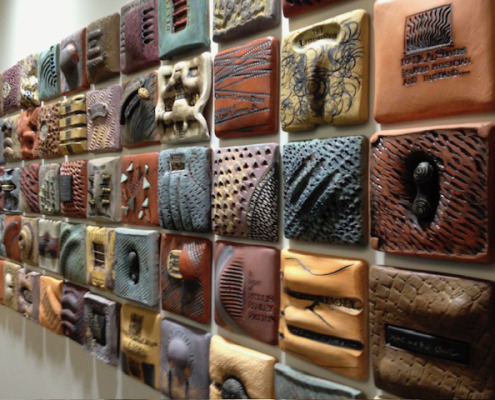
Kathy enjoys melding technology and nature, combining organic forms with geometric elements and asymmetric designs. Her hand-built wall tiles are studies in surface and texture. The face of each tile is embellished with patterns and designs and embedded with objects that are found in nature or from her imagination. In Kathy’s series of linear wall sculptures, she draws inspiration from tools and farm implements. Her work has evolved over the years. Most recently, she has been creating chairs with an organic approach or style.
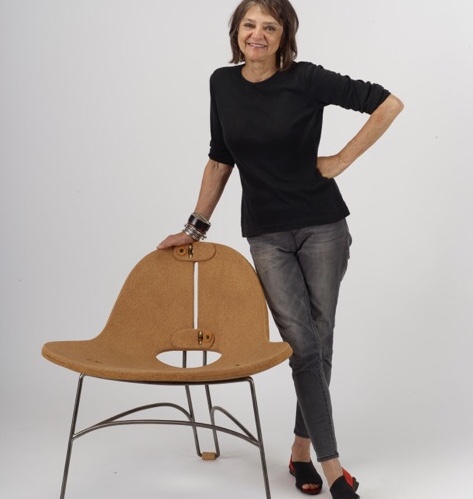
Kathy received her BA degree from Agnes Scott College (GA) and studied extensively in Italy and Mexico. Collections in which her work can be found include the City of Charlotte (NC), Asheville Pack Place Conservancy (NC), North Carolina Artwork for State Buildings, NationsBank (NC), Raleigh Federal Bank, Lowe’s, Inc. (NC), Arkansas Art Center and The Horn Collection of Contemporary Crafts (AR).
For more info, visit Blue Spiral 1 Gallery or Asheville Museum of Art.