Golden-winged Warbler Working Group

Birdwatching with Working Group membersIn Spring 2019, the Southern Appalachian Golden-winged Warbler Working Group, consisting of more than 10 agencies and organizations, met in the Roan Highlands to discuss landscape-scale conservation measures, including strategic land protection and cooperative management projects. SAHC was proud to host the group on our preserves and to assist with touring iconic public lands across the Roan. Read more

Prescribed Burn for Shortleaf Pine

This Spring, we used a prescribed (controlled) burn of 13 acres to help manage our shortleaf pine reforestation project at our Community Farm.

This prescribed burn will help restore the shortleaf pine by removing undesirable, competing plant species and giving the slower-growing shortleaf pine a chance to re-establish. Shortleaf pine is a fire-dependent and fire tolerant species, meaning that the species actually depends on fire in order to reproduce and thrive. Read more

Elk Hollow Preserve Trail Work

Our Elk Hollow Preserve Volunteer Work Day in April was a success, thanks to an incredible group of folks who joined us in building trails, friendships, and partnerships! Read more

Sandy Mush Forest Restoration Coalition

SAHC partners on forest stewardship expansion in Sandy Mush.

We have long been stewards of Sandy Mush, protecting over 12,000 acres of this high priority conservation area. We are excited to collaborate with EcoForesters and the Forest Stewards Guild to help grow a Sandy-Mush-wide forest restoration project! While this project is still in its infancy, with collaborators working to secure funding, the primary goal is to foster healthy and resilient forests that protect environmental values, cultural heritage, economic opportunities, and quality of life for the Sandy Mush Community.

Through this project we hope to:

  • Form a “Sandy Mush Forest Restoration Coalition” by bringing together diverse stakeholders in the community and create a collaborative space for shared decision-making.
  • Restore native species habitat, as much of the forest land in Sandy Mush has been degraded by historical land use practices and non-native invasive plants.
  • Host an annual Forest Stewardship Gathering in Sandy Mush to connect landowners with resources to care for their forests.

Blue Ridge National Heritage Area logoThis project is made possible by a grant from the Blue Ridge National Heritage Area Partnership. 

Look for more updates in the future!

Welcome – Stewardship Associate Chris Kaase

Chris joins SAHC as our new Stewardship Associate. His primary responsibility will be stewardship of properties that have a working agricultural component.

“Protecting traditional livelihoods is a critical objective of regional land protection efforts,” says Chris. “I am really looking forward to serving as a liaison between SAHC and the owners of our agricultural easements.”

Chris moves to Asheville from Columbia, SC, where he worked as the stewardship coordinator for the Congaree Land Trust while finishing graduate school in the Department of Geography at the University of South Carolina.  

“I’m extremely excited to be back in the mountains,” he says. “I grew-up in southwestern Virginia and northwestern North Carolina and have a strong connection to this region. It’s where I’m from, where I want to be and, in turn, the community and natural environment to which I think I can contribute the most.” Read more

Invasive Feral Hogs Continue to Threaten the Roan

We are entering the fifth year of coordinated efforts to manage invasive feral hogs in the Highlands of Roan. These invasive feral hogs damage the fragile, globally important ecosystems of the Roan as they “root,” eating rare species and tearing up the terrain.  They also spread multiple diseases and pose a safety threat to outdoor recreation enthusiasts.

In November, the Feral Hog Working Group, part of our ongoing collaborative Roan Stewardship efforts, met at the SAHC office to discuss updates and plan future work.

“Since feral hogs can have devastating impacts on plants and wildlife, as well as human and livestock health, the situation requires coordinating a broad group of partners,” explains Marquette Crockett, SAHC’s Roan Stewardship Director. “This includes federal and state agencies in both NC and TN.” Read more

2018 Roan Naturalist Travis Bordley

Former AmeriCorps service member Travis Bordley stepped into our Roan Naturalist boots this summer.  Travis spent the majority of his time from May to August on the Appalachian Trail between Carvers Gap and 19 E, recording data, educating hikers, and helping manage negative impacts to the Roan’s fragile, globally important ecosystems.

In total, he observed over 12,600 hikers in the Roan, and had interpretive, educational discussions with more than 4,000 people.

“There were days where I couldn’t believe my eyes at the steady stream of people pouring onto the trail,” says Travis. “These moments made me fear for the sensitive habitat in the area. There were also slow days when visitor usage was low, and I was able to genuinely connect with people.” Read more

Tech Update for the Roan

Grassy Balds Management gets a Tech Update

Ilan Bubb interned with us this summer through the Duke University Stanback Intern program. He is earning his Masters of Environmental Management at the Nicholas School of the Environment.

Ilan did a “needs assessment” and GIS modeling project to assist with an update to the Environmental Assessment for grassy balds management in the Highlands of Roan. The Environmental Assessment is a plan which has helped guide stewardship efforts in the Roan for decades. He ground-truthed both restoration and maintenance targets in this plan. He visited GPS-referenced points within the Roan landscape and photographed each area so we can evaluate the effectiveness of stewardship efforts.

In addition, Ilan assisted with volunteer workdays, including our annual Grassy Ridge Mow-Off, to help manage the Roan’s precious ecosystems.

Roan Stewardship 2018

In the Highlands of Roan, Southern Appalachian Highlands Conservancy convenes a multi-partner effort to manage the world’s largest stretch of Appalachian grassy balds. These unique ecosystems contain a variety of rare plants.

SAHC volunteers and our partners with the NC BRIDGE program contributed more than 1,900 hours to manage habitat on Roan’s grassy balds this summer. Altogether, Roan stewardship partners managed a record 32 acres. Volunteers and BRIDGE partners hand-mowed more than 17 acres from Round Bald to Grassy Ridge, cutting back blackberry and shrubs across the balds. The US Forest Service mechanically mowed 15 acres on Hump Mountain.

The BRIDGE crew are hardworking stewardship partners. A program of the NC Division of Prisons the NC Division of Forest Resources to train young, non-violent offenders with firefighting and forestry skills, BRIDGE stands for “BUILDING, REHABILITATING, INSTRUCTING, DEVELOPING, GROWING, EMPLOYING.

Our Roan stewardship work is supported by grants from the National Forest Foundation, McLendon Family Foundation and the Appalachian Trail Conservancy.

Thank you to all the volunteers, partners, and supporters who make this work possible!

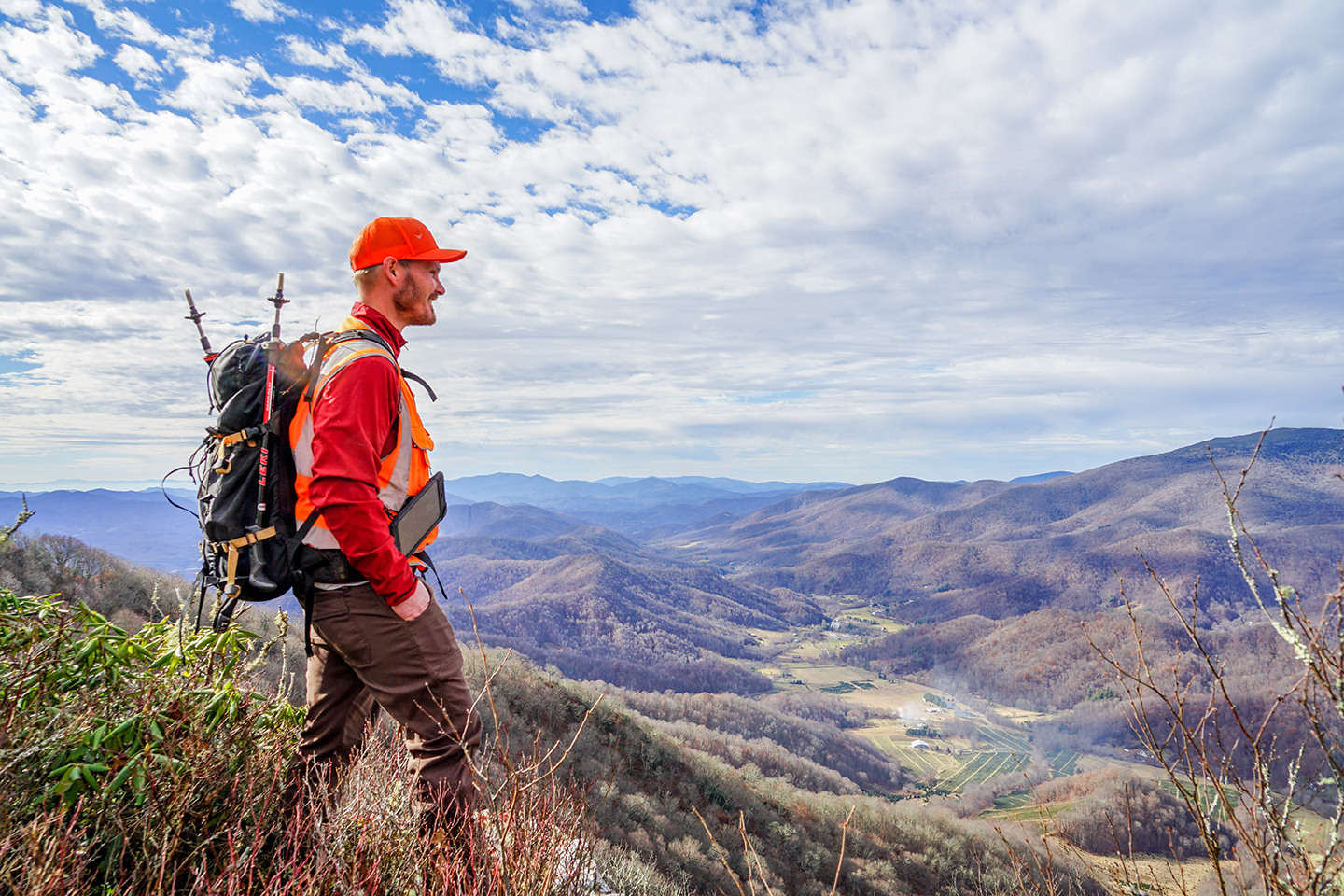
Hunter Outreach Chili Dinner

Highlands of RoanThe Roan Highlands are commonly referred to as the Southern Appalachian Highlands Conservancy’s flagship conservation focus area. Along with their stunning views and unique habitats, the Roan Highlands are home to a rich mountain culture spanning generations with a deep connection to the land. The relationship between these communities and the mountain has been the foundation of stewardship in the Roan for hundreds of years. Historic uses like hunting and fishing have played a significant role in that relationship. Hunting for subsistence has always been a way of life and has fostered relationships with nature based on intrinsic values and respect.

SAHC honors the relationship between Roan communities and the land by allowing a limited number of hunting licenses to be issued for our protected properties. These licenses are typically issued to prior landowners, neighbors, or relatives to hunt deer and turkey. Read more