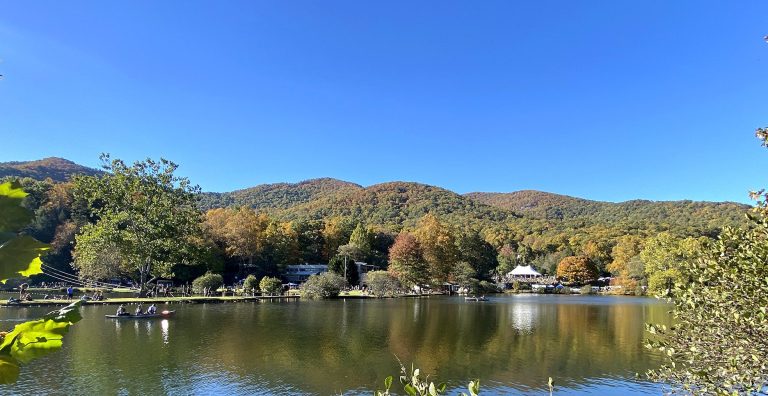
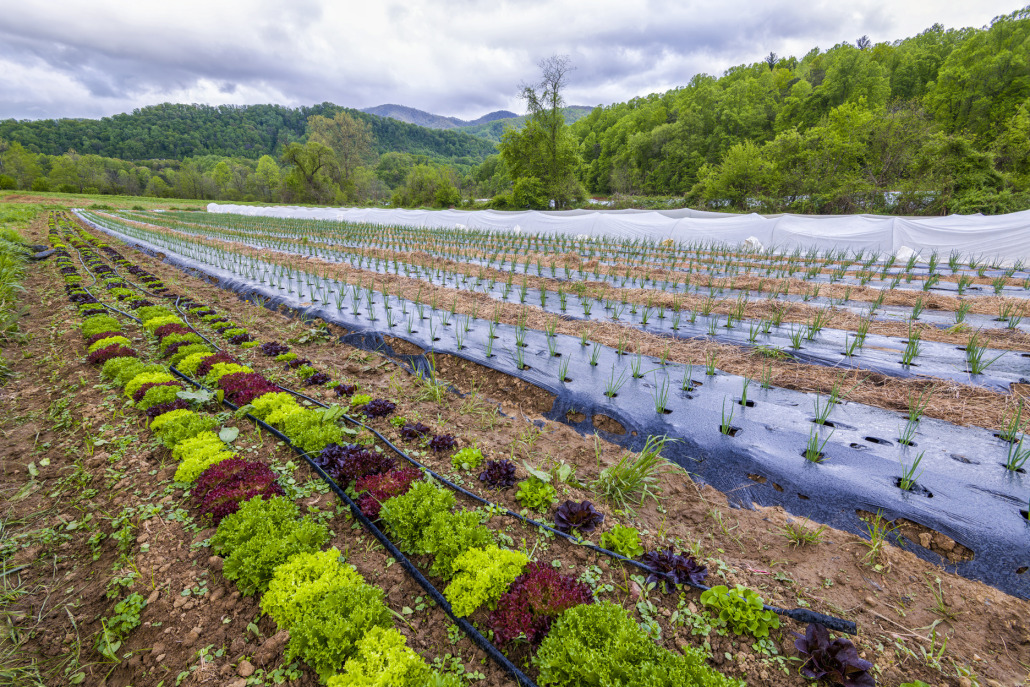
Full Sun Farm — the name says it all. A quintessential small mountain farm on sun drenched bottomland in the Sandy Mush Creek valley, Full Sun Farm possesses fertile soils sprouting healthy produce and lush, colorful flowers.
This is the kind of place where you want to source your meals. Organic production methods promote health for the planet, for consumers, and for the farmers who toil in cultivating the crops. Now, 29 more acres of this land have been permanently protected for present and future generations to farm.
“This conservation easement continues a commitment to local farmland protection by Vanessa Campbell and Alex Brown, owners of Full Sun Farm,” says Jess Laggis, SAHC’s Farmland Protection Director. “They generously donated a conservation easement on 32 acres of their farmland in 2021, and this bargain sale conservation easement completes the permanent protection of productive farmland at Full Sun Farm in the beautiful Sandy Mush farming community.”
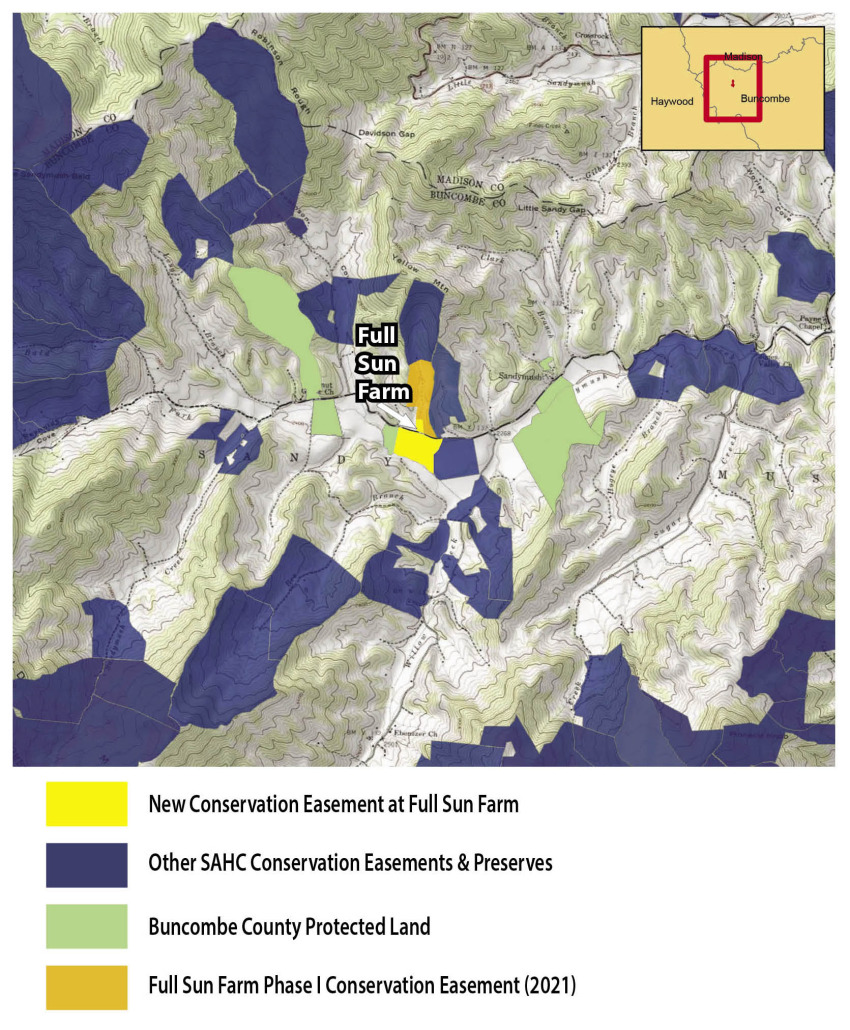
Full Sun Farm adjoins more than 220 acres of protected scenic farmland in the Sandy Mush valley. This new conservation easement preserves productive, high-quality soils, which are being used to grow food for the local sustainable agricultural economy.
“This newly protected tract fits neatly between SAHC’s first agricultural conservation easement in Sandy Mush and other farmland protected by SAHC and Buncombe County,” continues Laggis. “The property’s road frontage, prime soils, and water make it ideal for agricultural production. It is located on the Buncombe County Farm Heritage Trail, an educational and economic development resource enjoyed by both cyclists and motorists. Permanent protection of the land will also help preserve the scenic beauty along Bald Creek Road.”


Land like this commands attention in the mountains.
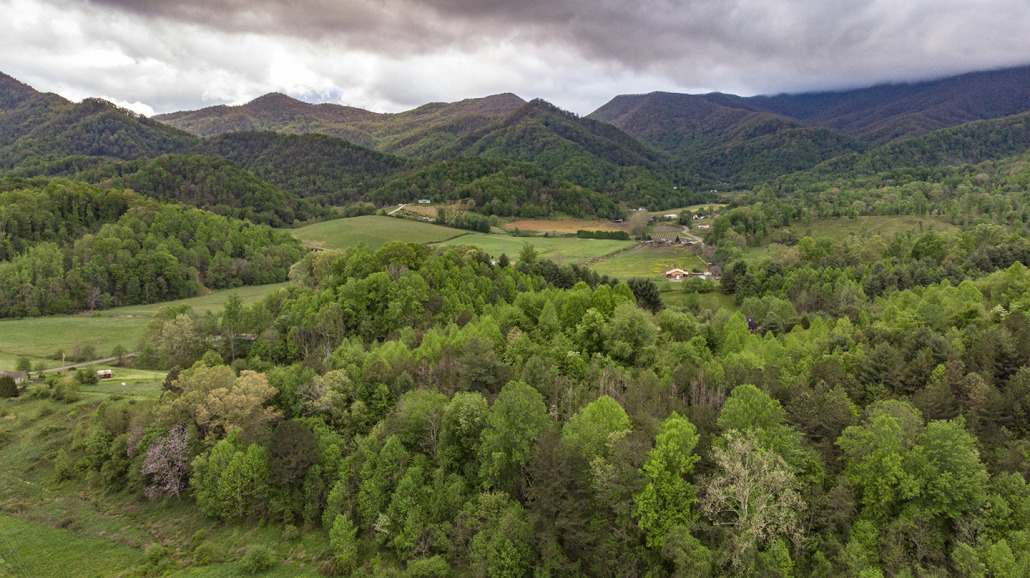
The Sandy Mush community has seen a lot of conservation action over the past twenty years, and with good reason. Secluded from the urban center of Asheville, generations of farmers created space for community amongst the rolling hills and forested mountain coves. As populations around Asheville continue to grow, surrounding communities like this face increased development pressure.The physical characteristics that make the land attractive for development also constitute land well suited for agriculture. Sandy Mush Creek and its tributaries have deposited rich agricultural soils in the relatively flat bottomlands over long periods of time. These soils are rare in the mountains and important for farming. Conservation helps balance the needs of people and availability of life-sustaining land.
“Some of our soils are prime soils, and that is very important,” says landowner Vanessa Campbell. “In many places, prime soils are being built on and lost for agricultural use. In other areas, like out west, soils are becoming degraded. We are concerned about the impacts from climate change, and it’s good to know that in preserving this land, future generations will be able to grow healthy food here for a long time to come. It will be a resource for the region, for farmers to be able to farm without turning to soils that have been depleted.”
Over 95% of the recently conserved 29 acres at Full Sun Farm contains important agricultural soils – including 17 acres of nationally important Prime Soils (61.4%), 8.4 acres State Important Soils (30.3%), and 1 acre Locally Important Soils (3.6%).
A Crucial Time for Farmland Conservation
According to a recent “State of Agriculture” address by Steve Troxler, the Commissioner of Agriculture for North Carolina, threats to the food industry in North Carolina include loss of farmland, and access to roads, water, and energy. Troxler emphasized the need to do more to preserve farmland now, saying that farmland preservation is an essential issue to the future of agriculture in the state. Speaking at the annual Agricultural Development Forum in early February, Troxler highlighted the many challenges rapid growth has brought to the state, including access to natural resources, outdated infrastructure and urban sprawl.
“North Carolina ranks number three in the nation as far as the number of people that are moving in here,” Troxler said, cautioning that North Carolina could lose up to one fifth of its 8.3 million acres of farmland to development over the next 15 years. The American Farmland Trust ranks North Carolina the second most likely state to see large-scale farmland losses by 2040. According to Troxler, rising land prices are making it harder to make headway in conserving farmland. So far, the state has conserved about 34,000 acres of farmland – just a fraction of what is needed.
“A farm is so much more than just what you think of as producing food. It also is an open space, a wildlife habitat, a place where water percolates into the ground instead of running off and causing flooding,” Troxler said during the address. “Protecting farmland is paramount to all these issues.”

Local Farmland Conservation – A Community Effort
“We thank Southern Appalachian Highlands Conservancy for the important work that they have done to protect Full Sun Farm Phase 2,” says Ariel Zijp, Buncombe County’s soil and water conservation farmland preservation manager. “We are ecstatic to see another working farm protected in the county, especially such a beautiful working farm with significant prime agricultural soils, that has played a big role in the vibrant local food scene in Buncombe county. We are getting close to reaching Buncombe County Commissioner’s Land Conservation Goal of protecting 20% of Buncombe county by 2030, and these acres continue to help make that impact.”
This conservation easement on Full Sun Farm was made possible by grant funding from the U.S. Dept. of Agriculture’s Natural Resources Conservation Services’ Agricultural Conservation Easement Program – Agricultural Land Easements (NRCS ACEP-ALE program), generous support from the Stanback family, a philanthropic $15,000 contribution from The Biltmore Company, and a $31,000 grant from Buncombe County toward transaction costs to complete the project. The landowners donated a significant portion of the value of this conservation easement.
“Biltmore thanks the Southern Appalachian Highlands Conservancy for their great work to protect the natural resources of our region for the benefit of present and future generations,” said Biltmore’s Vice President of Compliance & Legal Services Tim Rosebrock, who also leads Biltmore’s Corporate Social Responsibility work. “We consider supporting this land easement a vital part of who we are as a local family business. When our founder George Vanderbilt planned his estate in Asheville, part of his vision was to preserve the surrounding landscape and to nurture the land’s resources for years to come. Out of that vision grew Biltmore’s family focus on sustainable farming and the environment. In supporting conservation of the high quality farmland at Full Sun Farm, Biltmore is honored to help ensure a secure food supply for future generations and the continuation of the farm’s legacy of scenic beauty, natural wonders and recreational offerings.”
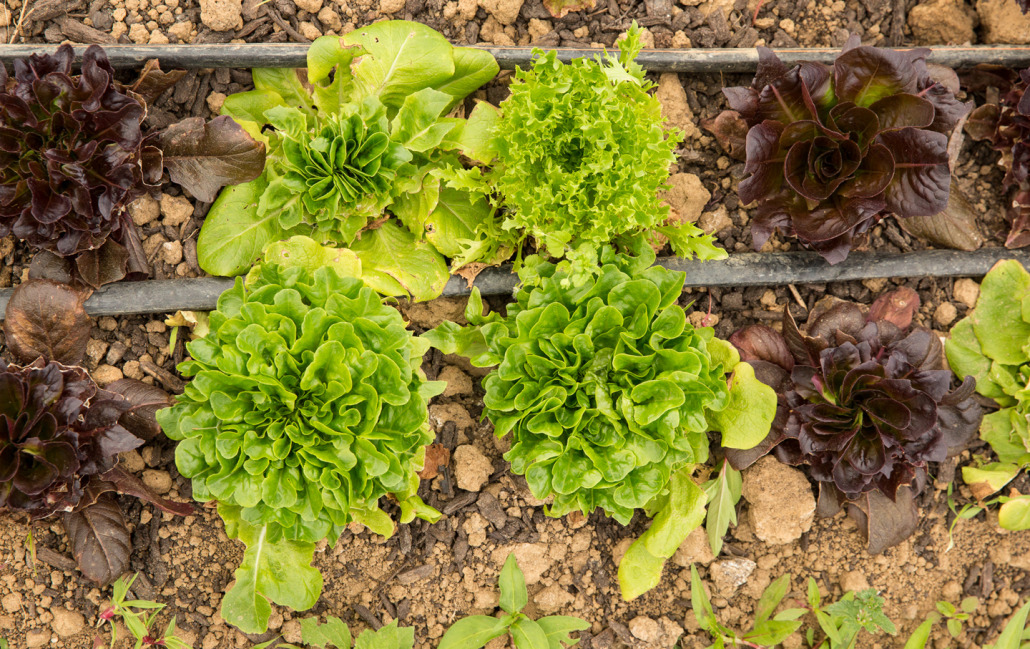


“Full Sun Farm is such a beautiful farm, being beautifully managed,” says Laggis. “Fields of flowers and organically grown vegetables are surrounded by stunning mountain views. In the spring, the irrigation pond provides the amphitheater for a symphony of frog and toad songs. It’s a hard place to leave. Thanks to the generous support of philanthropic leaders, The Biltmore Company, and both local and federal grants that support farmland conservation easements, this place will remain a special farm for many years to come. We are grateful to all of these, the landowners, and SAHC members for making it possible to protect this remarkable place!”

Fresh Flowers and Produce – Direct to YOU
Full Sun Farm operates as a direct-to-consumer vegetable and flower producer with U-pick flower, flower and vegetable CSA, as well as tailgate market outlets. They grow to organic standards and follow Best Management Practices, including extensive cover cropping, strong riparian buffers along waterways to protect water quality, and mechanical pest interventions.
“For the health of our soil, ourselves, our customers and our community, we grow using organic methods,” say Vanessa and Alex. “Our focus is growing beautiful flowers and a lot of different kinds of tasty, beautiful vegetables for sale at farmer’s markets. We are so grateful to have a chance to farm and live here and take care of this place. And, we are even more grateful to have it protected in perpetuity. Sandy Mush is such an amazing jewel of a place, and we love being part of the community. We’ve been out here since 1997, and had grown on rented land a few years before that. We love being outside and just being able to grow vegetables, sow seed, watch the plants grow and come up with produce at the end — it’s just very rewarding, interesting, exciting, and challenging work, even after 20 years!”
For more information, visit www.FullSunFarm.com
Photos courtesy Michael Pittman, Michael Fredericks, and Kathleen Brannan of the Carolinas Nature Photographers Association.