Balsam Gap

A narrow roadway crossing the tops of the Blue Ridge mountains from North Carolina to Virginia, the Blue Ridge Parkway tops the charts as the most visited unit of the U.S. National Park system. Outdoor enthusiasts logged an impressive total 16.7 million unique visits to the Blue Ridge Parkway in 2023. Much of the undeveloped land surrounding the beloved scenic parkway – which provides incredible views enjoyed by cyclists, motorists, and other visitors – remains privately owned, and thus potentially at risk of being developed. Now, 45 more acres of forested land along the Blue Ridge Parkway have been permanently protected. This year, the Southern Appalachian Highlands Conservancy purchased 45 acres adjoining the Blue Ridge Parkway near Balsam Gap, on the county boundary separating Haywood and Jackson County, NC.

Conservation Values
“We are grateful to the former landowner for donating a large part of the value of the land and to the Stanback family for making a significant gift to enable SAHC to purchase this property,” says Conservation Director Hanni Muerdter. “This is a significant area for wildlife. The landowner cared deeply about the land and its future and wanted to see it protected. This property contains good quality forest and water sources, and SAHC plans to own and manage the land as a nature preserve.”
With elevations on the tract up to 3,900 ft, the property is highly visible from the Blue Ridge Parkway. Paralleling the parkway, the Mountains-to-Sea Trail trail passes through Balsam Gap and runs though National Park Service land just to the north of the recently conserved tract, on its way across 1,175 miles from the Great Smoky Mountains to the Outer Banks.

“One of the last remaining larger-acreage parcels around Balsam Gap, the tract’s size, gentle terrain, and location made it vulnerable to potential development,” continues Hanni. “Permanent protection of the land will help provide a buffer for the Blue Ridge Parkway and the Mountains-to-Sea Trail, as well as preserving water resources and wildlife habitat.”
SAHC’s new Balsam Gap Preserve is located in the ecologically important Great Balsam Mountains and within a priority corridor for wildlife movement, according to The Wildlands Network. The property contains tributaries to Scott Creek, a tributary of the Tuckasegee River designated as Trout Water by the NC Division of Water Quality.
The ecological and historic importance of the vicinity is reflected in diverse special area designations, including the Audubon Society’s Plott & Great Balsams Important Bird Area, Redbank Cove Natural Heritage Area, and the Balsams Pisgah Priority Reptile Conservation area.
”The Balsam Gap area is a ‘pinch point’ for wildlife movement,” adds Hanni. “Large swaths of land are protected to the north and south of Balsam Gap, but a protected corridor around Balsam Gap is very narrow – acting as a pinch point for wildlife movement. Additional protection of land at Balsam Gap is critical for allowing animals enough safe land to move north/south along this ridgeline.”
“SAHC’s recent acquisition in Balsam Gap will help preserve quality forests along the Blue Ridge Parkway, reinforcing a vital wildlife corridor,” says Nikki Robinson, NC Project Manager with The Wildlands Network. “This strategic move will support the natural movement patterns of numerous species as they seek out resources like food, water, shelter, and mates. Conservation science underscores that enhancing habitat connectivity is a key strategy for preserving biodiversity. We are grateful that SAHC is championing this cause in the Southern Appalachian Mountains, a region brimming with life yet vulnerable to habitat loss, fragmentation, and climate change.”


Blue Ridge Parkway
According to the Blue Ridge Parkway website, extensive planning for the landscape of the parkway set it apart from most other national park areas. It was “planned down to the smallest detail in ways that most visitors do not notice at first glance. Transitions from enclosed woodland tunnels to expansive views, or exposed rock faces to open rolling pastures, lends variation that keeps visitors engaged and delighted in the journey. “Landscape architects and engineers dovetailed their skills and creative genius for the benefit of the millions who have enjoyed this drive for more than eight decades…. ‘Intimate glimpses’ such as moss on a shake-roofed building stand in contrast to the ‘heroic panorama that looks out forever.’ Each element added its own variety and charm.”
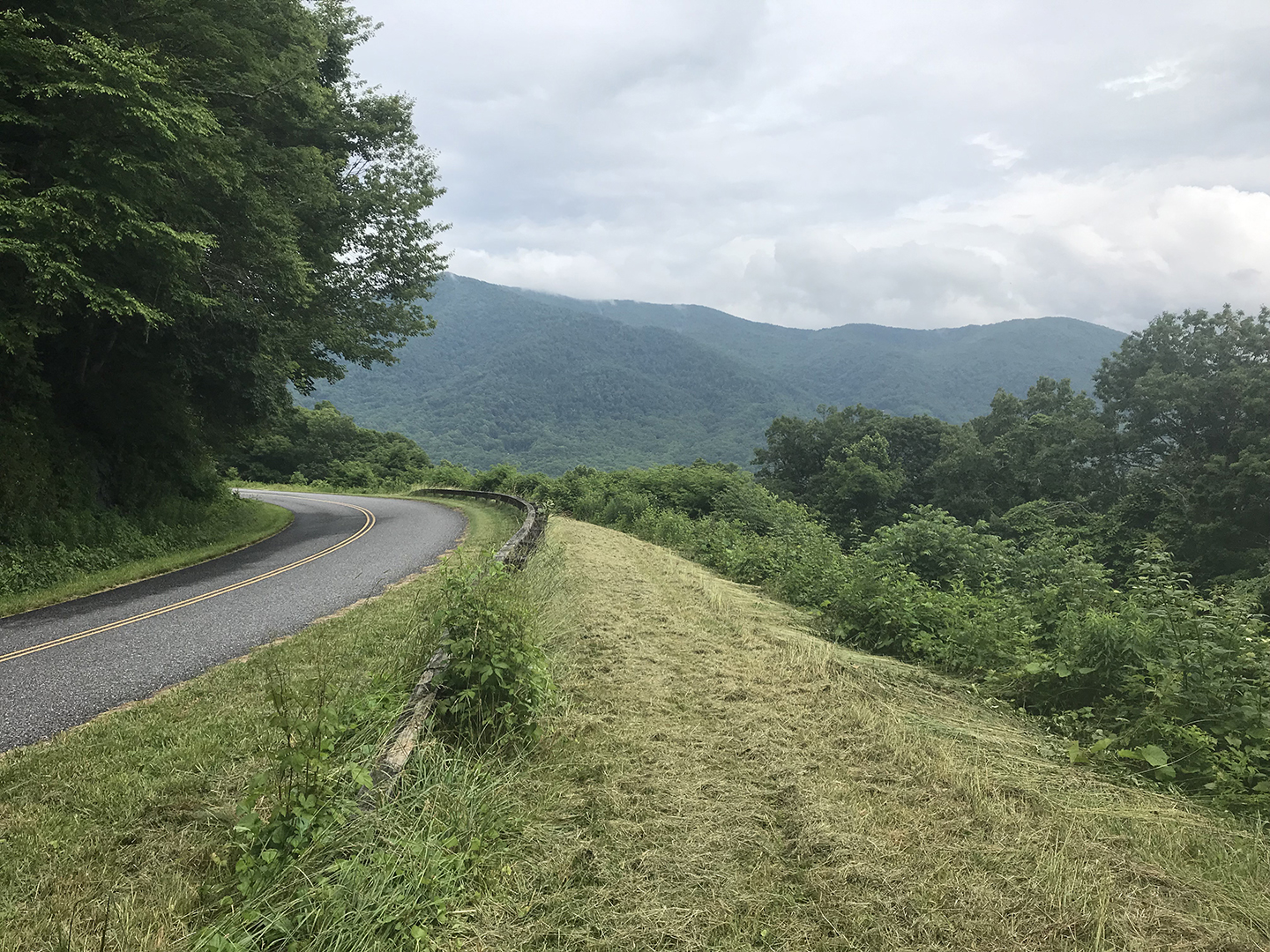
Recent announcements about section and facility closures on the Blue Ridge Parkway herald exciting – and long needed – updates for the historic scenic route, which was first established in 1936. This work is part of the $123.5 million Great American Outdoors Act investment along 75 miles of the Parkway to address much-needed maintenance and updates of paving, drainage structures, guardrails, overlooks, signage, and more. The paving and infrastructure repair project for the historic parkway is expected to continue until Spring 2026. The Blue Ridge Parkway has topped the ‘most visited’ chart of the National Park Service for the past two years, and the visitation totals from 2023 showed an increase of one million visitors from 2022.
“SAHC’s recent acquisition of the 45 acre tract near Balsam Gap is one of many land protection projects that we and our partners in conservation have accomplished along the beloved parkway,” says Hanni. “This property adds to continued efforts of SAHC and our partners working to steward and protect the Blue Ridge Parkway and user experiences.”
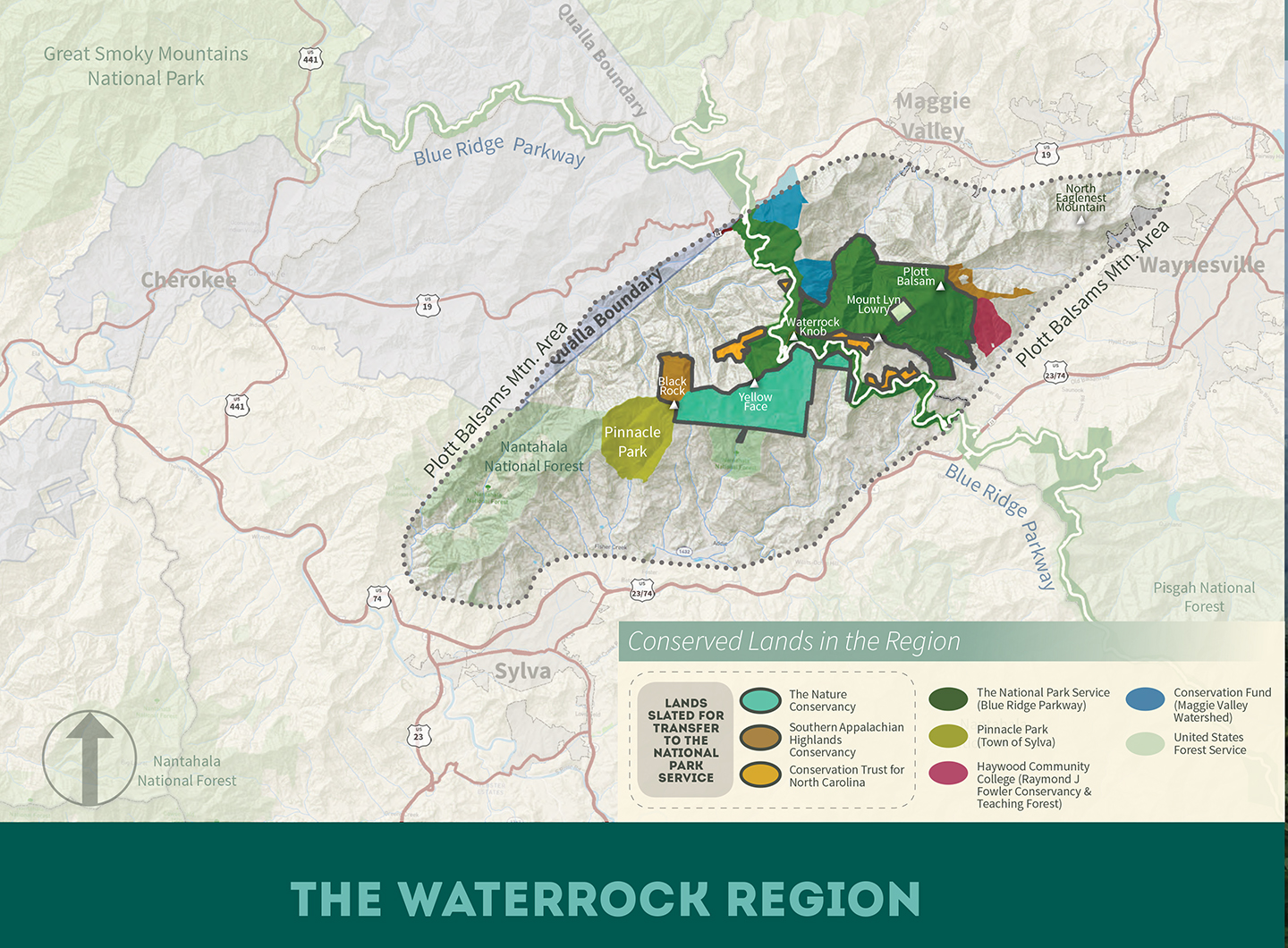
For example, to the northwest of Balsam Gap on the Blue Ridge Parkway, SAHC and a broad coalition of partners including The Conservation Fund, The Nature Conservancy, Conservation Trust for North Carolina, and many more are working with the National Park Service on a monumental expansion effort around the Waterrock Knob visitor center, adding more than 5,300 conserved acres to national park service land.
History of Balsam Gap
Balsam Gap has long been used by people and animals living and traveling through the mountains of Western North Carolina. The gap creates a mountain pass between the Plott Balsam Range and Great Balsam Mountains. You might recognize the location as the road connecting Waynesville to Sylva, at the crest of the county line.
The gap allowed both the Great Smoky Mountains Expressway and the former Murphy Branch of the Southern Railway to cross the substantial bulk of these mountains, following trading and travel paths once used by the Anigiduwagi (aka Cherokee ᏣᎳᎩ or Tsalagi) and other indigenous people. Balsam Gap was also used by early white colonists and by a volunteer militia under General Griffith Rutherford, whose campaign in 1776 largely decimated Tsalagi/Cherokee Middle and Valley Towns, razing 36 villages and destroying homes, crops, and livestock just before the onset of winter. A century later, the development of the railroad through the gap led to the establishment of a post office in the community of Balsam. This was followed in the early 1900s by the creation of the Balsam Mountain Springs Hotel (now operated as the Balsam Inn), a grand hotel destination for guests arriving by rail to enjoy the mountains in summer and escape the heat of the lowlands.