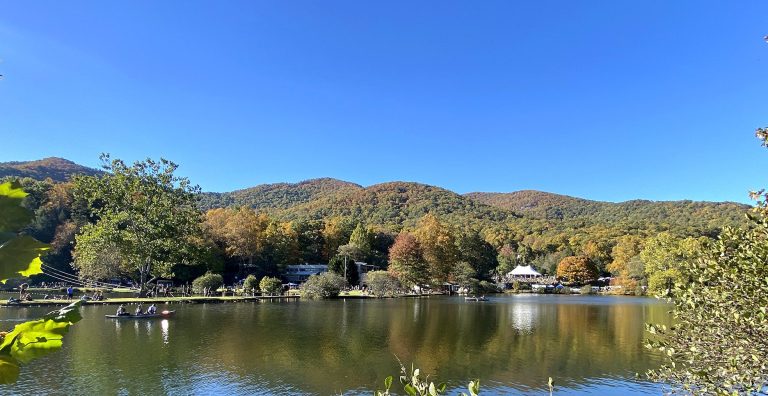
We worked with Joe Carson, a generous landowner in Buncombe County, who donated a conservation easement on his 37- acre property in Swannanoa. Conservation of this land is crucial because of its location. It is less than a mile from the Blue Ridge Parkway and is adjacent to the protected Asheville Watershed and Pisgah National Forest. It is also close to SAHC held conservation easements that total over 2,500 acres. This easement contributes to the network of protected lands within the Craggy Mountains and protects the scenic integrity of views from the Blue Ridge Parkway and other public roads.
Carson said he bought the tract in 1996 with plans for a cottage, but decided instead to work with SAHC to put it under easement in order to protect it from future development and to preserve its ecological integrity. “I wanted to leave a legacy of untouched nature and open space for future generations to enjoy,” he says. “By working with SAHC to put a conservation easement on my property, I was able to do that.”
The property is within the Swannanoa River watershed and is located on the southern slopes of the Craggy Mountains. It features significant wildlife habitat, forested lands, and intact riparian corridors. Its protection preserves these important conservation values for the future.
The property is entirely forested and ninety-percent is Oak-Hickory forests between eighty and one hundred years old. Some individual trees, mostly chestnut oak and white oak, are over one hundred and fifty years old, said Josh Kelley, biologist for WNC Alliance and member of SAHC’s Land Protection Committee. The conservation of this property also protects water quality in our region. It contains a network of stream corridors that are tributaries of Long Branch Creek, which eventually flows into the Swannanoa River.
The conservation easement is within the Black and Great Craggy Mountains Important Bird Area, indicating that this tract provides essential habitat for a diverse variety of birds. Ninety-one species of nesting birds have been observed on the property, including the Black-throated warbler, Chestnut-sided warbler, and Red-breasted Nuthatch.
The southern portion of the property features large mafic rock outcrops, one that is almost an acre in size, that have been shown to support globally rare plant community types. Unique plants that were found on the property include Appalachian beard-tongue, little bluestem, shooting star, and Chauncey’s coneflower, among many others. Shooting star and Chauncy’s Coneflower are both on the state rare list.
Carl Silverstein, SAHC’s Executive Director, says this conservation success is a step closer to landscape-scale protection of the Craggy Mountains. “This easement not only protects outstanding water resources, plant and animal habitat, and scenic views from the Parkway, it also builds on existing conservation work in the area to promote connectivity between protected lands.” he says.