Buckskin Branch Farm

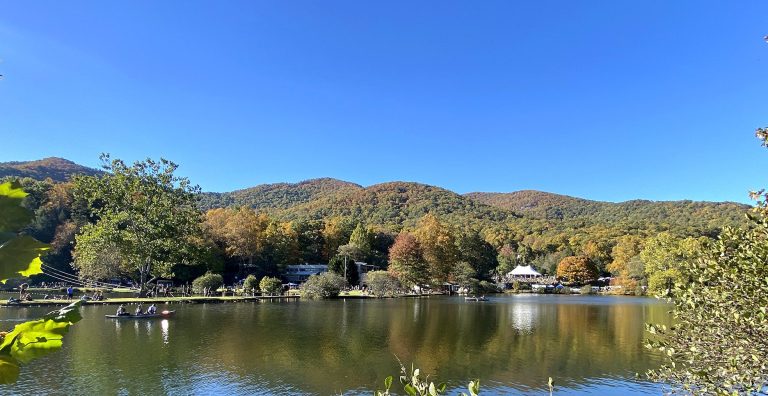
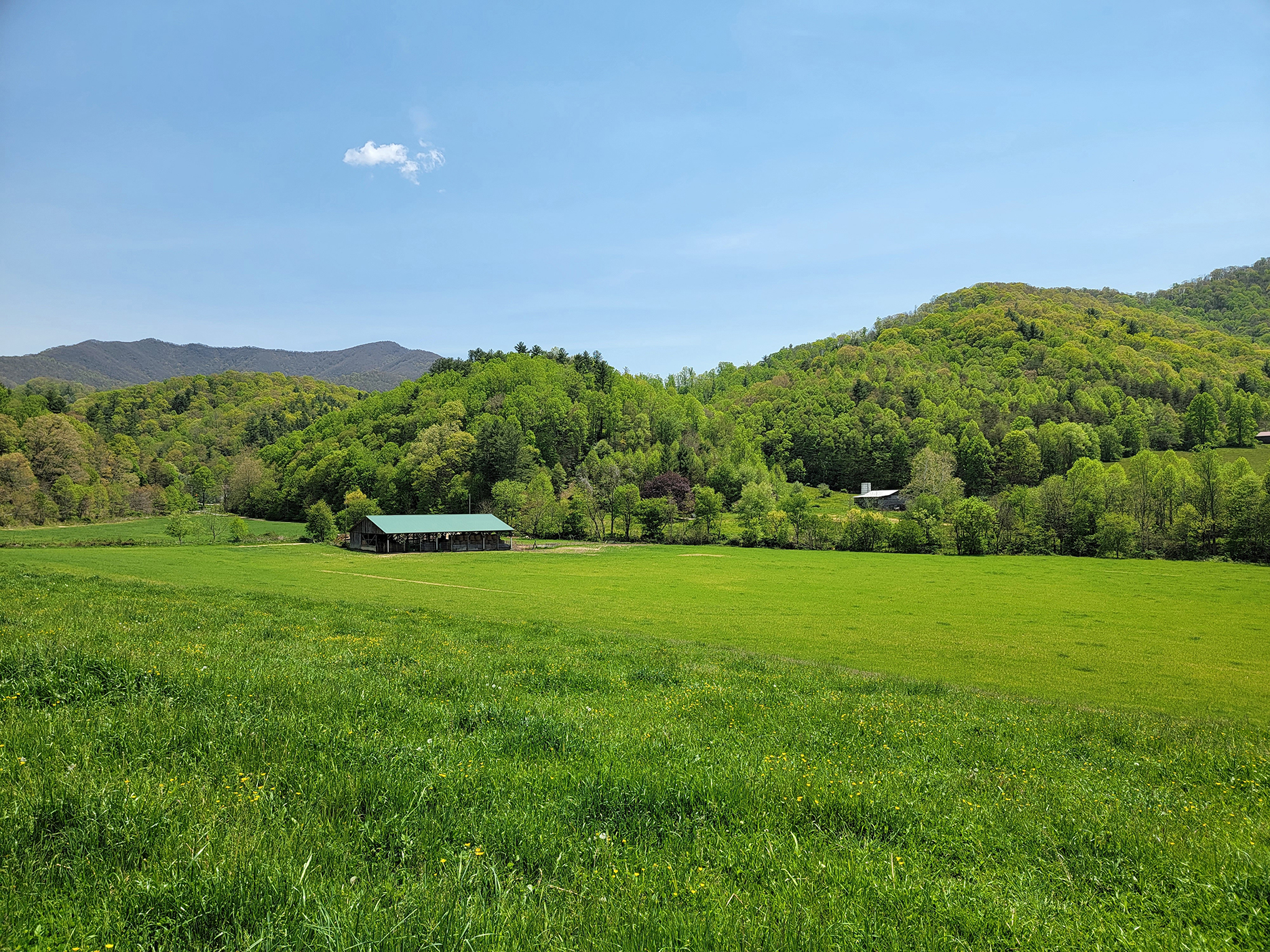
Like a lovely landscape painting, Buckskin Branch Farm spreads across a scenic valley in the Fines Creek community of Haywood County. The open pasture and fertile fields of the farm sit nestled between Max Patch Road and forested hillsides overshadowed by the ancient Smoky Mountains.
Landowners Kim and Tracey Palmer worked with Southern Appalachian Highlands Conservancy to permanently protect 489 acres of the farm with a conservation easement, a testament of their joint respect for the land, familial legacy, and farming traditions which helped shape this rugged mountain community.
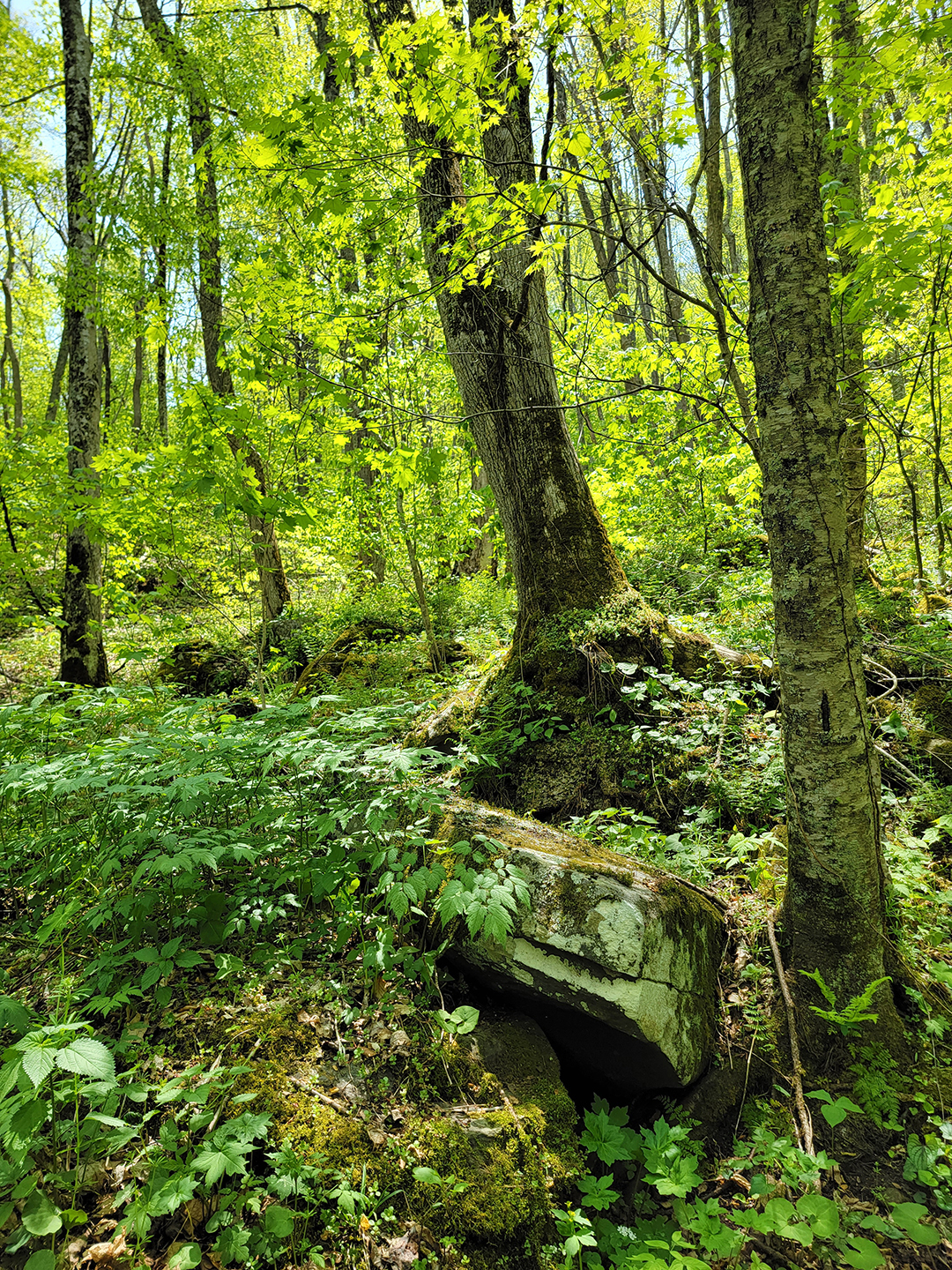
“Our big inspiration in doing the conservation easement has been to protect the land for farming and keep it from being developed in the future, and to preserve its scenic beauty,” says Kim. “My father spent a lot of time painstakingly purchasing the many tracts of land which make up this farm, and it would have been a shame for it to be split up again in the future.”
Kim’s family has historic ties to this farm and the wider area of Haywood County, including the farm where Kim grew up in the Rush Fork valley. His father, Joseph “Joe” Hardy Palmer, began purchasing tracts of land to create what is now Buckskin Branch Farm in the 1960s, often from extended family members. Bit by bit, the Palmers accumulated the rich bottomland fields and surrounding forested hillsides in the cove, which drain into tributary creeks of the Pigeon River watershed.
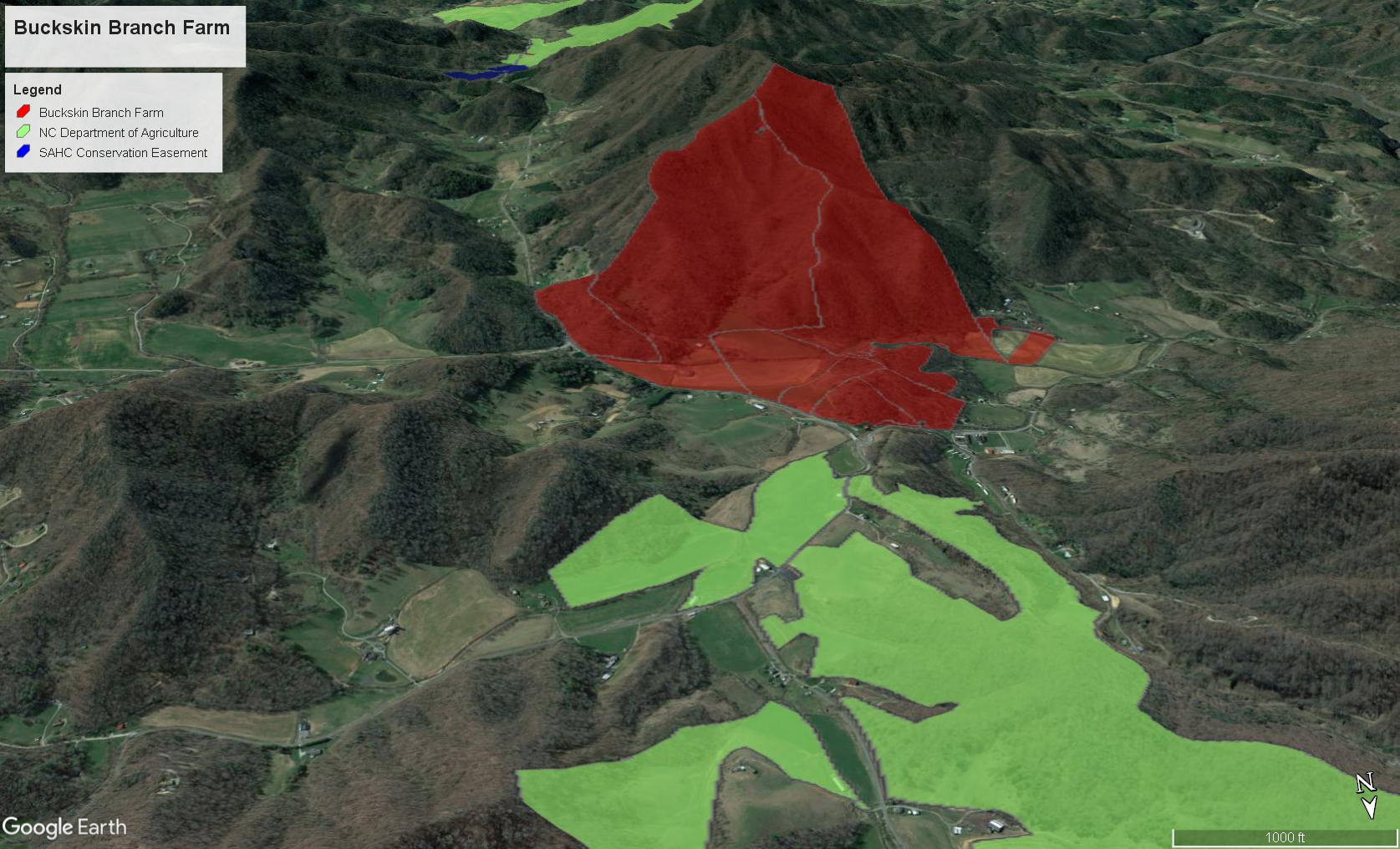
“Kim and Tracey’s property was lovingly quilted together by the Palmer family over decades,” says SAHC Farmland Protection Director Jess Laggis. “In total, 17 parcels were recombined for this gigantic conservation easement, protecting one of the largest remaining privately-owned tracts in Haywood County. The property anchors the corner of NC Scenic Byway Hwy 209, Max Patch Road, and Fines Creek Road. It is part of the scenic views from the Fines Creek Community Center, the historic Ferguson Supply and Café general store, and Crabtree Bald. The Palmer family traces their family ties to the land back nearly 200 years, and collectively own over 1,000 acres in Fines Creek. The family commitment to conservation is inspiring, with three of the Palmer brothers (Chris, Kim, and John) protecting their land.”
Over the years, Buckskin Branch Farm has been used for a variety of crops and livestock. As conscientious landowners, the Palmers implemented land management practices decades ago to help protect land and water resources while farming – such as fencing cattle out of the streams.
About a third mile of Cove Creek, a tributary of Fines Creek, crosses the property along with smaller, unnamed tributaries. Cove Creek and Fines Creek are classified as Class C Waters (indicating that they are protected for recreation, fishing, wildlife, biological integrity, and agriculture) by the North Carolina Division of Water Quality. Fines Creek is a direct tributary of the Pigeon River. In total, water resources on the farm comprise approximately 14,734 linear feet of drainage, including perennial and intermittent streams.
“At 489-acres, the Buckskin Branch Farm property is one of Haywood County’s largest privately held tracts,” said Tara Scholtz, Senior Program Officer with The Community Foundation of Western North Carolina. “A permanent easement on a property of this size, containing numerous headwater tributaries and portions of Cove Creek and Fines Creek, will help protect these water resources forever from the effects of sedimentation that low-density housing development inflicts on watersheds. The Pigeon River Fund is honored to play a role in funding transactional costs, which are a small but crucial part of this important conservation project, and to support an effort that furthers the goals of the Haywood Waterways Association’s Pigeon River Watershed Action Plan.”
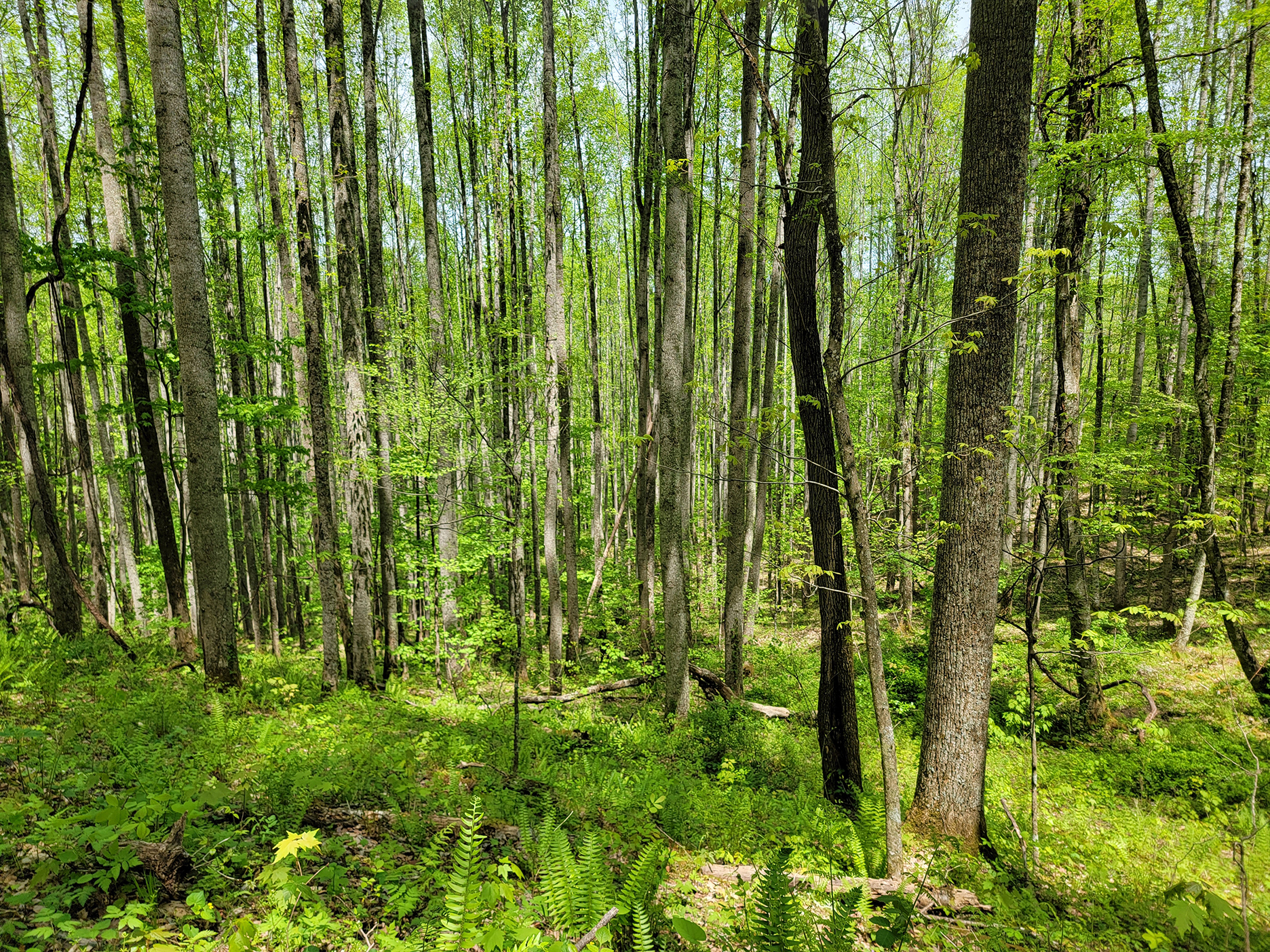
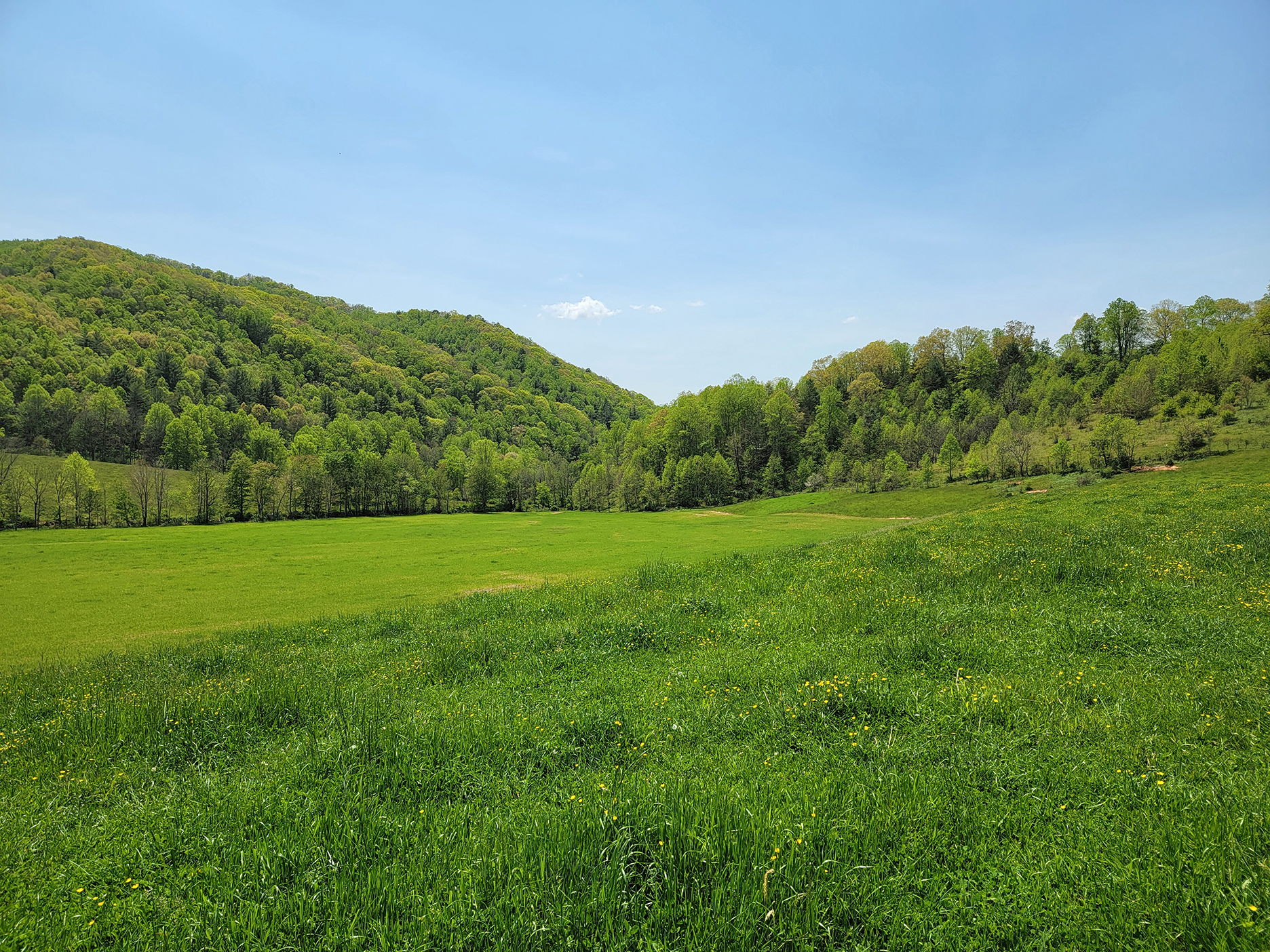
The conservation easement protects both the wooded cove and wide open fields of Buckskin Branch Farm, with approximately 65 acres of open space for pasture and crops. The southern end of the property rises to 3,954 feet elevation on steep upper ridges just north of Oakes Knob, while the bottomland fields (2,330 ft. elevation) spread out adjoining scenic byway NC 209.
Bottomlands along creeks, such as those found at Buckskin Branch Farm, benefit from soil deposits formed over very long periods of time that create fertile, productive farmland in low-lying areas. Such nutrient-rich soil deposits are relatively rare in mountain regions, and worthy of protection because they support robust crop growth. The rich fields of the Buckskin Branch Farm include 11.7 acres of nationally important “Prime” soils, 45.6 acres of soils of statewide importance, and 87.4 acres of soils of local importance.
Funding for the project was made possible in part by a grant from the NC Dept. of Agriculture’s Agricultural Development and Farmland Preservation Trust Fund, private philanthropic donors, and a grant through the Pigeon River Fund of the Community Foundation of Western North Carolina.
“The North Carolina Department of Agriculture and Consumer Services is proud to be a partner on such an important project,” said Evan Davis, NC Department of Agriculture and Consumer Services Director – Farmland Preservation Division. “The Buckskin Branch Farm is the largest agricultural conservation easement recorded in the mountain region funded in part by the NC Agricultural Development and Farmland Preservation Trust Fund. Preserving a large, working farm in the mountains could not be done without the dedication of the Palmer Family, and the collaboration between Southern Appalachian Highlands Conservancy and the State’s Farmland Preservation Division. We are thrilled to see this productive family farm become an NC Forever Farm.”

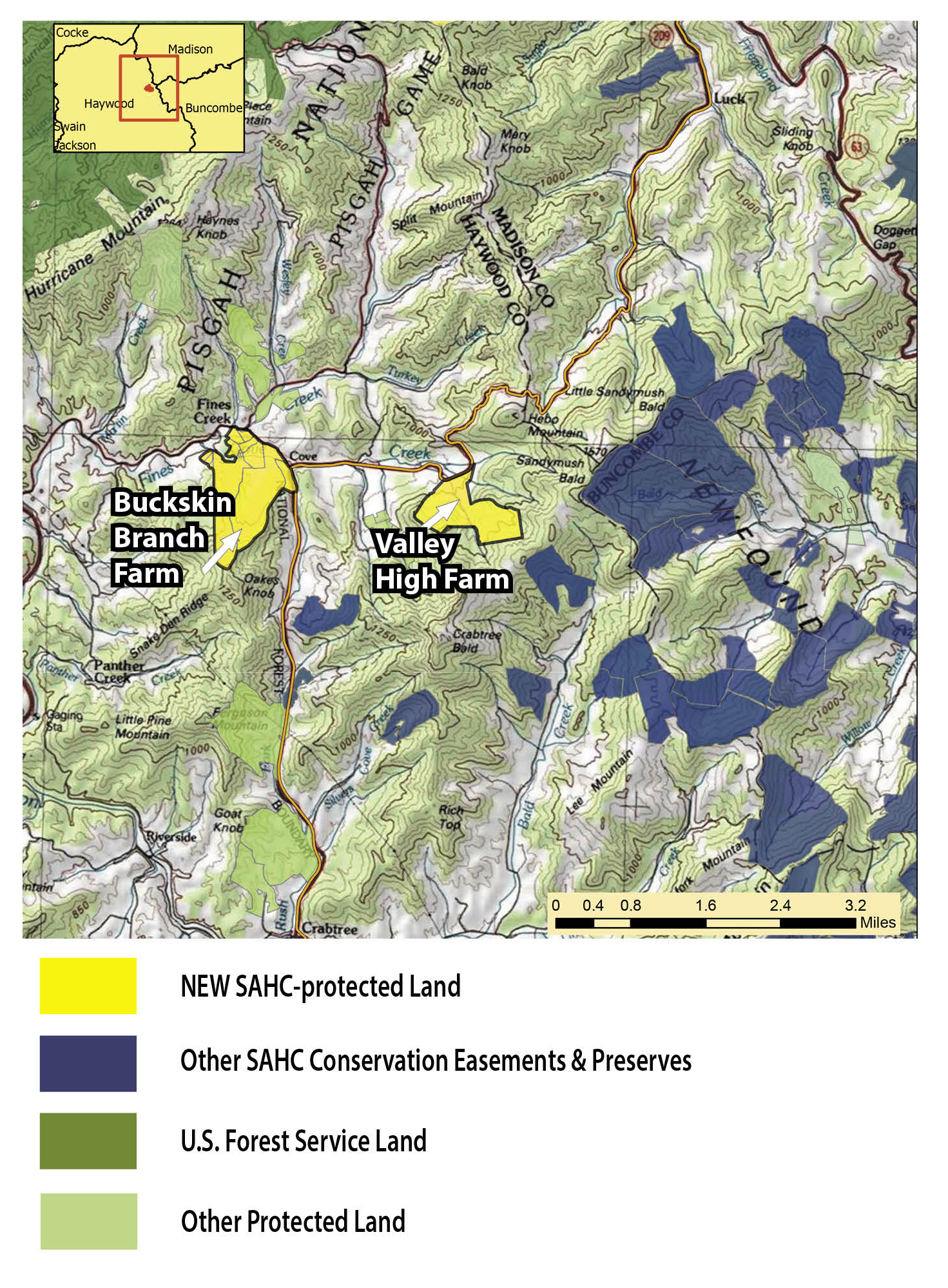
Buckskin Branch Farm is located near three NC Farmland Preservation Trust Fund Easement properties, held by the NC Department of Agriculture. It is also close to the Pisgah National Forest (Appalachian Ranger District), the Blue Ridge Parkway, Great Smoky Mountains National Park, and two NC Natural Heritage Natural Areas: Raven Cliff and Crabtree Bald. Other nearby lands and conservation easements held by the Southern Appalachian Highlands Conservancy include the Rush Fork Farmland Conservation Easement, Crabtree Bald Conservation Easement, Split Pine Cove Preserve, and Valley High Farm.
“The connectivity of farmland and forested land around Buckskin Branch Farm is important for agricultural viability of the region as well as plant and animal diversity,” adds Jess. “Conservation of the farm adds to a significant protected landscape within the Newfound Mountains and helps protect the rural scenic quality for visitors and local residents alike.”
History of the Land
Kim Palmer’s voice resonates with a reverence for the history of Buckskin Branch Farm and the countless generations who have taken a turn toiling in the farm fields or hunting the wild land.
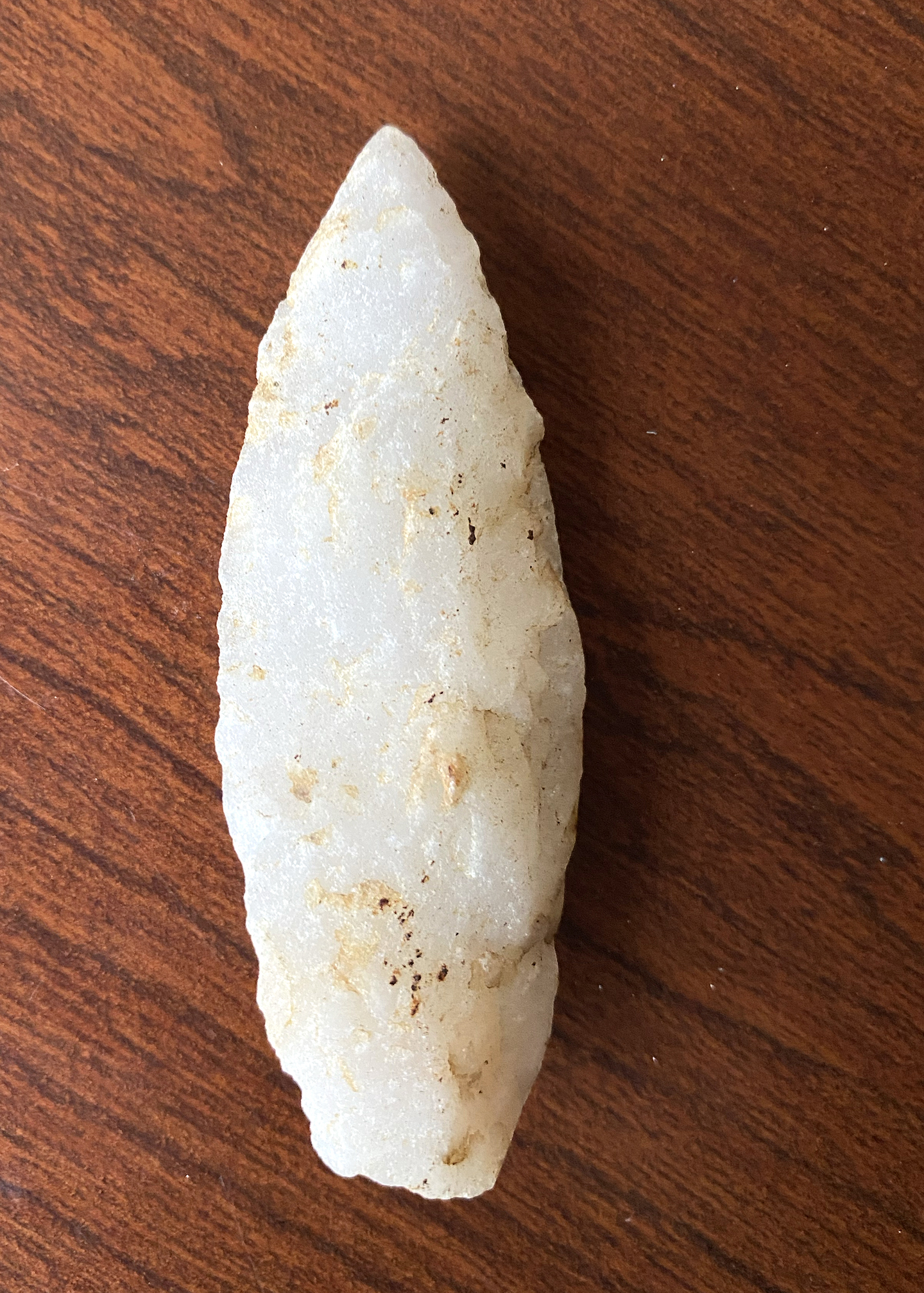
“I can tell you about the history of this land going back about 8,000 years,” he shares, producing a handful of knapped stone implements found over the years he’s turned soil on the farm. From a North Carolina archaeology text, Kim traces some of the ancient Native American connections to the land, noting that the tools appear to be from the Woodland, Mississippian and Archaic periods. In later periods, this land would have been in the territory of the Cherokee – also known as Ani-Yunwiya (ᎠᏂᏴᏫᏯ, translating as ‘Principal People’) or Anigiduwagi (ᎠᏂᎩᏚᏩᎩ, translating as ‘People from Kituwah’). The artifacts bear testimony to the presence of Indigenous people who lived on and had a relationship with the land before the colonial period.
Later, migrants from European shores spread across the mountains as the western region of North Carolina opened to colonial settlement after the American Revolutionary War. Large land grants made to well-positioned individuals in the post-revolution era were subdivided and marketed by land agents tasked with finding settlers to inhabit and work the land.
Both Kim and Tracey have family ties to the Scots-Irish settlers who made the mountains home. ‘Scots-Irish’ refers to Scottish emigrants who settled for a while in Northern Ireland before moving on to North America, with many ultimately residing in the southern Appalachian region.
Historic pressures of politics, money, and persecution pushed Scottish inhabitants out of their islands and highlands in the 1700s, and many of those colonists found the rolling mountains of the southern Appalachians akin to their ancestral homeland.
“My 3x-great grandfather Robert “Robin” Ferguson was born in Scotland in 1764,” shares Kim. Robin married Frances “Fanny” Love (born in Ireland in 1768). According to a history compiled by Kim’s brother John, the family settled in upstate South Carolina before moving into North Carolina sometime between 1807 and 1808. They were some of the first colonial settlers in the Rush Fork valley. The Ferguson family made money in cattle and timber and continued purchasing land in the Rush Fork area, eventually accumulating thousands of acres. Physical attributes of the region bear the family name, such as Ferguson Mountain.
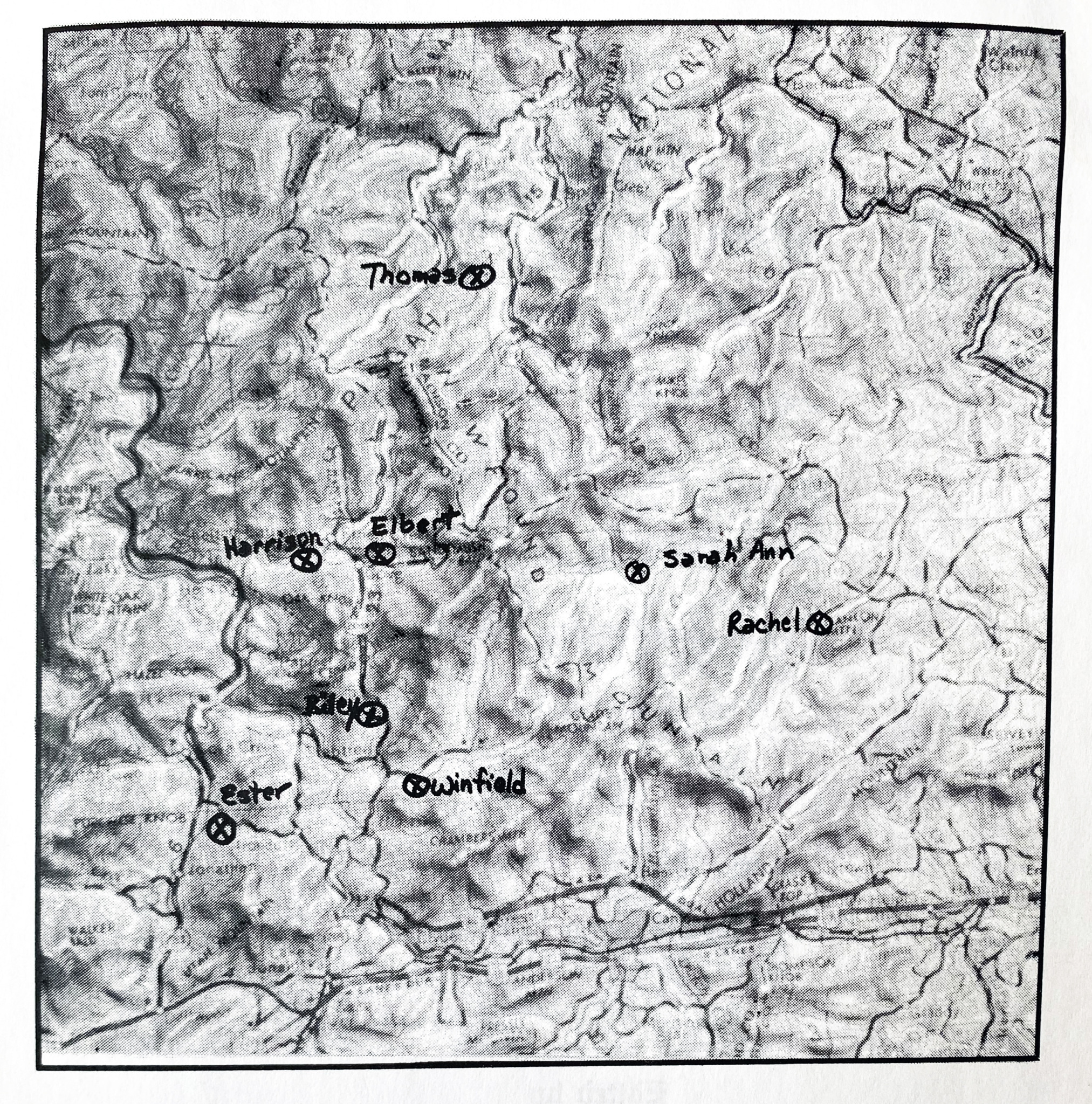
Together Robin and Fanny had nine children: Andrew, Robert Jr., John, William, Thomas, Jimmy, Eleanor, Mary (Polly) and Samuel.
A first generation American, Thomas Ferguson had 11 children – including William (also known as Harrison), Elbert, and Riley Ferguson (Kim’s great-grandfather). Harrison and Elbert, with help from their father Thomas, purchased several tracts of land on Fines Creek that would later be assembled into the Buckskin Branch Farm property by Kim’s father. Some of these parcels were purchased from the Penland and Rathbone families.
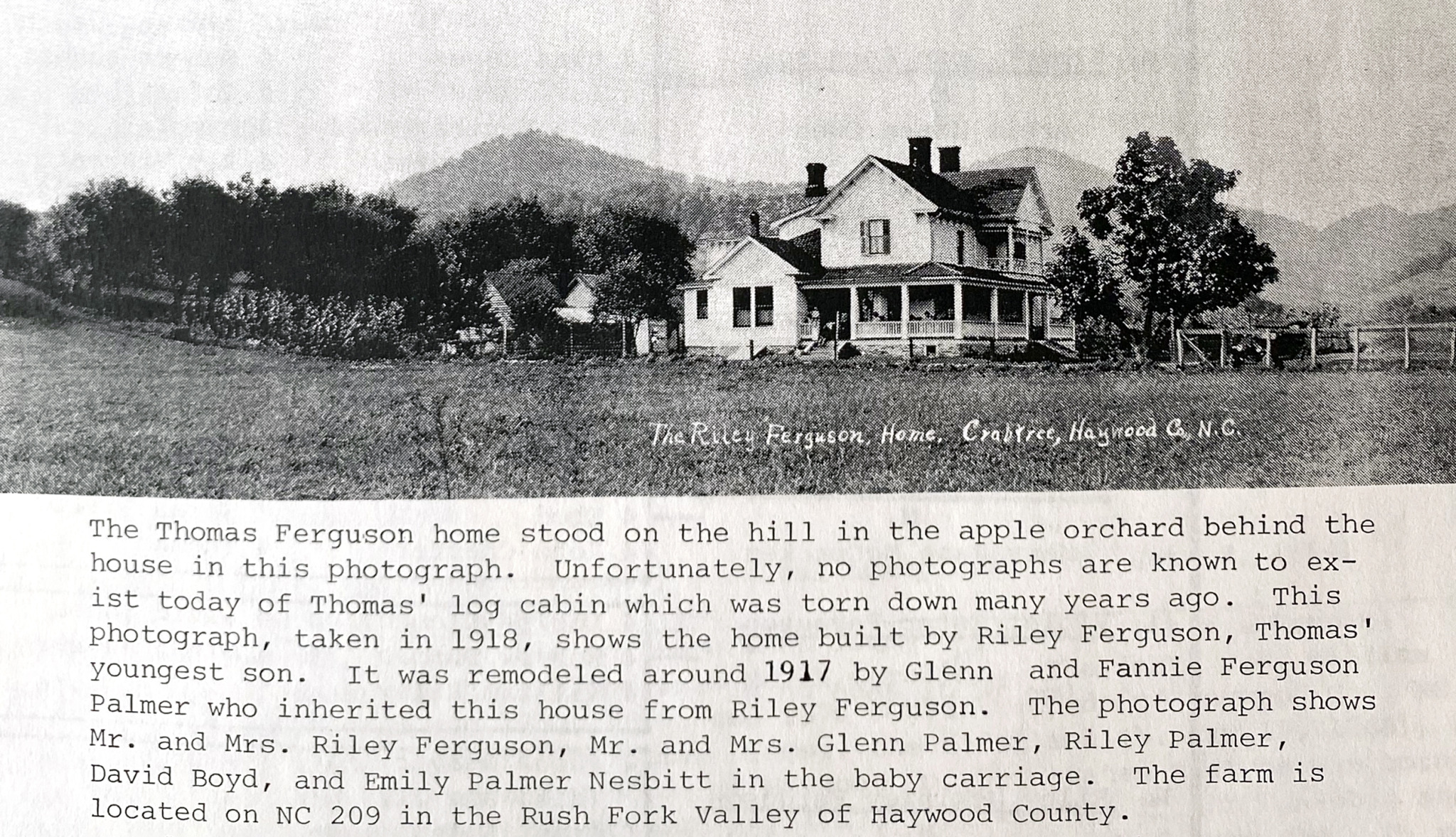
According to the Ferguson family history, “Harrison and his brother Elbert bought the ‘Penland Tract’ of land on Fines Creek, divided it, and moved there to operate their farms and raise their families. This property included much good bottomland for both brothers. Harrison continued to acquire property throughout his lifetime and finally ended up owning all the property from the Fines Creek School to the Pigeon River on the south side and all except two tracts on the east side.” For his part, Riley Ferguson made his home and raised his family near the Fergusons’ original homestead in the Rush Fork community.

“It’s very rare that you can find a family connection to the land that far back,” says Kim. “My father was a land collector, and so was his grandaddy, and so on. We have family ties to this land going back six generations, so we wanted to make sure Buckskin Branch Farm stays together and will never be split up again. With the conservation easement, this land will always be preserved, and we thank the Southern Appalachian Highlands Conservancy for that.”
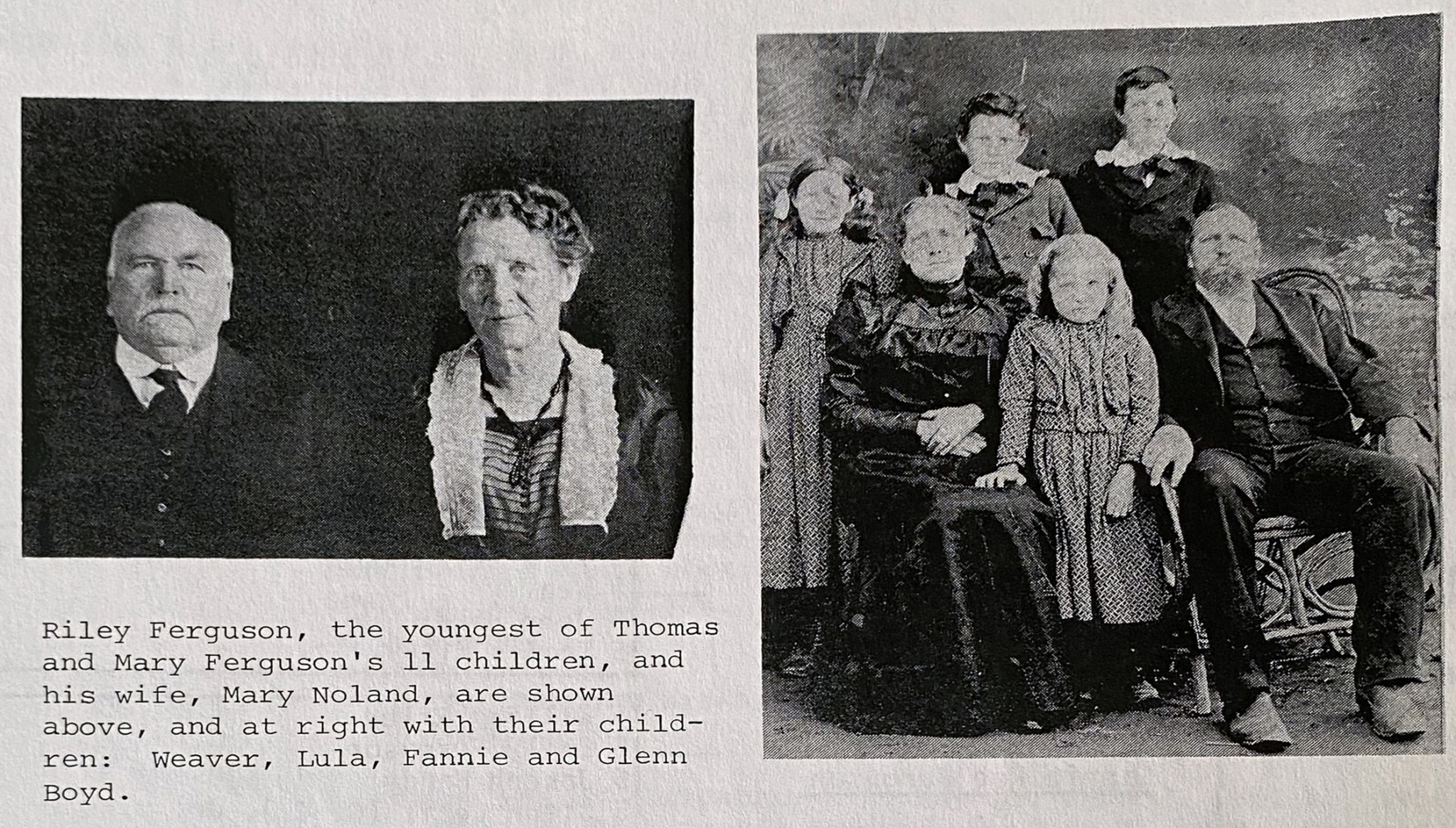
Kim’s direct ancestor Riley McKinley Ferguson married Mary Emily Noland in 1886. They had two daughters who lived to adulthood: Lula (married to Handy Kirkpatrick) and Fannie (married to Glenn Palmer, who was born in the Cataloochee Valley – now part of Great Smoky Mountains National Park). The two daughters each inherited half of their father’s farm estate.
“You can go down Hwy NC 209 through Rush Fork valley, and on one side of the road there’s Palmers and on the other side Kirkpatricks,” laughs Kim. “That’s how they divided it up.”
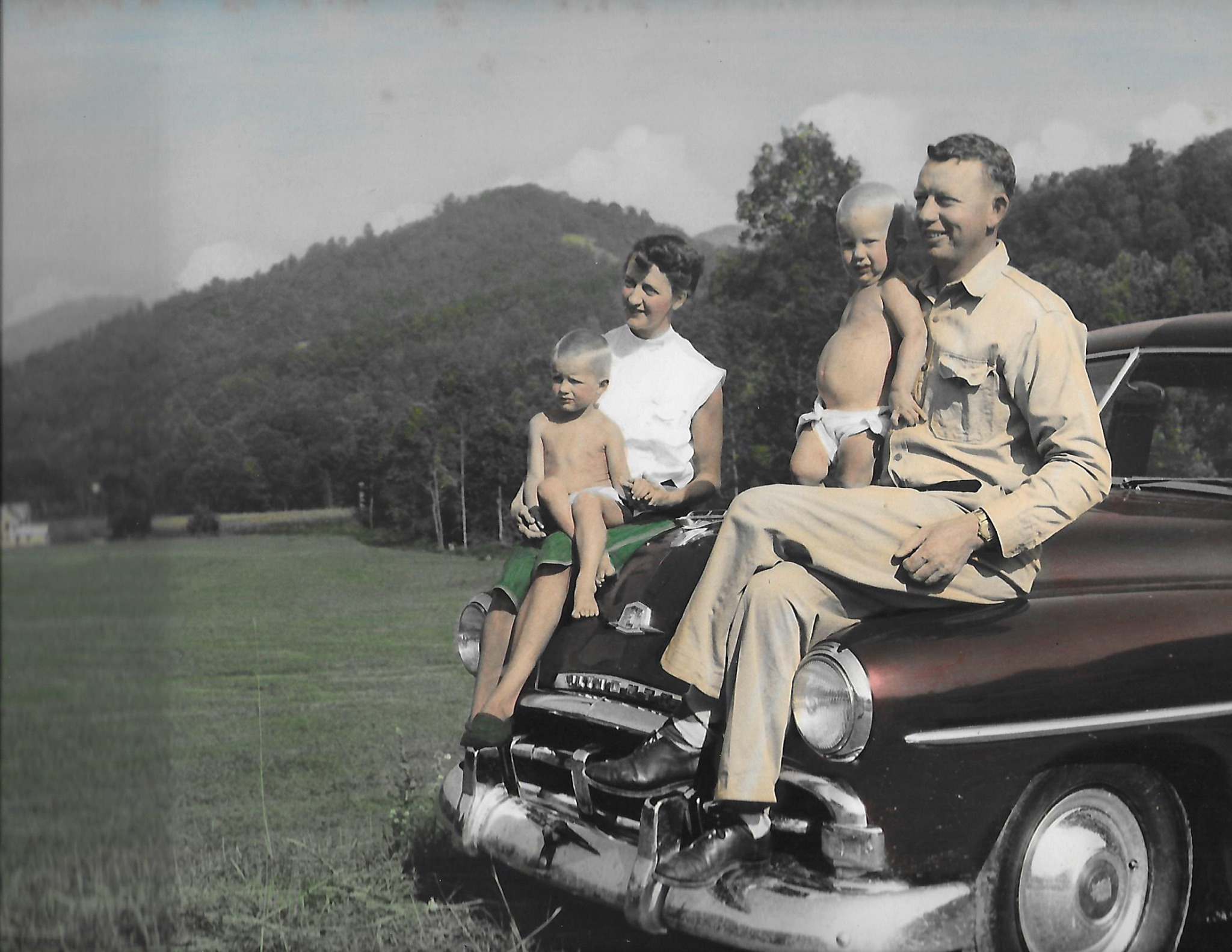
Kim’s father Joe Palmer ran a dairy operation on the family farmland he inherited in the Rush Fork community. A decorated Marine Corps veteran of World War II, he served 10 years in the NC General Assembly – first in the House of Representatives followed by four terms in the NC Senate. Kim’s mother, Nina Elise DeLozier Palmer, similarly possessed a long family history in the Western North Carolina mountains, dating to at least the early 1800s. She was born in 1926 in Judson, a Swain County town submerged beneath Fontana Lake after the construction of the Fontana Dam. During WWII, she worked in the FBI’s fingerprint Identification Division under J. Edgar Hoover, and afterward she pursued a successful career as an astute educator.
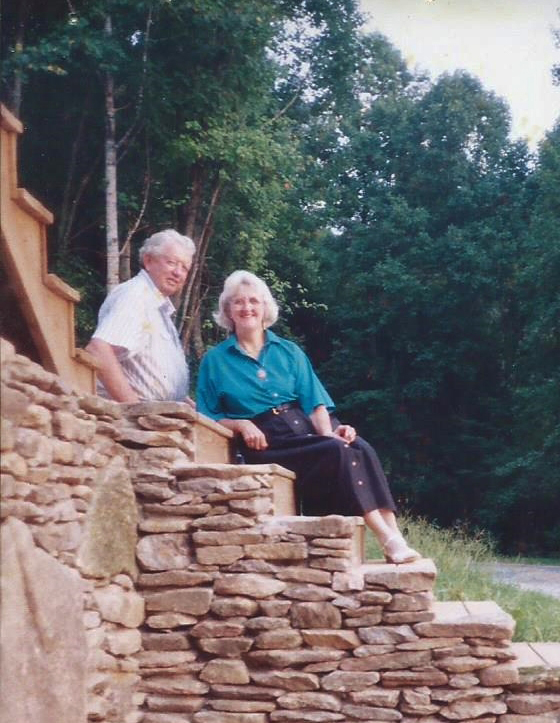
The Fines Creek land that Harrison and Elbert Ferguson had purchased passed initially to their own descendants. When later generations became ready to sell, they often contacted family members first. Kim recounts the story of how one of his distant cousins, Joanne, had moved to and married in Clemson, SC, and decided to sell the portion of Harrison’s land that she had inherited.
“She called my mother, who was teaching at Pisgah High School at the time,” shares Kim. “Mom told her ‘yes,’ we want to buy it. Daddy was in Raleigh in the legislature, so she took her paycheck from the school straight down to Clemson and signed it over to Joanne as collateral to hold the land until he got back and finished the deal.”
Joe Palmer continued purchasing land, piece by piece, in the Fines Creek community.
“He started buying the land in 1964 when I was a little boy,” recalls Kim. “He would just buy whatever piece he could at one time, and then come back later and purchase another piece. He spent years putting the Buckskin Branch Farm property together, which is what makes me so interested in saving it.”
Kim also attributes inspiration for conserving the land to his younger brother Chris Palmer (now deceased). Chris inherited the family cattle farm on Rush Fork and conserved his farmland through term easements with Haywood Soil and Water Conservation District.
“Chris was a visionary,” says Kim. “He understood the importance of preserving farmland for the future, and inspired both me and our brother John to conserve our respective lands.”
For Kim and Tracey, preserving their farm at Buckskin Branch for posterity underscores the importance of the history of the land and the generations of family heritage linked to it.
Art and Farming – Living with and Working the Land
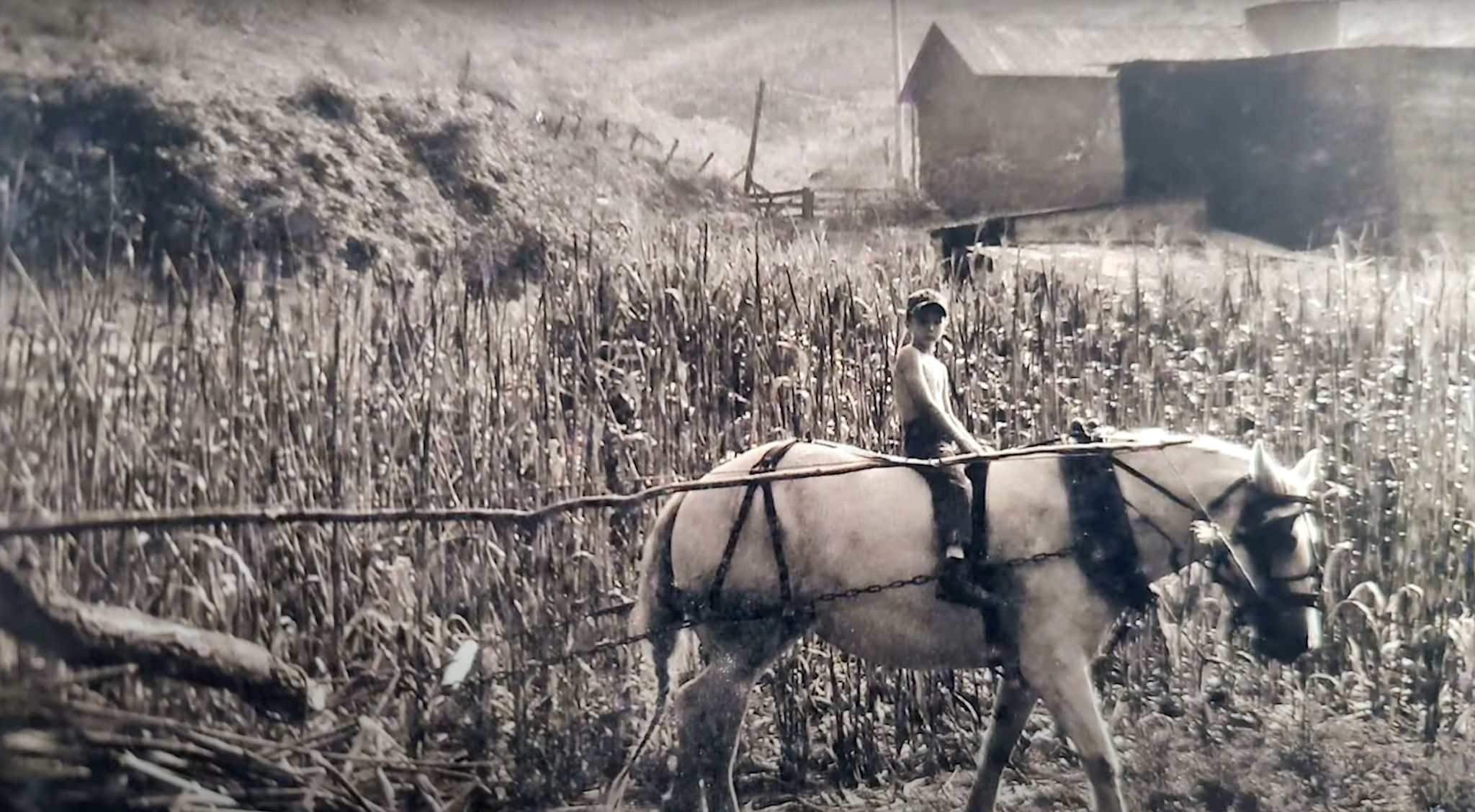
Kim’s livelihood has always revolved around farming. He grew up on the family farm in the Rush Fork community, then studied agriculture and dairy production at NC State University before returning home to run his father’s dairy operation.
“I didn’t know anything but farming,” shares Kim. “When we were little, we’d start off with small duties, picking rocks out of the fields or taking care of a calf. Later, I did some of everything – raising crops and livestock. The farm was constant, and the dairy had to run seven days a week. With the dairy buyout money [the Milk Production Termination Program 1986-87], Daddy purchased the big corn field that is the heart of Buckskin Branch Farm.”
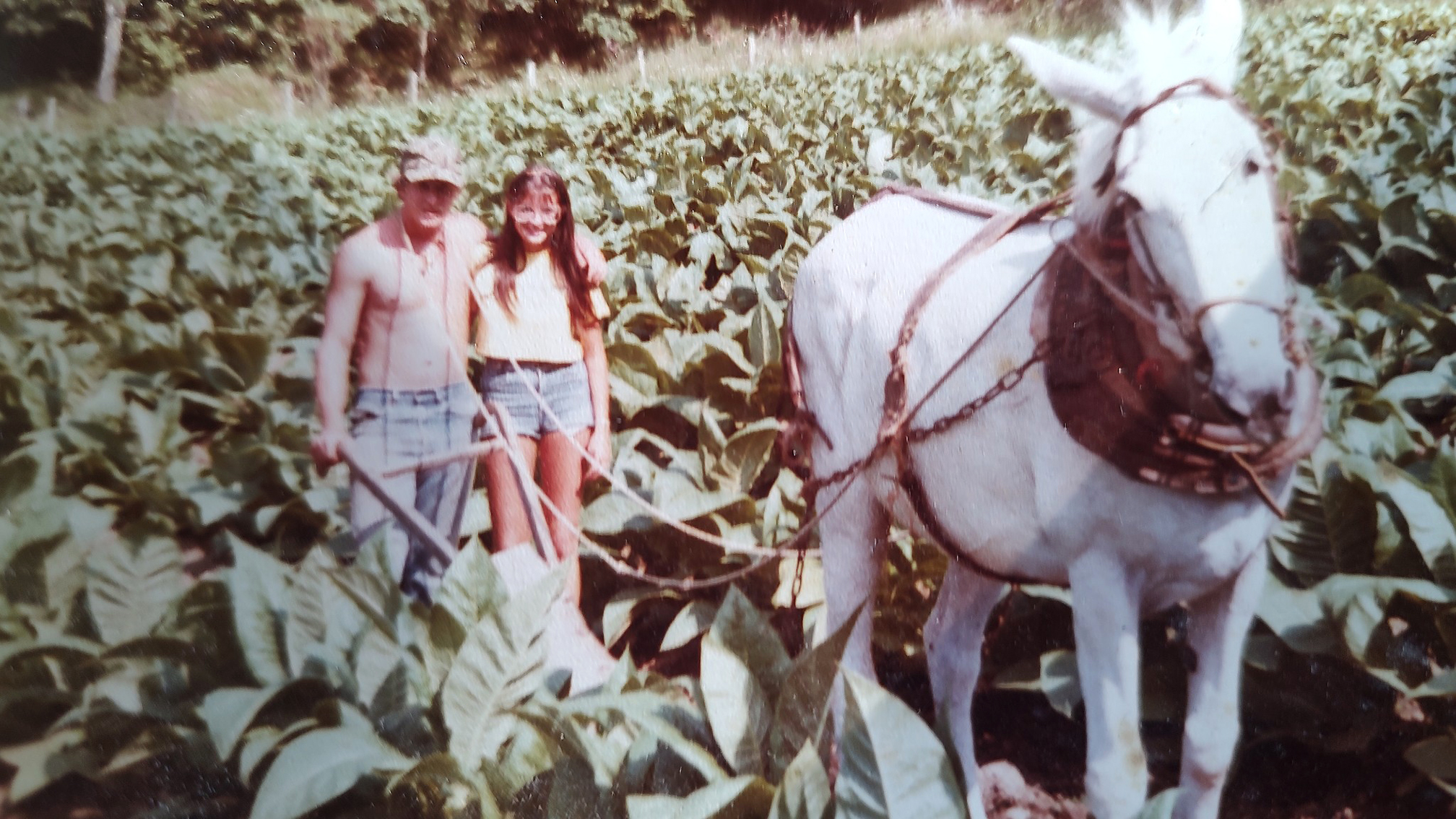
Kim and Tracey have been stewards of Buckskin Branch Farm since 1982, when they married and moved there to set up home. Over time, the farm produced tobacco, bell peppers, dahlia bulbs, corn for silage, tomatoes, and Black Angus cattle. Early on, the couple even cultivated the land together using mules.
“One teaspoon of tobacco seed was enough to grow an acre of tobacco,” recalls Kim. “We’d start planting beds in February. First, we’d burn the bed to the ground to kill all the weed seeds, then mix the tobacco seed with ashes or cornmeal to plant the beds, then cover them with straw and canvas. When the plants were big enough, we’d pull them up and put them in boxes and use the sled setter to put them in the fields.”
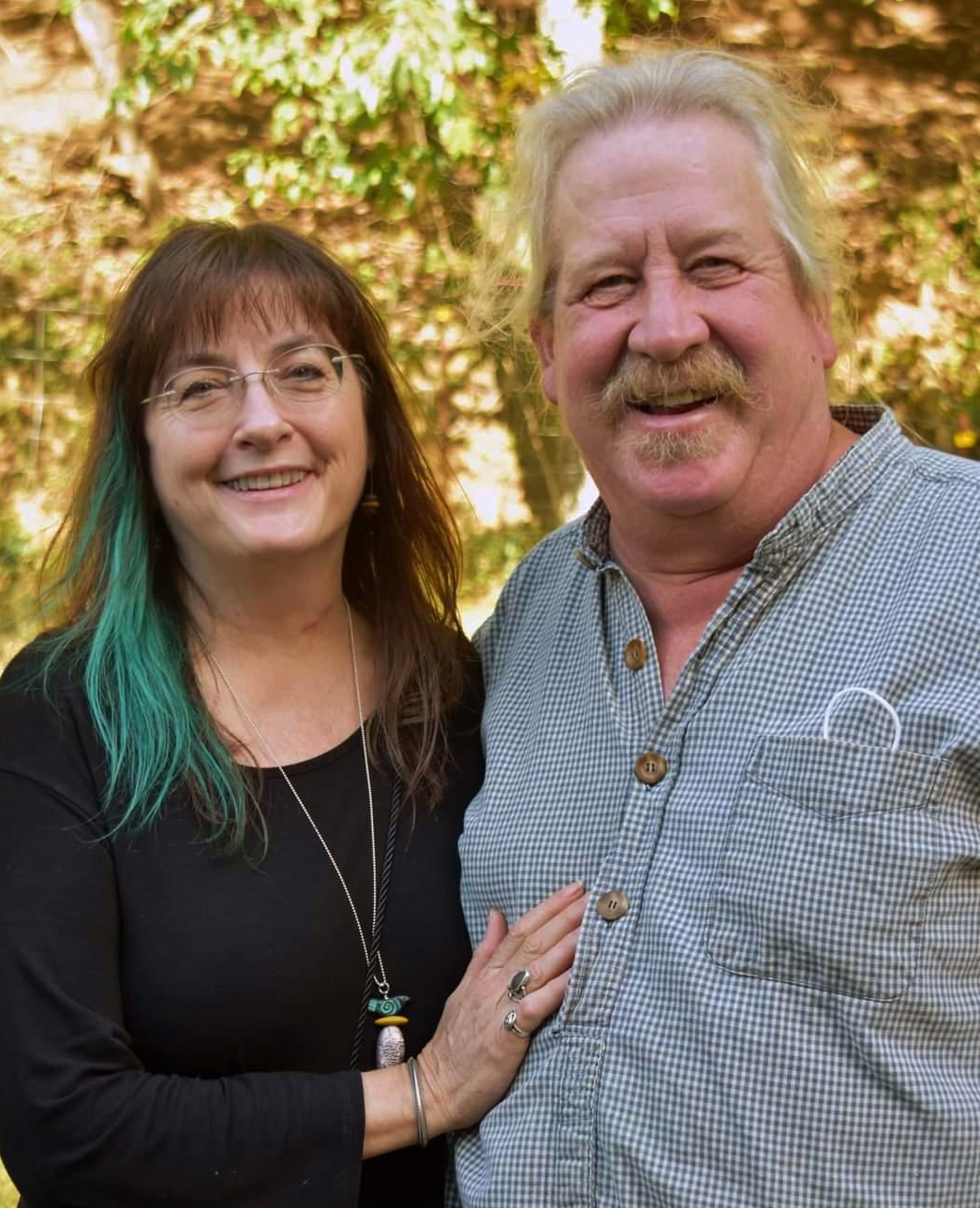
Kim and Tracey are the kind of couple that destiny seems to bring together. When Kim was a young man working at his father’s dairy farm, the state inspector at the time, Dan T. McCracken, recognized their kindred interests and quipped, “You should meet my daughter; she loves to ride horses and go camping and all that stuff, too.”
Later, Tracey met Kim while he was playing music, which he’d been doing since about 14-15 years old, and they’ve been together ever since. They share interests in music, riding horses, historic re-enactment as a hobby – and a deep and abiding love for each other and for the mountains.
In addition to working the farm part-time along with Kim, Tracey worked a ‘town job’ until 2017, when she quit to focus on artwork full-time.
The land around Buckskin Branch Farm provides inspiration for Tracey’s art, which is showcased on her website Bonnieblinkstudio.com (‘bonnie blink’ is Scottish for beautiful view). Tracey grew up in the Clyde, NC, area, although her McCracken ancestors once called the Fines Creek community home; in fact, Kim’s sister now lives in the home built by Tracey’s great-great-grandfather Thomas Benton McCracken.
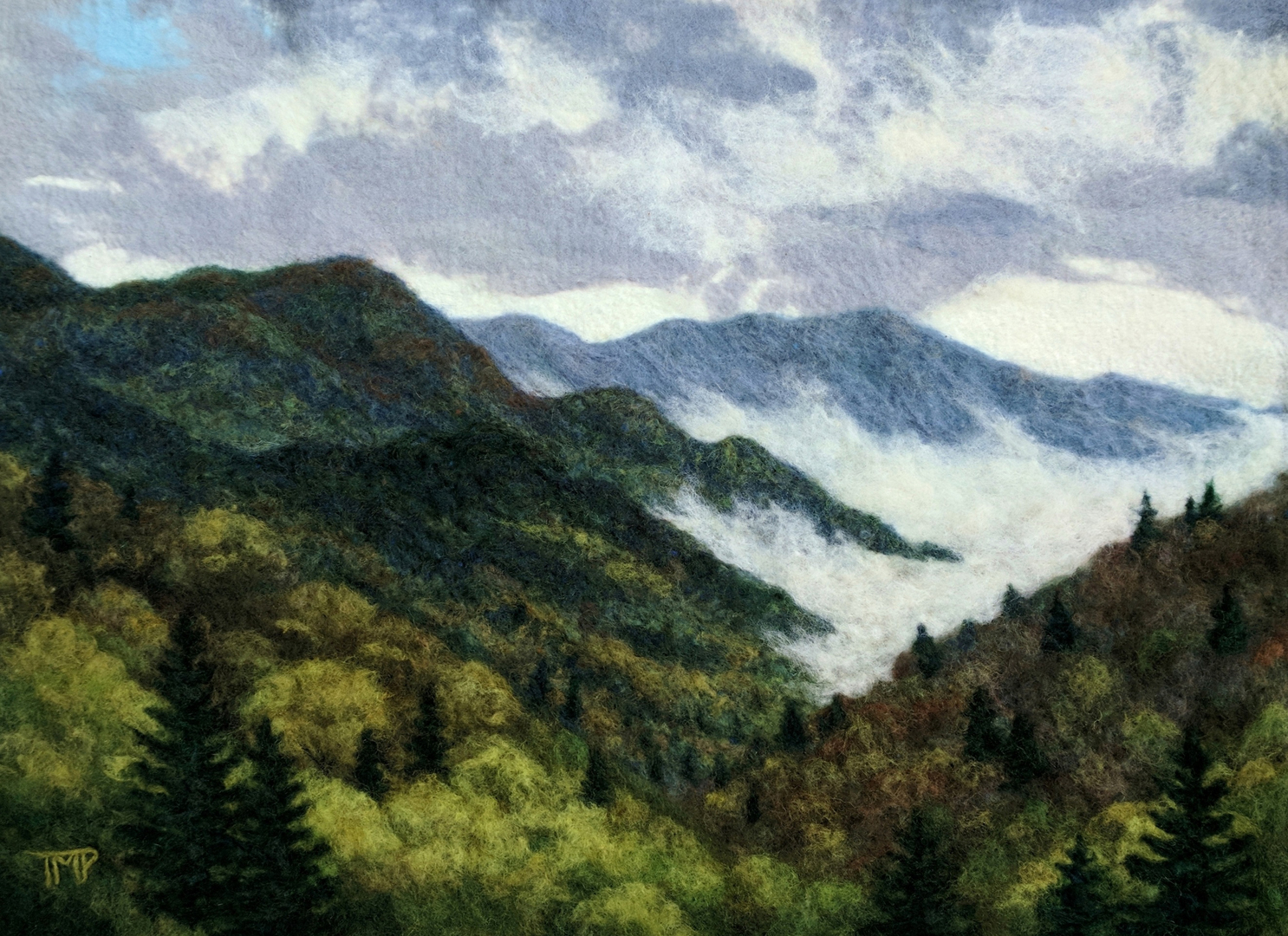
A self-taught artist and member of the Southern Highland Craft Guild, Tracey’s felted wool painting technique draws from her Scottish roots. Using textured layers of wool, she creates one-of-a-kind works of art that showcase the natural beauty of the Appalachian mountains – from burley tobacco growing in a field to vibrant fox faces and Smoky Mountain sunsets. She wet felts the piece first and then needle felts in the details, using a sharp needle with barbs to push bits of wool into the wet felted background.
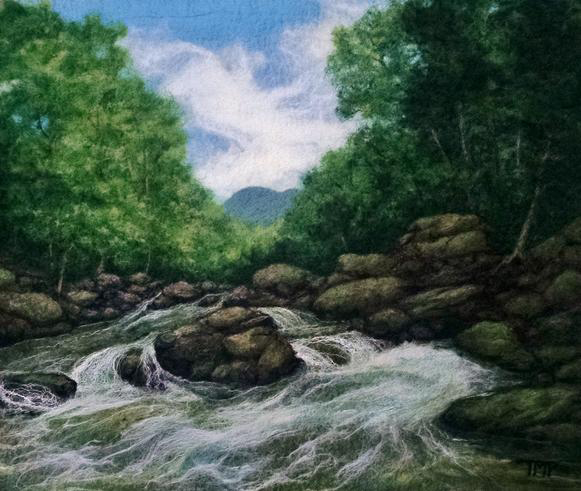
“There are no streetlights, no other houses in view,” says Tracey. “It’s beautiful just like it is. When I married and moved here, I remember thinking it was like the end of the world. It’s a very beautiful area, and we are so blessed to live here. One of my favorite things is taking our dog for a walk in the afternoon and checking on all the special trees and things I love. I can’t wait to see the rhododendron bloom. I like being in the woods in winter even better than summer. All the scenery around me inspires my painting and felting art.”
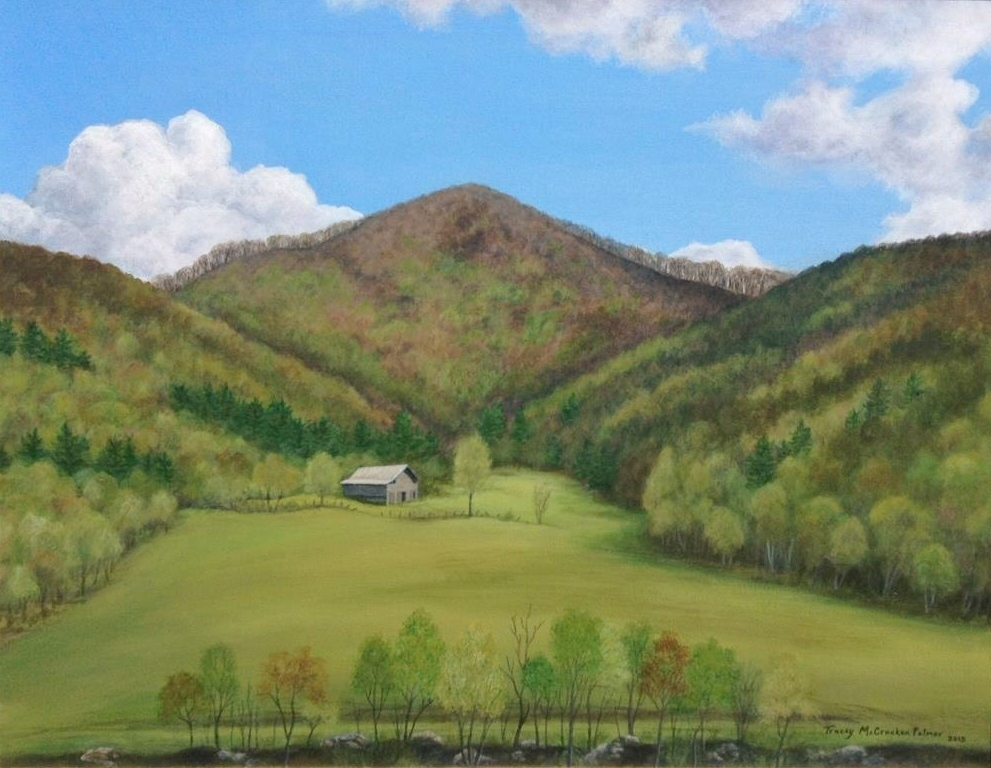
“We just have a beautiful view of the Great Smoky Mountains National Park here,” adds Kim. “Every day we see the sunset over the Smokies, and it has never been the same twice. You never know what you’re going to see the next day.”
Tracey’s art reflects the livelihoods and landscape around them: individual animals, scenic landscapes, and snapshots of farm life. Kim recalls how Tracey once raised funds to repair the roof of a historic barn on their property by selling her artwork. For her, the painting and fiber arts she crafts are part of the heritage of working and living with the land
“We’re thrilled to know that this land is going to be safe from development,” says Tracey. “We wish we could save more.”
Farm Transition
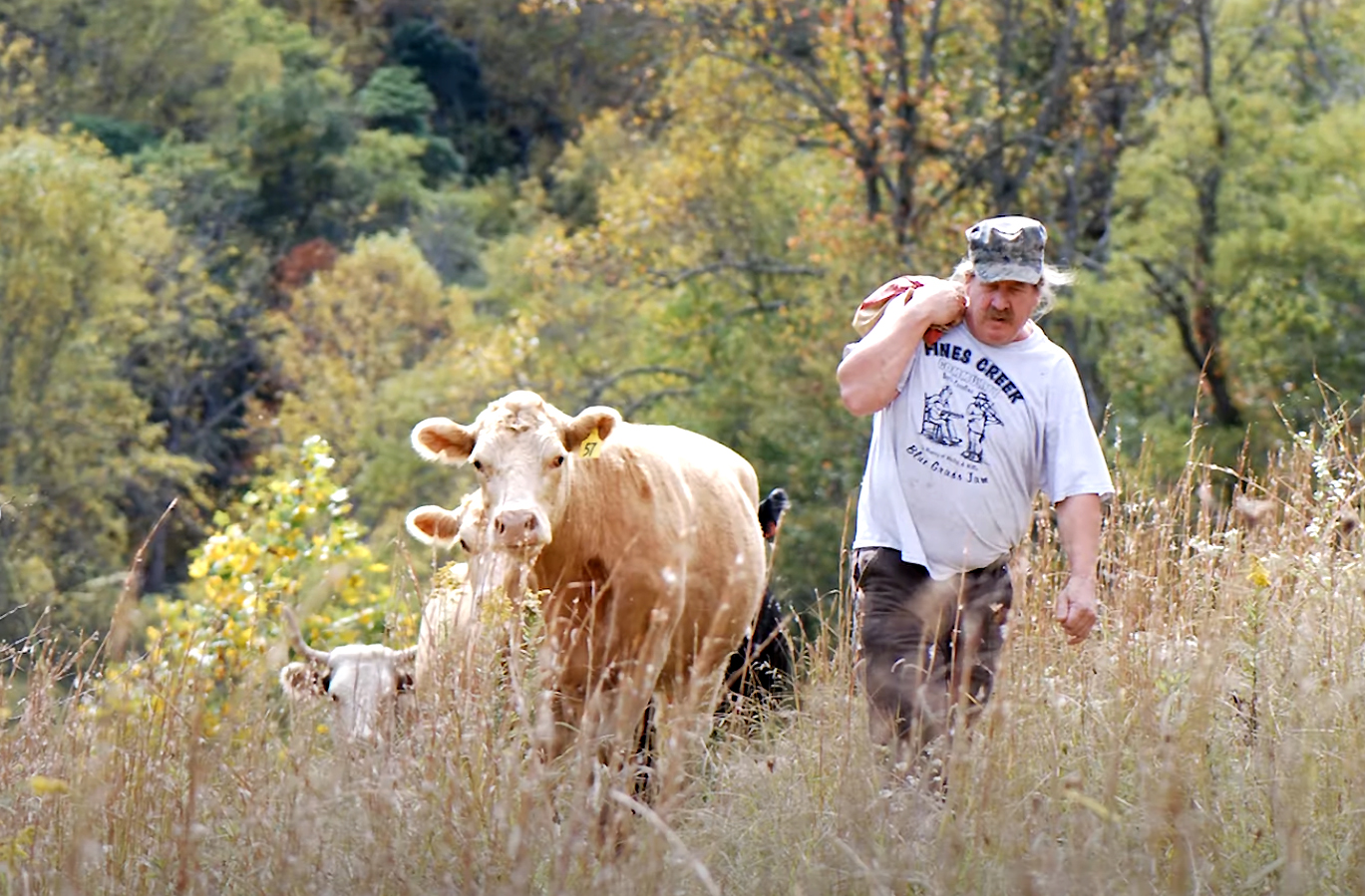
“We really had two main reasons to preserve this land,” continues Kim. “The first involves all of the million wonderful things about the land – the mountains, views, water, and wildlife. The second reason is the farm itself. If you study NC agriculture, you see that we’re losing thousands of farms every year to development. It’s very important to us that Buckskin Branch remains a working farm. We wanted to preserve it to promote local agriculture.”
Buckskin Branch Farm provides an excellent example of a successful farm transition. With the agricultural conservation easement project complete, Kim is now able to retire while his partner for the past 8-10 years steps up to take over farm operations.
“I would never have wanted to retire if we hadn’t found someone to take it over,” says Kim. “Farming is hard work, all day. You have to love it or you’re not going to do it.”
Jonathan Ferguson, a distant Ferguson cousin, is taking charge of farming on the property. Kim is ready for retirement but excited to see the land stay productive for future generations.
“They will continue raising cattle and plan to grow ears of ‘picking’ corn,” he adds, reflecting on the future. “It’s really cool to see this transition happening now, while I’m alive.”
Tracey and Kim feel that they have fulfilled a responsibility to the land, and to all of those who have lived here before them. By protecting Buckskin Branch Farm, they have helped to preserve the character of the community, the scenic beauty of the mountains, and the natural resources that sustain life – clean water sources, wildlife habitat, and agricultural soils.