Year of the Spruce

In 2026, Southern Appalachian Highlands Conservancy is expanding on our previous work in spruce-fir habitat restoration, thanks to a grant from the Cornell Lab of Ornithology‘s Land Trust Bird Conservation Initiative and support from The Nature Conservancy’s Plant a Billion Trees program.
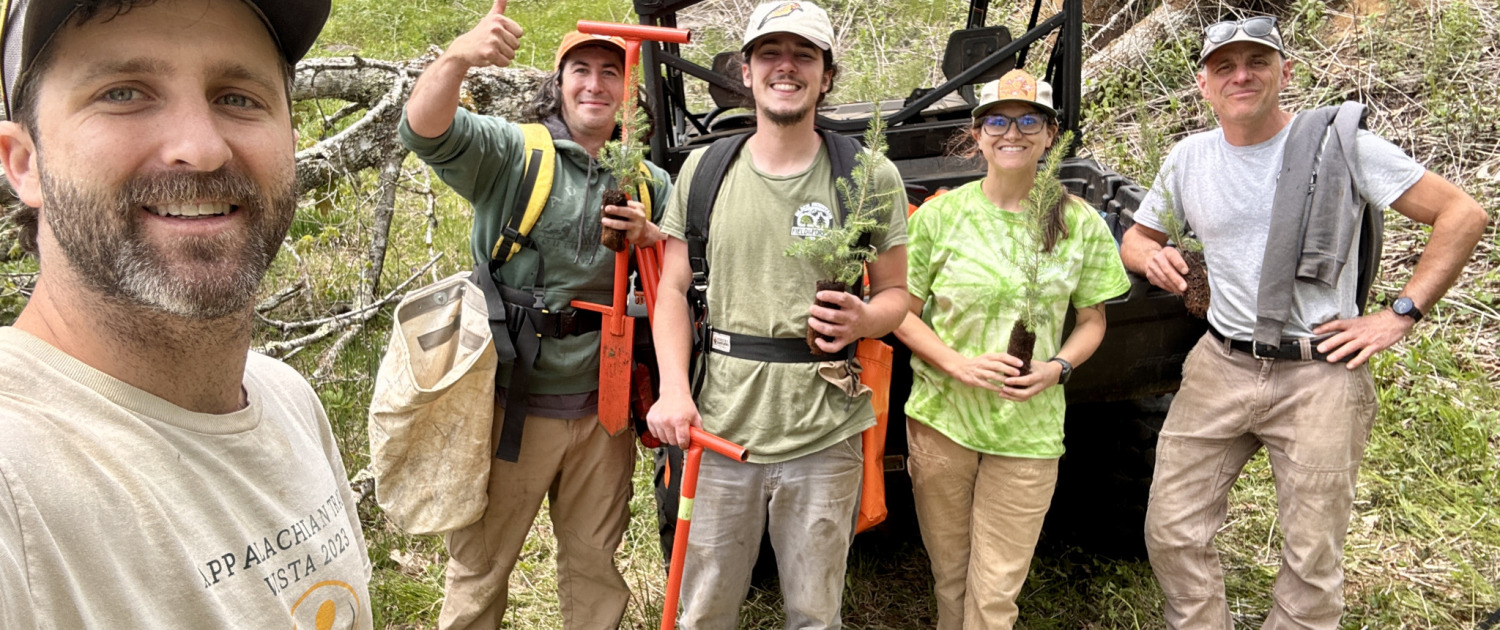
“Our spruce habitat restoration work days this year are part of landscape-level restoration work being conducted by SAHC and federal partners to address the devastating impacts of Tropical Storm Helene,” says Roan Stewardship Director Marquette Crockett. “This work reduces wildfire risk while restoring globally rare habitats. SAHC is expanding conifer forests on our preserve directly adjacent to the heart of red spruce-Fraser fir forests on Pisgah National Forest.”
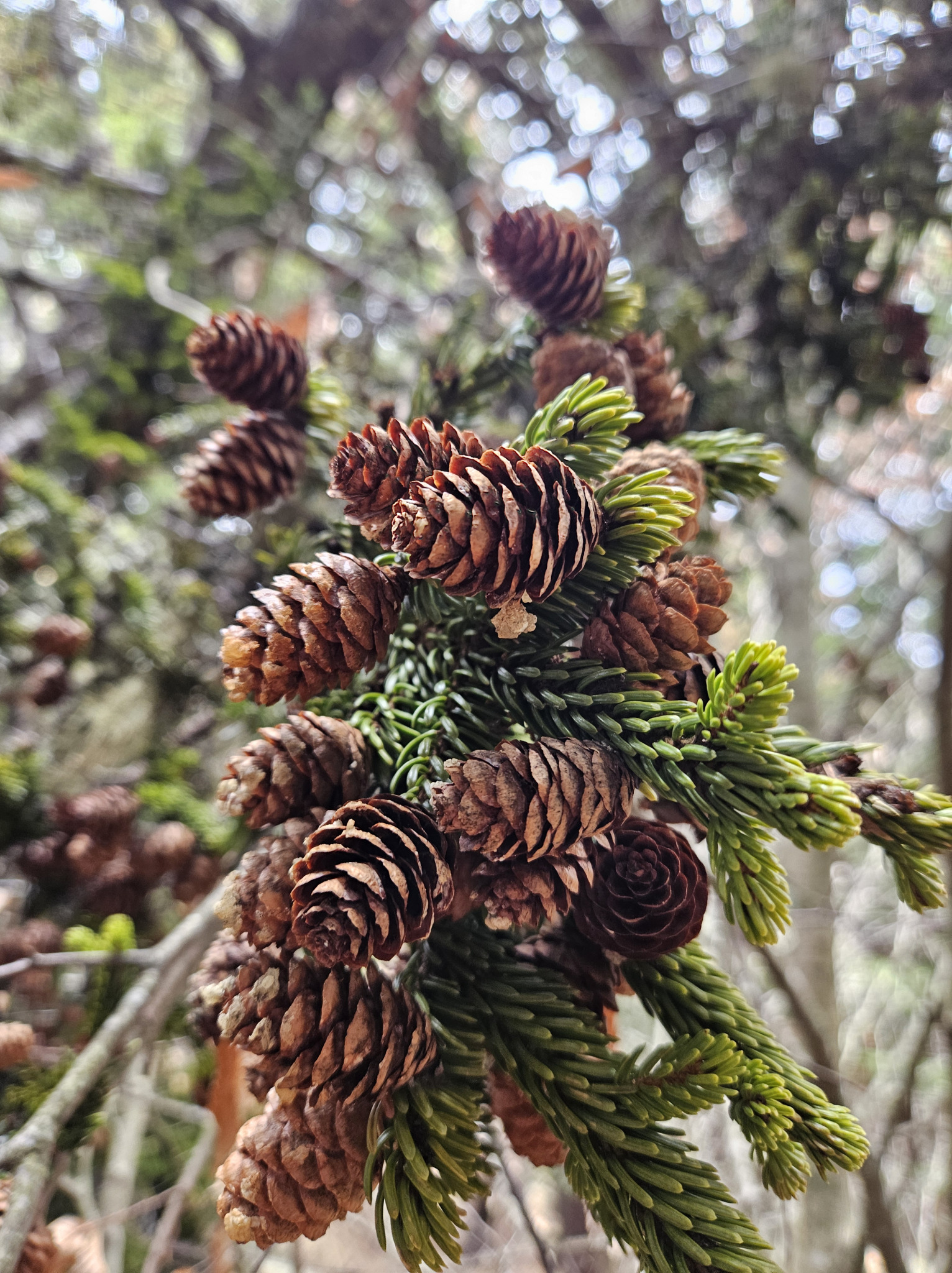
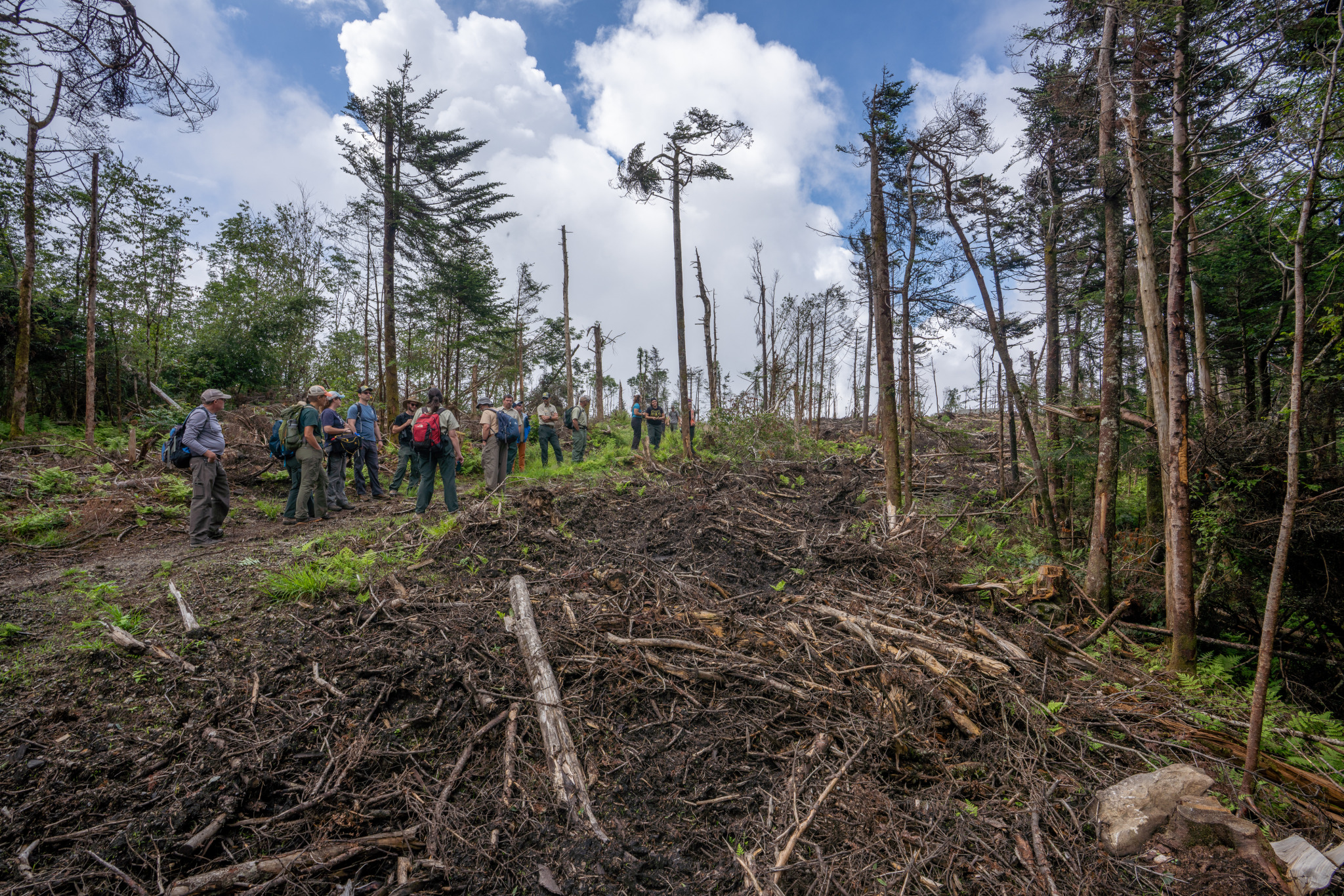
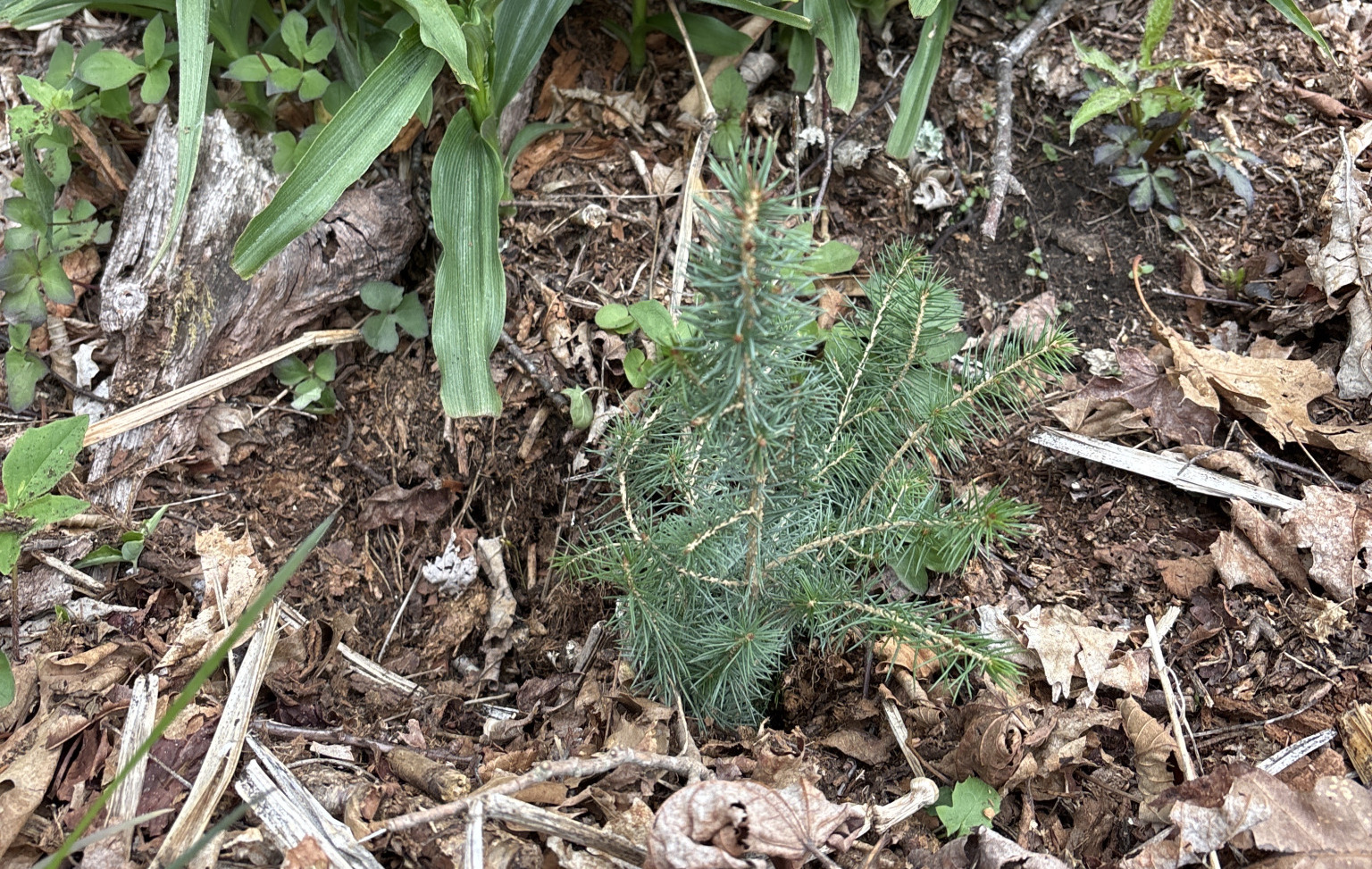
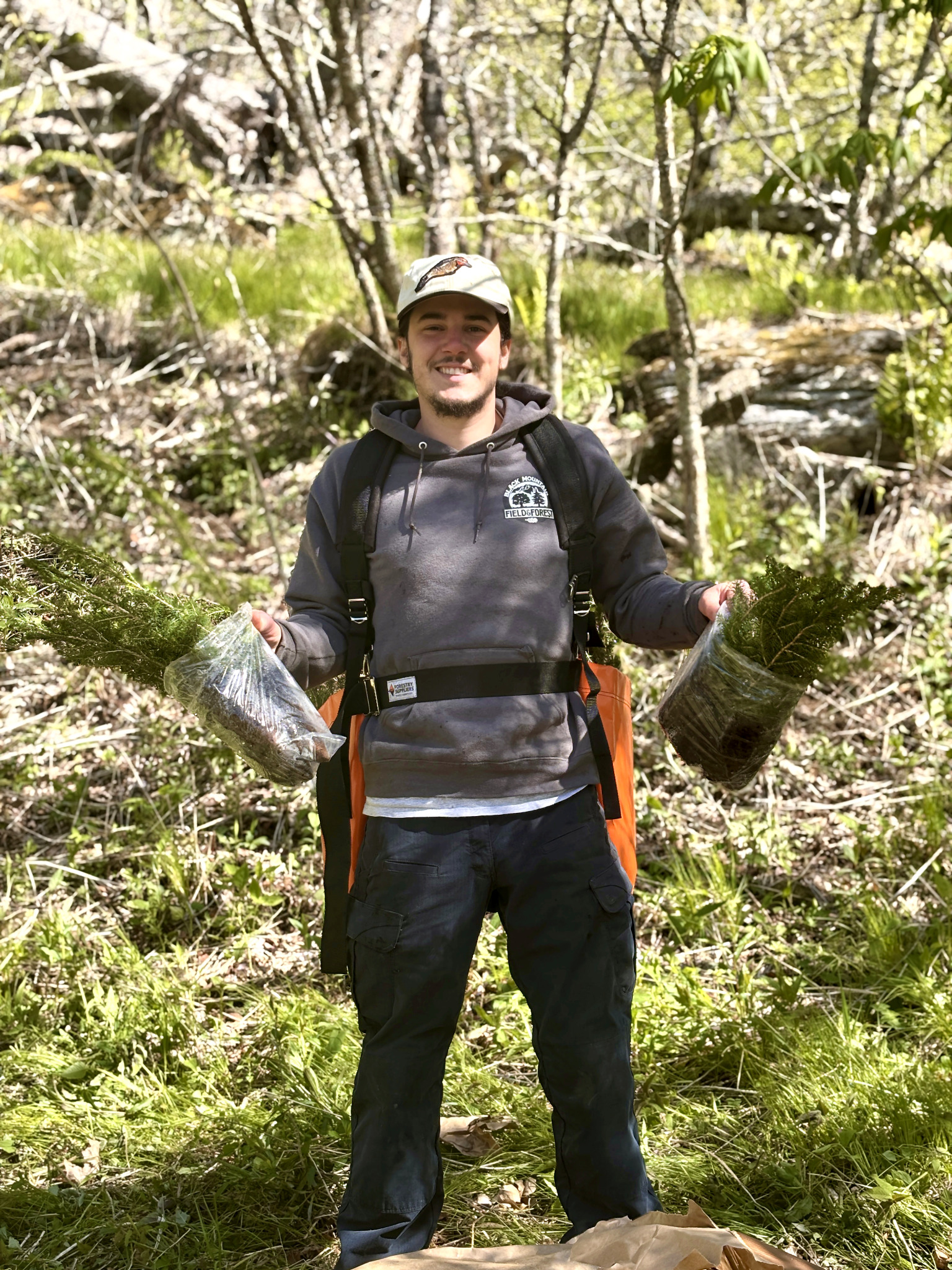
SAHC and our partners at the Appalachian Trail Conservancy and The Nature Conservancy recently planted approximately 7,000 native red spruce seedlings in devastated blow down sites – some on U.S. Forest Service land and others in remote areas on SAHC’s Roan High Preserve.
Why Spruce?
Red spruce-Fraser fir forests once covered as much as 1,500,000 acres in the southern Appalachians; by 1895, this had been reduced to 225,000 acres by logging and fire. The remnants of this great forest persisted only in a few ‘sky islands’ scattered across the highest mountains of the southern Appalachians. During a survey in the 1930s, forester Leon Minkler stated that “unaided by man, these cutover and burned areas would take 500-1,000 years to again clothe themselves in spruce or fir.”
Eighty-eight years later, Roan Mountain supported about 2,500 acres of red-spruce and Fraser fir forest – until Helene reduced the forests by another 15-20%.
“Southern Appalachian red spruce-Fraser fir forests are listed by multiple studies as one of the most endangered ecosystem types in the United States,” explains Marquette. “Not only are they threatened by climate impacts and acid deposition, but they are also under attack by pests like the balsam woolly adelgid. Despite the threats, these forests support multiple federal and state listed rare species, including the federally endangered spruce-fir moss spider and Carolina northern flying squirrel, the rare Weller’s salamander, Appalachian Cottontail, and more. Cold water streams flowing from these forests support Appalachian brook trout and other rare aquatic species.”
SAHC is an active member of the Southern Appalachian Spruce Restoration Initiative (SASRI), working to restore red spruce on high elevation sites throughout our region. By expanding and connecting habitat ‘islands’ of spruce, SASRI partners hope to improve and preserve habitat for rare and endangered species. For the past seven years, SAHC has been putting restoration techniques to work on high elevation preserves in the Roan Highlands.
“This work centers on the ecosystem function of the tree,” continues Marquette. “While we realize that we do not have the capacity to recreate an entire ecosystem, we can take active steps to support natural regeneration of these areas and provide conifer habitat that many of our rare species depend on for food, shelter, and shade. Unfortunately, because balsam woolly adelgid attacks Fraser fir before it becomes mature, our best chance of getting conifer in the canopy at these sites is red spruce. Expanding spruce conifer habitat may help save species that depend on it, for years to come.”
For example, new research by Jenifer Mallinoff on Roan Mountain and Grandfather Mountain clearly shows that having more conifer in the transition zone between spruce and hardwoods may be an important key to sustaining at least five rare mammals on our landscape (published in the journal Ecology and Evolution, Oct. 2025).
Spruce habitat benefits multiple rare and declining bird species in the region, including Northern Saw-whet Owl, Hermit Thrush, Blackburnian Warbler, and Red Crossbill. Carolina northern flying squirrels are only found in areas of high spruce density. Spruce and fir trees provide shade in delicate rock outcrop habitat needed by the tiny spruce-fir moss spider.
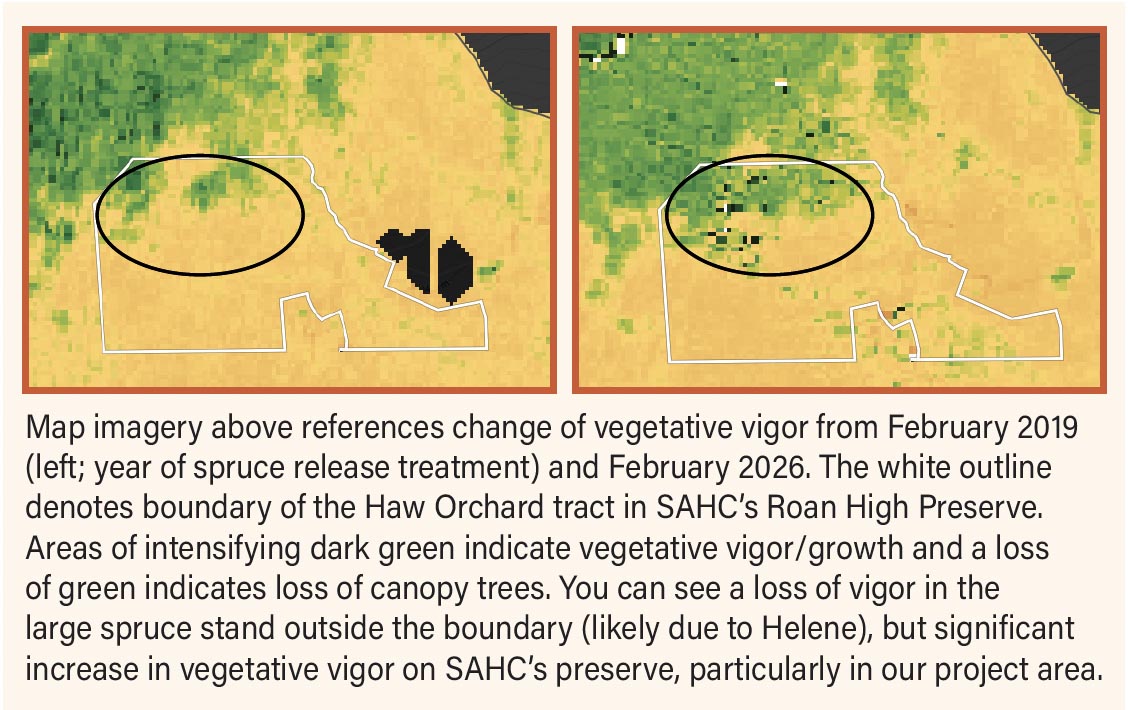
“We have encouraging news to share,” adds Marquette. “When we look at aerial images of the Roan Highlands, we can see the devastating impacts of Helene on spruce-fir forests on Pisgah National Forest. But, we can also see increases in spruce and fir canopy cover on SAHC preserves where active conifer release and planting work has been taking place over the last several years.”