Cane River Confluence
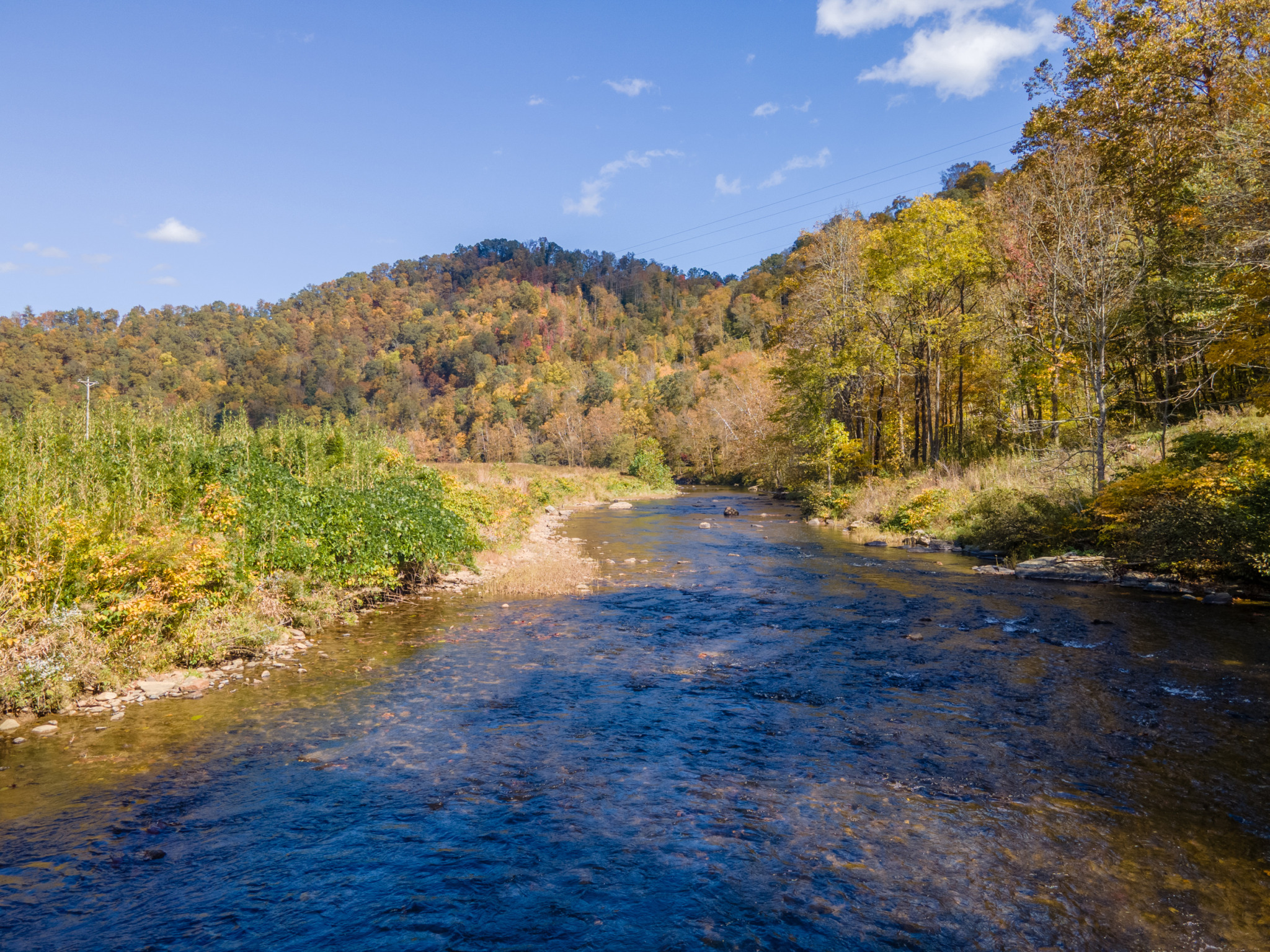
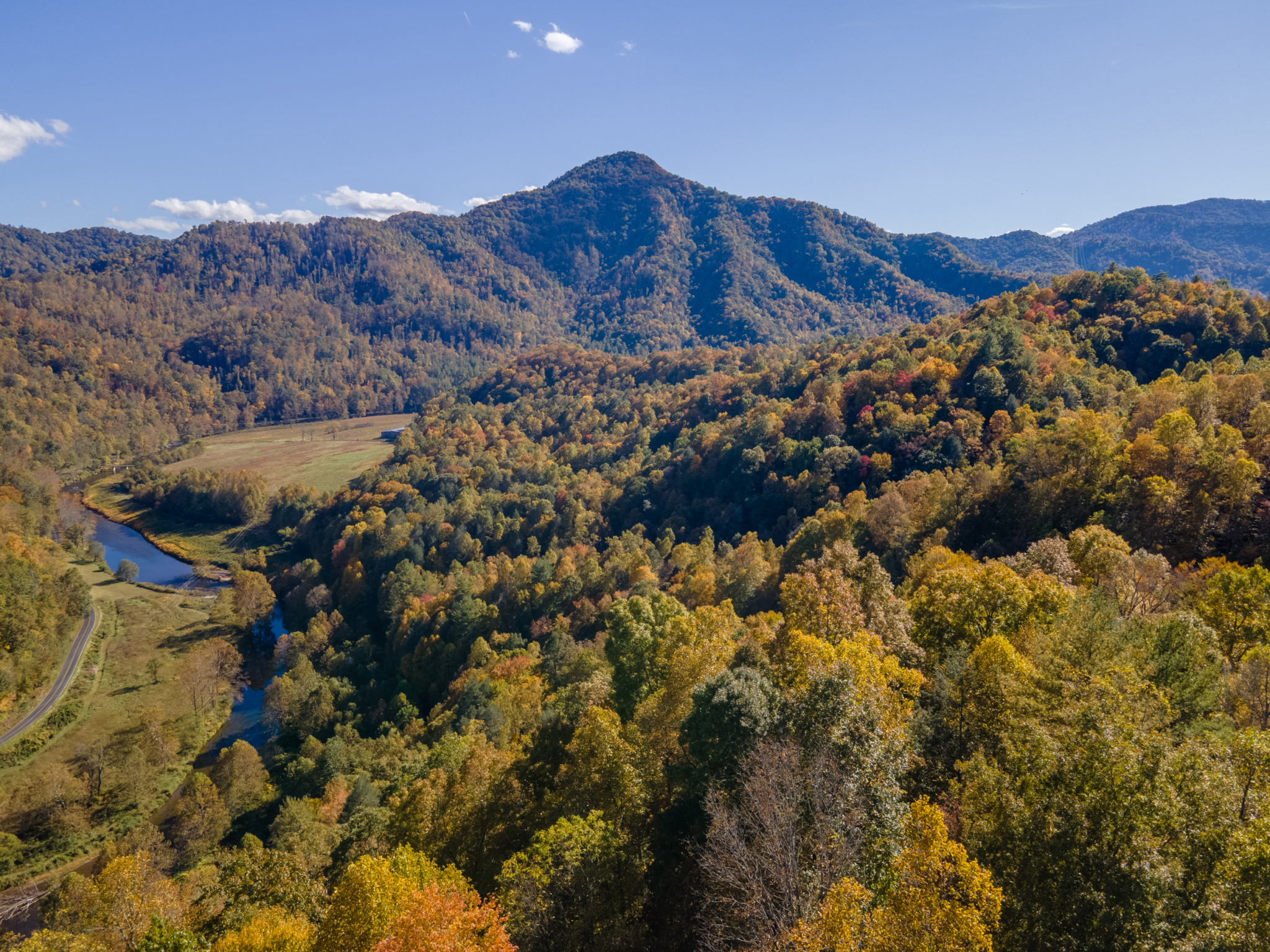
In November of 2025, Southern Appalachian Highlands Conservancy purchased 433 acres in Yancey County at the confluence of the Cane River and the North Toe River, where these rivers merge to form the Nolichucky River.
The acquisition permanently protects natural resources, aquatic habitat, and a substantial stand of native river cane. The tract has more than 3 miles of frontage on the Cane and Nolichucky Rivers, which are a US Fish and Wildlife Service Critical Habitat for the endangered Appalachian Elktoe mussel, and which provide exceptional habitat for other rare species.
“SAHC’s new Cane River Confluence preserve showcases extraordinary beauty and critical natural resources,” says Land Protection Director Michelle Pugliese. “The presence of rare and culturally important river cane for Native artisans, as well as vitally important water resources, makes this acquisition a spectacular success story.”
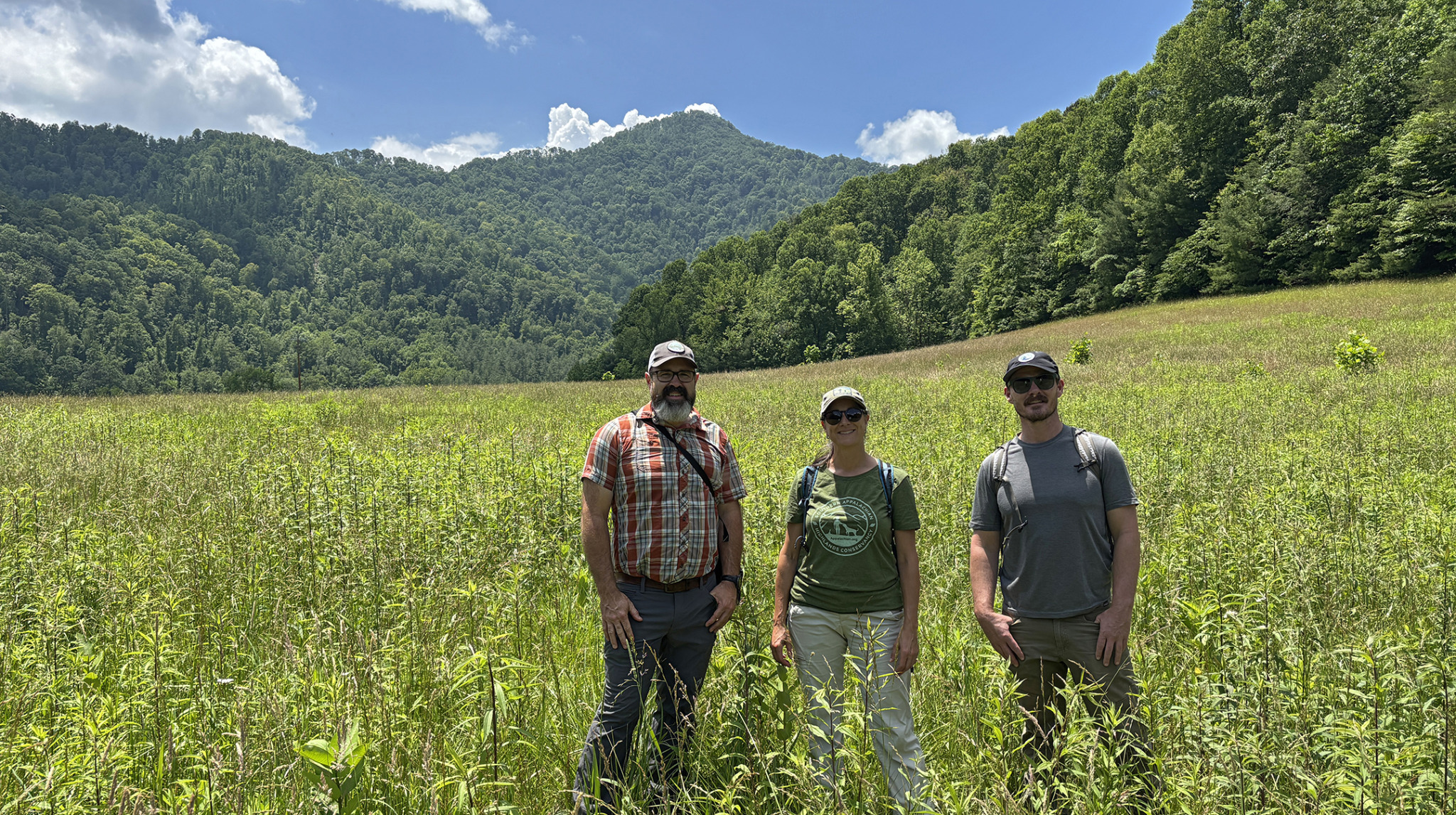
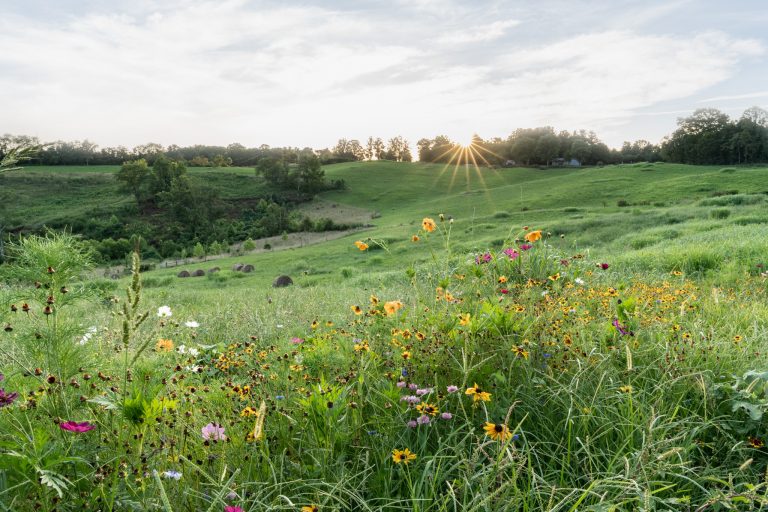
Forested slopes on the property reach just under 3,000 ft in elevations, and more than 90 acres of open pasture spread across the lower elevations of the tract.
Ecological Importance
The property includes and adjoins riparian areas and waterways that provide habitat for federal and state threatened and endangered species, and species of special concern, including the Appalachian elktoe (Alasmidonta raveneliana), wavy-rayed lampmussel (Lampisilis fasciola), blotched chub (Erimystax insignis), and eastern hellbender (Cryptobranchus alleganiensis). A significant stand of river cane, a culturally important native species, thrives on the land. Future expansion of the river cane habitat could assist with stream restoration and help mitigate against future flooding impacts in the region.
River Cane
“This rare and culturally significant site contains one of the largest remaining stands of river cane (ᎢᏯ / iya), a plant essential to Cherokee cultural practices,” says Dr. Caleb R. Hickman, Supervisory Biologist of the Eastern Band of Cherokee Indians (EBCI) Natural Resources Department and Citizen of the Cherokee Nation. “For generations, we have used river cane to make baskets, blowguns, mats, and ceremonial tools. These practices are not just art — they are acts of identity, resilience, and intergenerational teaching. River cane has declined by more than 98% since colonization, and yet it offers powerful ecological benefits — buffering floods, filtering agricultural runoff by more than 90%, and providing habitat for rare species like the Swainson’s warbler and northern long-eared bat. With partners like the University of Georgia, we are studying how traditional harvesting enhances cane regeneration and patch stability over time.”
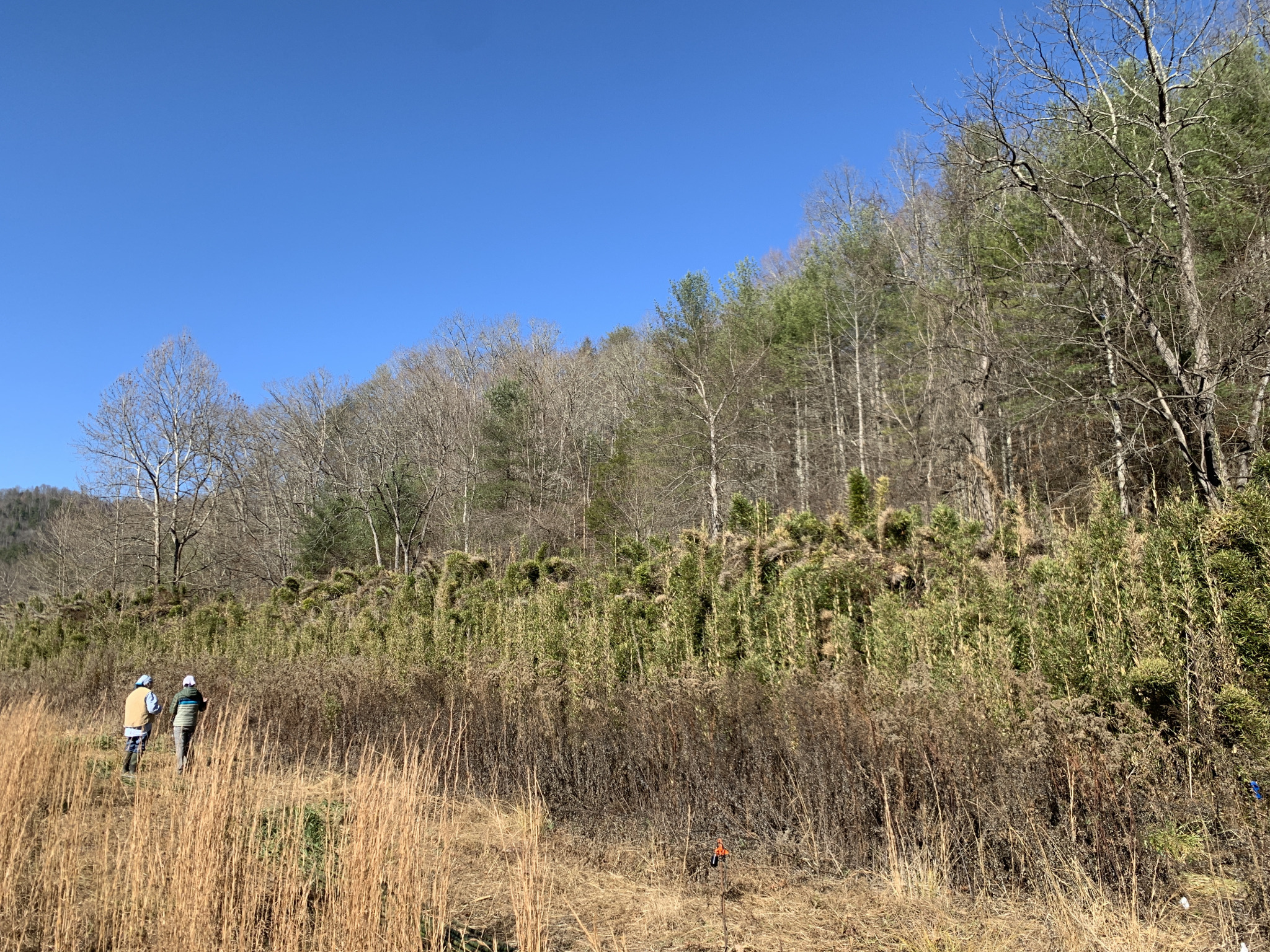
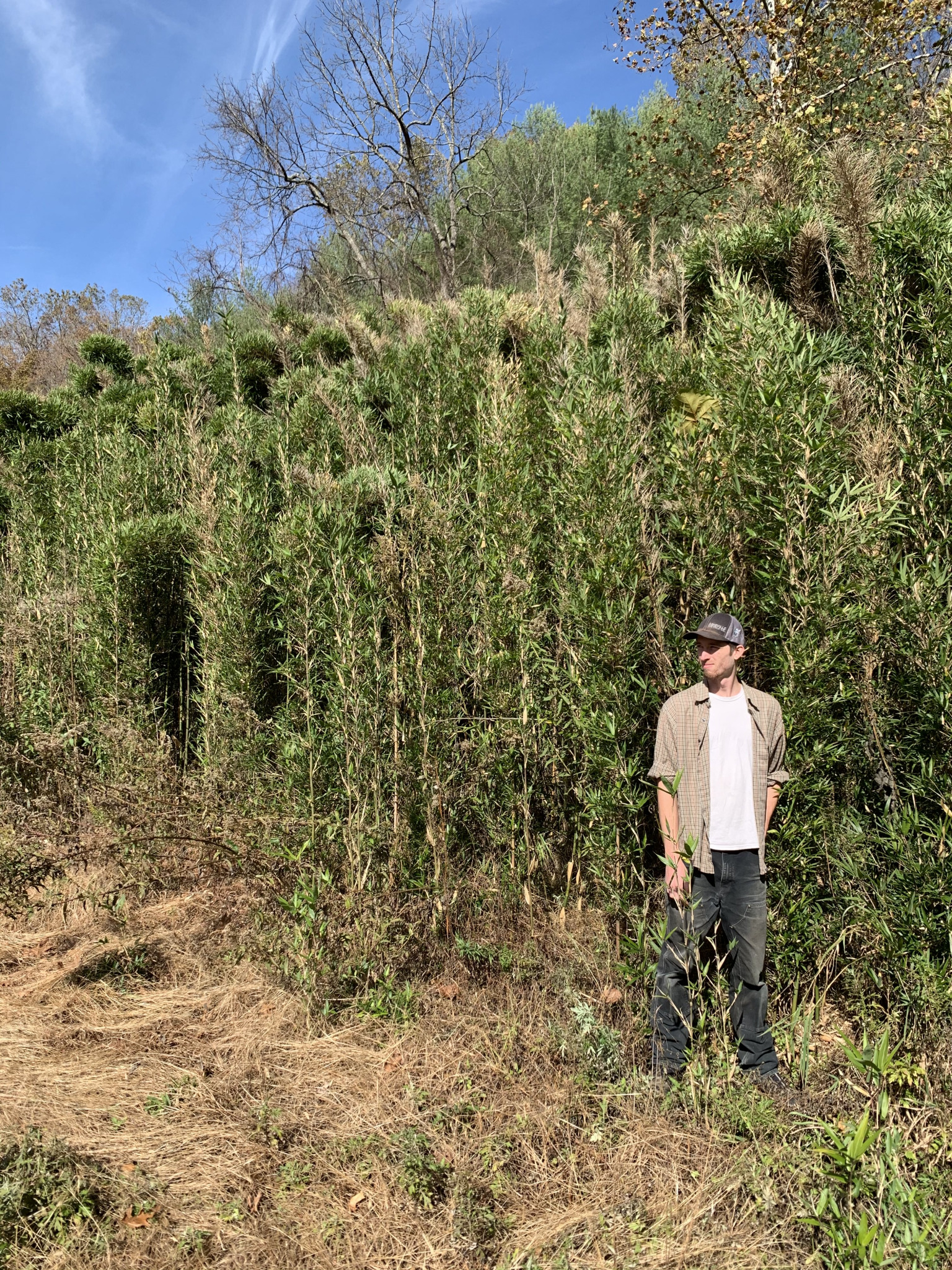
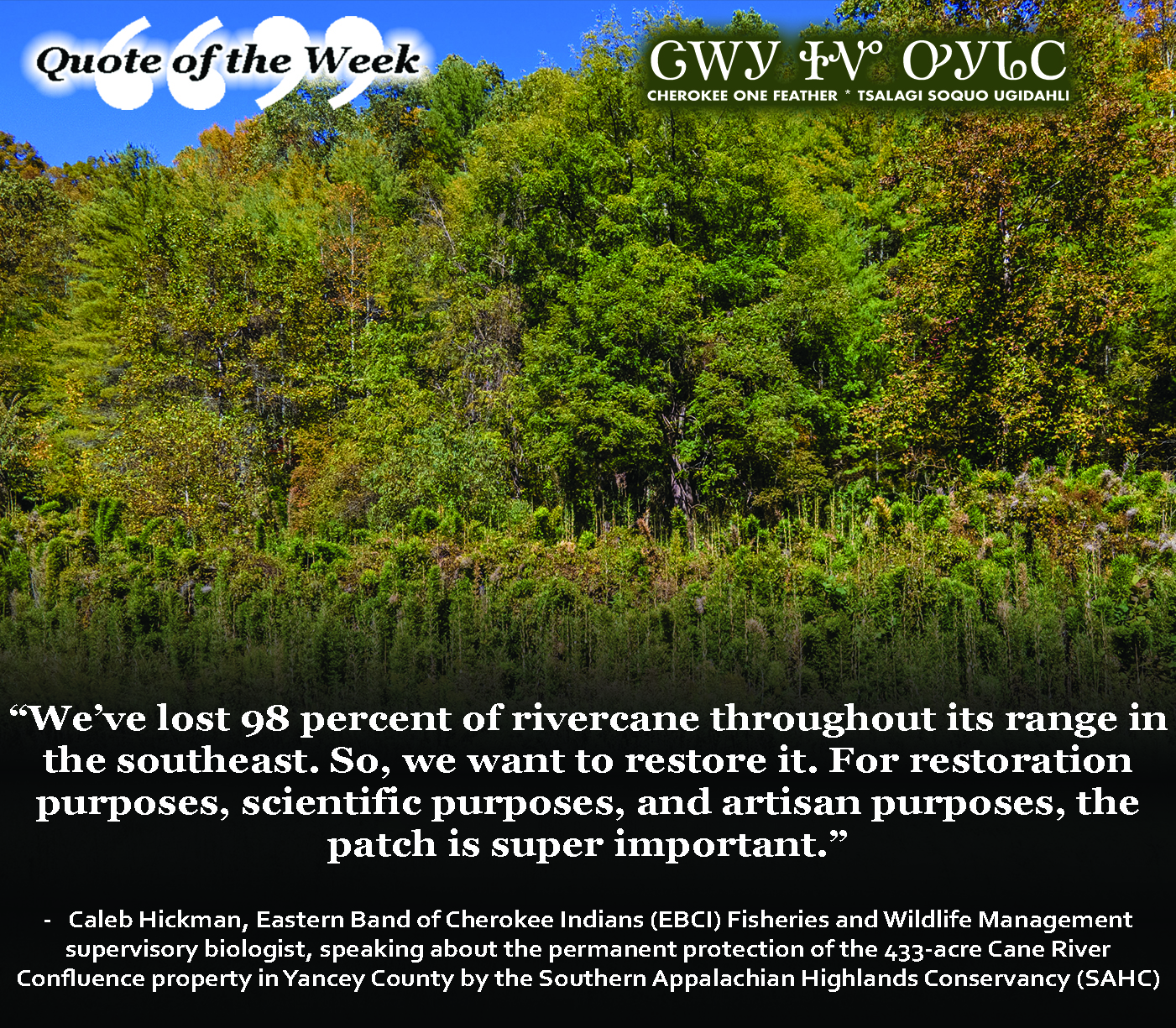
River cane is one of three native bamboo species in the southeastern United States. A dense patch of river cane, called a canebrake, is considered a critically endangered ecosystem. In 2012, river cane was added to the Cherokee Nation’s Culturally Protected Species list.
SAHC’s new Cane River Confluence preserve contains one of the largest remaining canebrakes in North Carolina, and among the largest in the southeastern United States.
Canebrakes help stabilize streambanks; study plots on the property withstood recent major flood events, including hurricane Helene.
EBCI had permission from the former owners to sustainably harvest river cane from the property, for use in artisan crafts. Working with the former landowner, the EBCI Natural Resources program partnered with a University of Georgia PhD student to study the river cane on this property and to evaluate different management strategies and artisan harvesting impacts. SAHC’s purchase of this property will preserve access for the EBCI and its partners to this significant canebrake.
“When we were provided access to this site in 2023, it enabled one of the largest traditional cane harvests in recent memory,” adds Caleb. “Dozens of Cherokee artisans, elders, and youth gathered not only to harvest but to learn, share, and reconnect with a plant and place rooted in ancestral memory. That kind of opportunity is rare, and it matters deeply. SAHC has shown genuine commitment to supporting Cherokee cultural renewal through land access and stewardship.”
SAHC plans to own and manage the property for the long term, to preserve the natural and cultural resources of the site.
“To be able to protect such a culturally and biologically significant resource on this property is invigorating,” adds Michelle. “It is a highlight of my work at SAHC to have protected this special property, and the habitat for endangered species that the Cane, Toe and Nolichucky Rivers support.”
The purchase was made possible by generous private donations, a temporary loan, grant funding from the NC Land and Water Fund (NCLWF), and a supporting Appalachia Rising grant through Re:Wild.
“The North Carolina Land and Water Fund is excited to support protection of the Cane River Confluence property,” says Will Summer, Executive Director of the NCLWF. “In addition to supporting conservation of riparian bottomlands and buffers, the opportunity for collaboration with the Eastern Band around the exceptional river cane canebrake is very exciting. We have funded many restoration projects that hope to bring river cane back to degraded stream banks, so supporting protection and study of such a robust existing occurrence is a great next step.”
Want to learn more?
Special thank you to the Cherokee One Feather for covering this exciting conservation story in the article “Rare rivercane patch in Yancey County to be preserved”!