Lamar Alexander Rocky Fork State Park
Lamar Alexander Rocky Fork State Park is the 55th Tennessee state park.

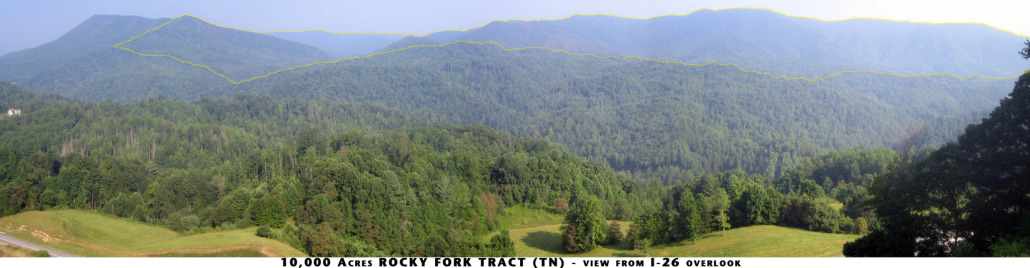
The 10,000-acre Rocky Fork watershed is comprised of the 2,076-acre Lamar Alexander Rocky Fork State Park and approximately 8,000 adjoining acres owned by the U.S. Forest Service and part of Cherokee National Forest.
SAHC worked from 2006-2012 to protect this iconic area, in partnership with the Appalachian Trail Conservancy, The Conservation Fund, the State of Tennessee, the U.S. Forest Service, and other public and private partners. The Tennessee Heritage Conservation Trust Fund provided $6 million for the State of Tennessee to acquire the land for the Park, which was officially designated Tennessee’s 55th State Park in October 2012. A section of the Appalachian Trail crosses the southwest corner of the massive Rocky Fork conservation project area, approximately a half mile from the state park.
The land contains pristine mountain streams, including Rocky Fork Creek, Flint Creek, South Indian Creek and the headwaters of Long Branch. The main branch of Rocky Fork, designated as a TN Exceptional Stream, flows through the park and through the entrance area. These streams are home to native Southern Appalachian Brook Trout and are available to the public for fishing. The area is also home to both state and federally endangered species. The diverse cove forest is home to the Peregrine Falcon, the Yonahlossee Salamander, and the Woodland Jumping Mouse, as well as many native wildflowers. The property is also part of the Unicoi Bear Sanctuary and lies within an Audubon Important Bird Area.
Successful efforts to conserve the 10,000-acre Rocky Fork watershed span more than six years (2006-2012), involving local heroes, multiple non-profit organizations, national and state agencies, Tennessee politicians, and devoted hiking clubs. SAHC is proud to have been a leader in protecting the 10,000-acre Rocky Fork watershed. A unique, fragile ecosystem with rare and endangered species, the expansive forested land is prominent in the view from I-26 just north of the TN/NC border (Unicoi County) and the surrounding area.
Rocky Fork had long been one of the top priorities for conservation in the southern Appalachians because of its vast size, adjacency to the Appalachian Trail and the Sampson Mountain Wilderness, its 16 miles of blue ribbon trout streams and other chart-topping conservation values,” remembers SAHC Executive Director Carl Silverstein. Although it was privately owned, it had been leased it to the Tennessee Wildlife Resources Commission for decades, and people enjoyed hunting, fishing and camping there as though it were public lands.
“In 1998, while I was still working with the Southern Appalachian Forest Coalition, the land came up for sale,” continues Carl. “Under leadership of Ed Williams III, the conservation community worked together to secure an appropriation from the federal Land and Water Conservation Fund to add part of the property closest to the Appalachian Trail to the Cherokee National Forest. But the landowner sold the whole 10,000 acres before we could act on it.
“When I became the Executive Director at SAHC and the property came up for sale again in the early 2000s, it was a second opportunity to save this incredible place that I thought had been lost. Plans to sell and develop the land were circulating in the early 2000s, and the owner was negotiating with developers. Local conservationists, outdoor enthusiasts, SAHC and the Appalachian Trail Conservancy pulled together to find a way to preserve Rocky Fork. SAHC boldly submitted a letter of intent to the owners to purchase the property for $32 million, and they indicated they would sell the property for $40 million. We recruited The Conservation Fund as a national partner to help give momentum to the multi-million dollar acquisition. We prepared and submitted an application to the TN Heritage Conservation Trust Fund for $6 million, which was awarded in 2007. Although a critical step forward, this grant only covered a fraction of the $40 million price tag for the land.”

“Southern Appalachian Highlands Conservancy and our principal partners, Appalachian Trail Conservancy and The Conservation Fund, were emboldened by this success,” recalls Jay Leutze, SAHC’s Advistor to the Board. “The partners launched an ambitious two-prong public/private strategy. We approached philanthropists in both North Carolina and Tennessee and began to engage Senator Lamar Alexander of TN, a champion for the project. We also cultivated public agency partners at both the state and federal level.”
Despite SAHC’s determination, we did not have access to the $34 million dollars needed to close the gap between our $6 million in hand and the $40 million purchase price for the entire property. SAHC and our partners chipped away in concerted effort, and after some successful fundraising and commitments, the gap began to shrink.
In December 2008, the U.S. Forest Service purchased 2,237 acres of the property for Cherokee National Forest. Simultaneously The Conservation Fund used their own money to eliminate the funding gap and close on the balance of the property, with a phased plan for land to be sold and transferred to the U.S. Forest Service over a period of years (2009-2012). In total, the U.S. Forest Service purchased close to 8,000 acres with more than $30 million from the Land and Water Conservation Fund (LWCF). The U.S. Forest Service acquired the final tract for Cherokee National Forest in September 2012. The initial $6 million secured by SAHC was used to purchase the acreage that is now Rocky Fork State Park. The state park was designated in 2012, opened to the public in 2015, and renamed Lamar Alexander Rocky Fork State Park in 2019. In 2016, SAHC assisted the Tennessee Department of Environment and Conservation in purchasing a 1-acre tract near the park entrance to better enable public access.
Today, we are thrilled that people can enjoy access to these public lands in the national forest, state park, and a section of the Appalachian Trail.

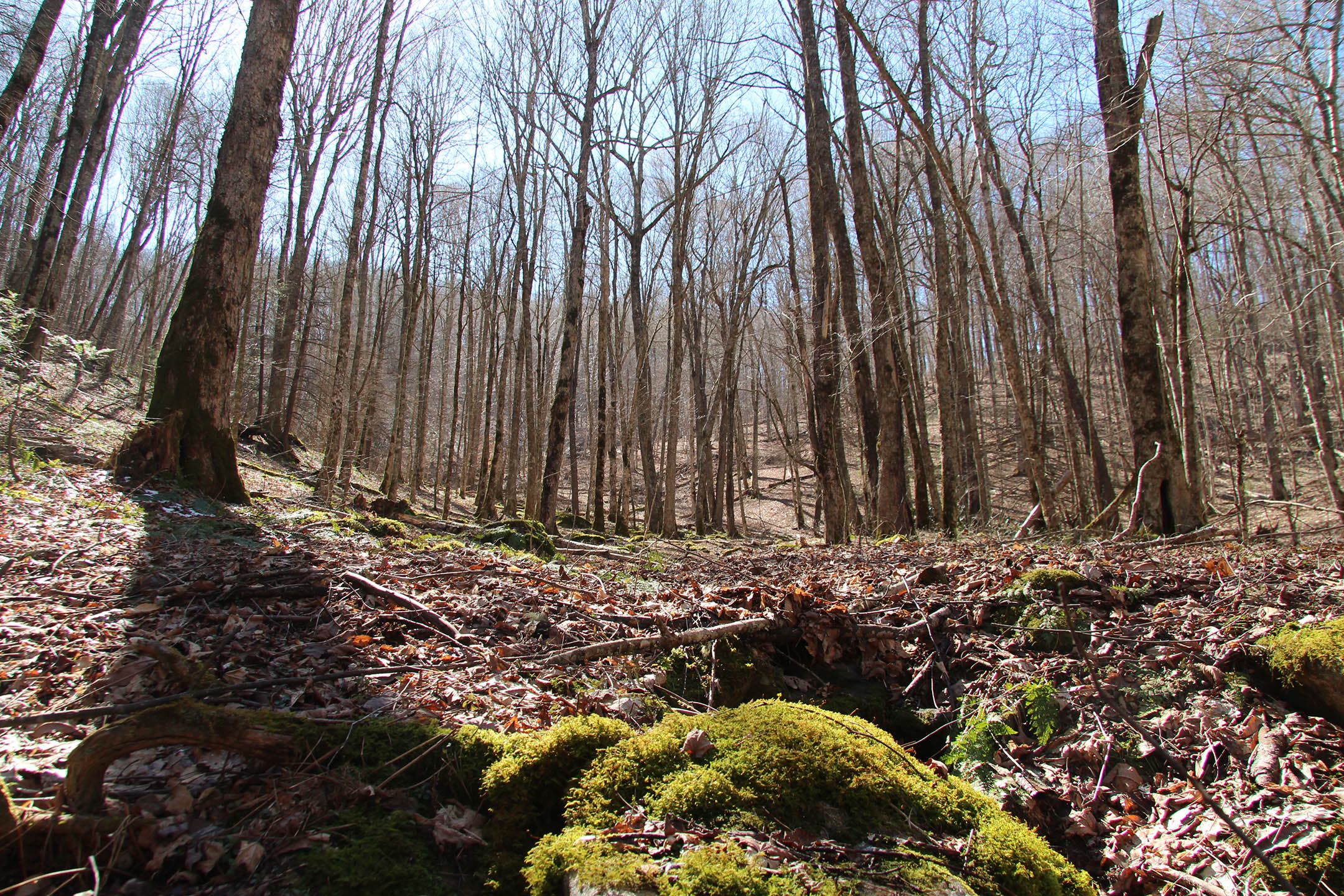
The Rocky Fork watershed encompasses a western portion of the Unaka Mountain Range, in both Unicoi and Greene counties in TN.
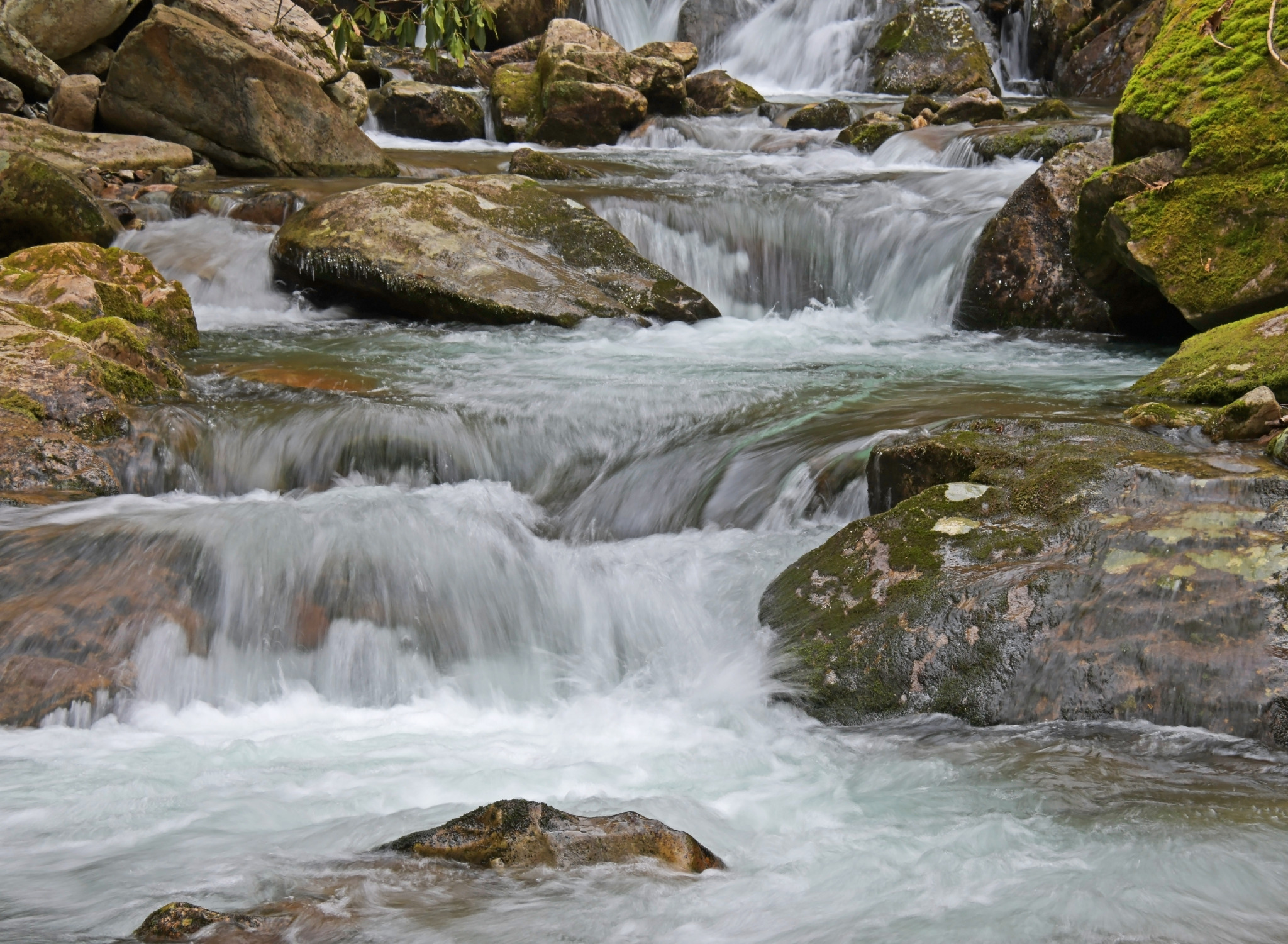
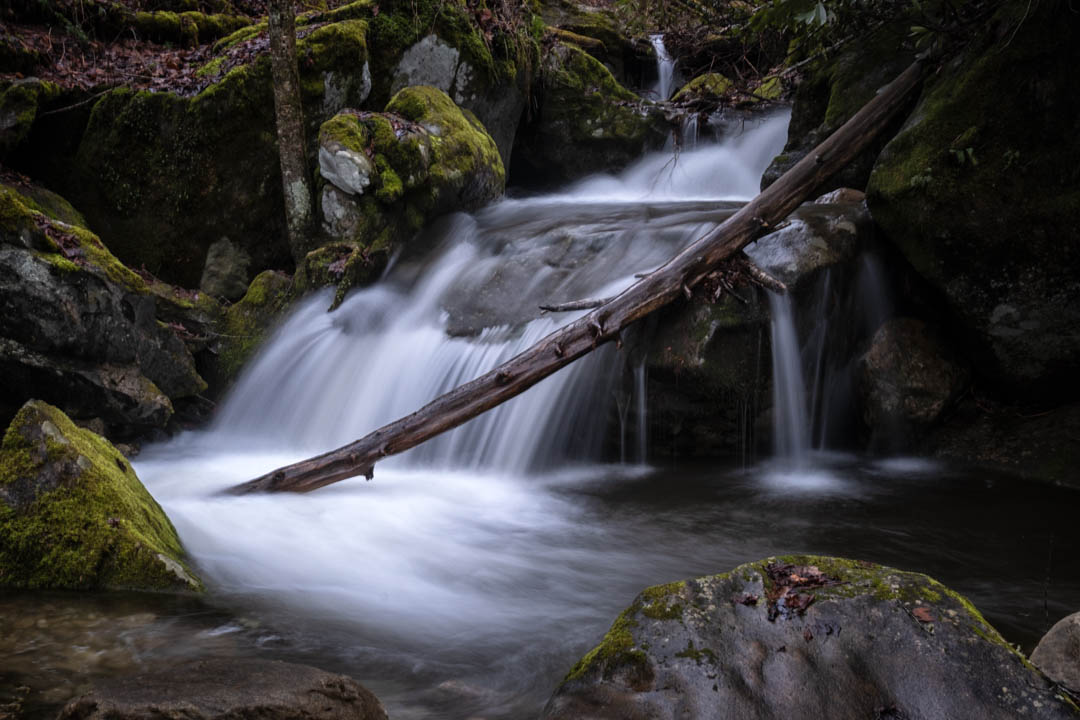
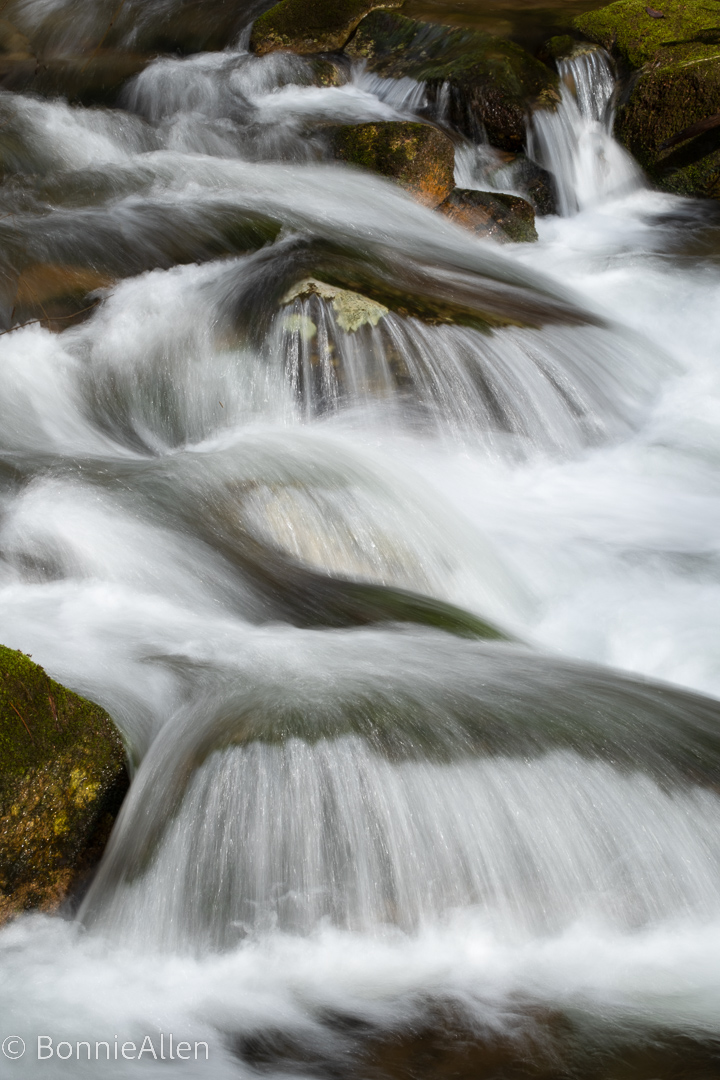
More than 16 miles of streams, with large cascades and waterfalls, drain the 10,000 acre Rocky Fork watershed.
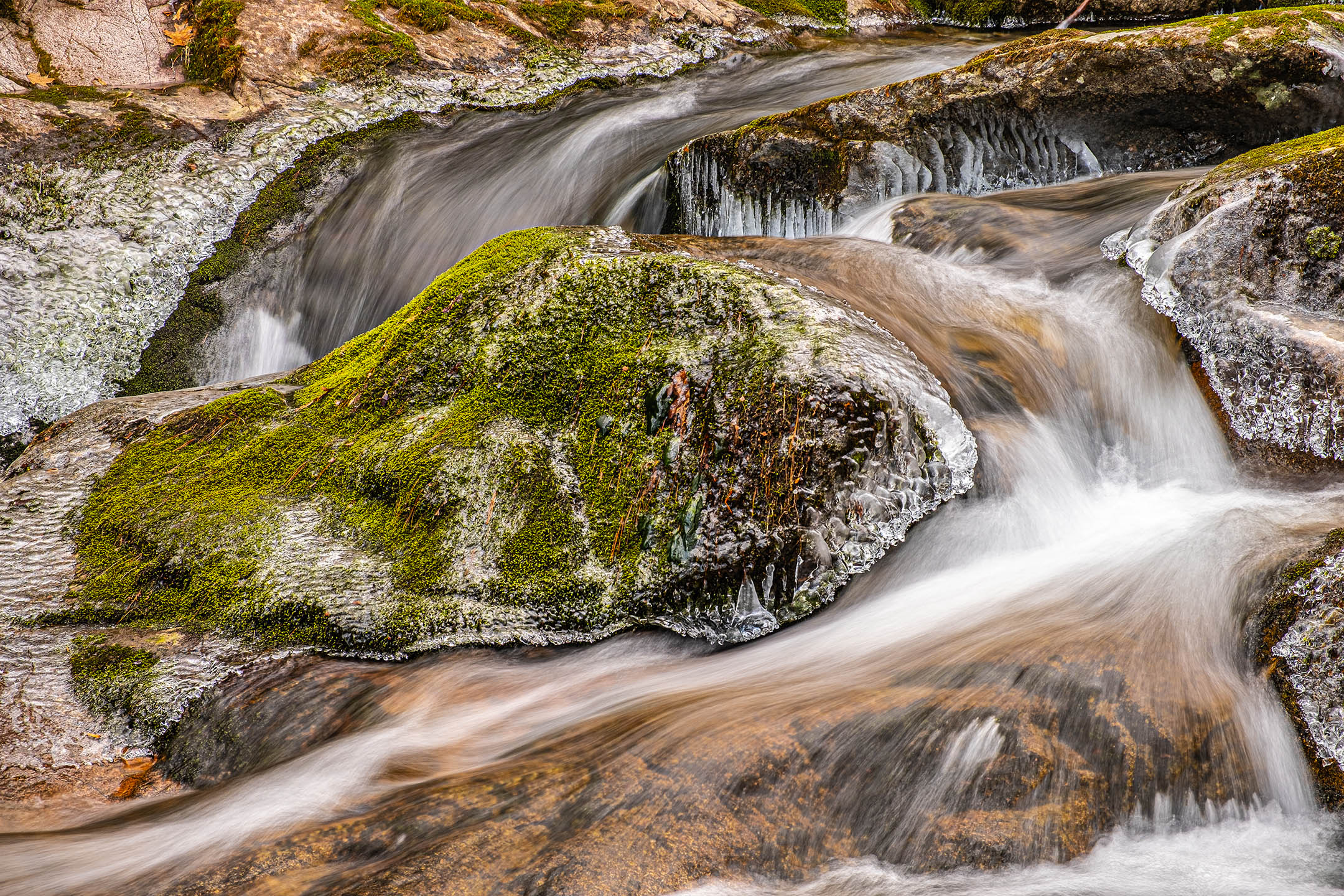
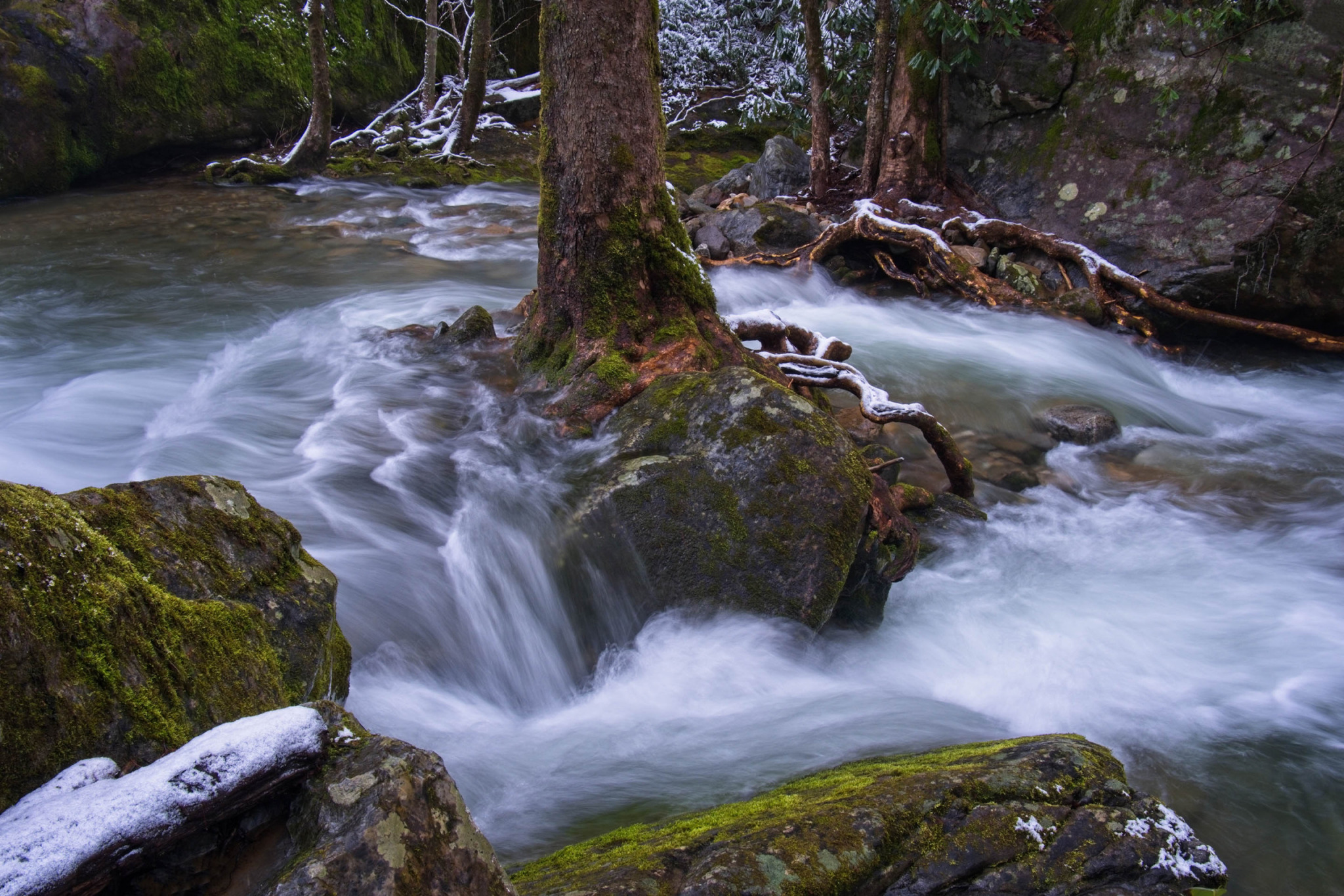
Moss-covered rocks, eddies, and gentle pools surrounded by lush growth provide cool waters for native trout and mesmerizing places to relax and connect with nature.
The land provides prime habitat for black bear, deer, turkey, and many other kinds of wildlife. Species of note which have been documented on the property include Peregrine Falcon, Eastern Hellbender, Yonahlossee salamander, Woodland jumping mouse, Star-nosed mole, and Smoky Shrew.
According to a flora survey, the Rocky Fork land produced 749 vascular plant species – of which 19 were on the Tennessee Rare Plant List and 34 were on the Cherokee National Forest Species Viability List.
Approximately 4 miles of the Appalachian Trail crosses the 10,000 acre Rocky Fork tract near the NC/TN border.
Highly visible from the TN Visitors’ Center on I-26, the tract is known as TN’s ‘Gateway to the Southern Appalachian Mountains’ and named for the pristine waters of Rocky Fork Creek running through it.
Prior to being acquired and protected by conservation partners, the land had been logged extensively, and old logging roads throughout the area provided a framework for trails.

“The clean, intact watersheds of Rocky Fork Creek and South Indian Creek support a plethora of rare species, including the Southern Appalachian Brook Trout, and are prized by the fishing community. Rocky Fork is a regional treasure and affords a unique opportunity to provide a park experience immersed in nature.”
 https://appalachian.org/wp-content/uploads/2019/05/ElkHollow-group.jpg
1020
2048
sahcadmin
https://appalachian.org/wp-content/uploads/2022/06/cropped-LogoUpdate_SingleHiker-300x300.png
sahcadmin2019-04-06 18:06:092019-11-21 18:32:34Elk Hollow Preserve Trail Work
https://appalachian.org/wp-content/uploads/2019/05/ElkHollow-group.jpg
1020
2048
sahcadmin
https://appalachian.org/wp-content/uploads/2022/06/cropped-LogoUpdate_SingleHiker-300x300.png
sahcadmin2019-04-06 18:06:092019-11-21 18:32:34Elk Hollow Preserve Trail Work David A. Ramsey
https://appalachian.org/wp-content/uploads/2018/10/Clearing-storm-over-Rocky-Fork-watershed_D.Ramsey_alt.jpg
1389
2048
sahcadmin
https://appalachian.org/wp-content/uploads/2022/06/cropped-LogoUpdate_SingleHiker-300x300.png
sahcadmin2018-10-25 17:44:172018-11-08 21:59:19Rocky Fork, by David Ramsey
David A. Ramsey
https://appalachian.org/wp-content/uploads/2018/10/Clearing-storm-over-Rocky-Fork-watershed_D.Ramsey_alt.jpg
1389
2048
sahcadmin
https://appalachian.org/wp-content/uploads/2022/06/cropped-LogoUpdate_SingleHiker-300x300.png
sahcadmin2018-10-25 17:44:172018-11-08 21:59:19Rocky Fork, by David Ramsey https://appalachian.org/wp-content/uploads/2016/04/RockyFork_triplefalls.jpg
1536
2048
sahcadmin
https://appalachian.org/wp-content/uploads/2022/06/cropped-LogoUpdate_SingleHiker-300x300.png
sahcadmin2016-04-22 12:58:472016-10-13 22:42:11SAHC helps Rocky Fork State Park acquire tract for public access
https://appalachian.org/wp-content/uploads/2016/04/RockyFork_triplefalls.jpg
1536
2048
sahcadmin
https://appalachian.org/wp-content/uploads/2022/06/cropped-LogoUpdate_SingleHiker-300x300.png
sahcadmin2016-04-22 12:58:472016-10-13 22:42:11SAHC helps Rocky Fork State Park acquire tract for public access https://appalachian.org/wp-content/uploads/2014/09/tipton_peopleviewing.jpg
1536
2048
sahcadmin
https://appalachian.org/wp-content/uploads/2022/06/cropped-LogoUpdate_SingleHiker-300x300.png
sahcadmin2014-09-16 17:37:152016-10-20 16:33:00Rice Creek - Protecting the View from the Appalachian Trail
https://appalachian.org/wp-content/uploads/2014/09/tipton_peopleviewing.jpg
1536
2048
sahcadmin
https://appalachian.org/wp-content/uploads/2022/06/cropped-LogoUpdate_SingleHiker-300x300.png
sahcadmin2014-09-16 17:37:152016-10-20 16:33:00Rice Creek - Protecting the View from the Appalachian Trail https://appalachian.org/wp-content/uploads/2012/09/group-shot.jpg
1150
2048
sahcadmin
https://appalachian.org/wp-content/uploads/2022/06/cropped-LogoUpdate_SingleHiker-300x300.png
sahcadmin2012-09-17 11:32:042016-11-04 15:23:51Rockin' at Rocky Fork with Mars Hill College
https://appalachian.org/wp-content/uploads/2012/09/group-shot.jpg
1150
2048
sahcadmin
https://appalachian.org/wp-content/uploads/2022/06/cropped-LogoUpdate_SingleHiker-300x300.png
sahcadmin2012-09-17 11:32:042016-11-04 15:23:51Rockin' at Rocky Fork with Mars Hill College