Southern Appalachian Highlands Conservancy’s partners at NC Wildlife Resources Commission have received grant funding to improve elk habitat on SAHC-owned land on the edge of the Great Smoky Mountains National Park.
SAHC’s Stevens Creek Preserve, located at the northern end of Cataloochee Ridge in Haywood County, was purchased in 2017 to protect habitat and water resources and to provide a buffer on the edge of the national park.
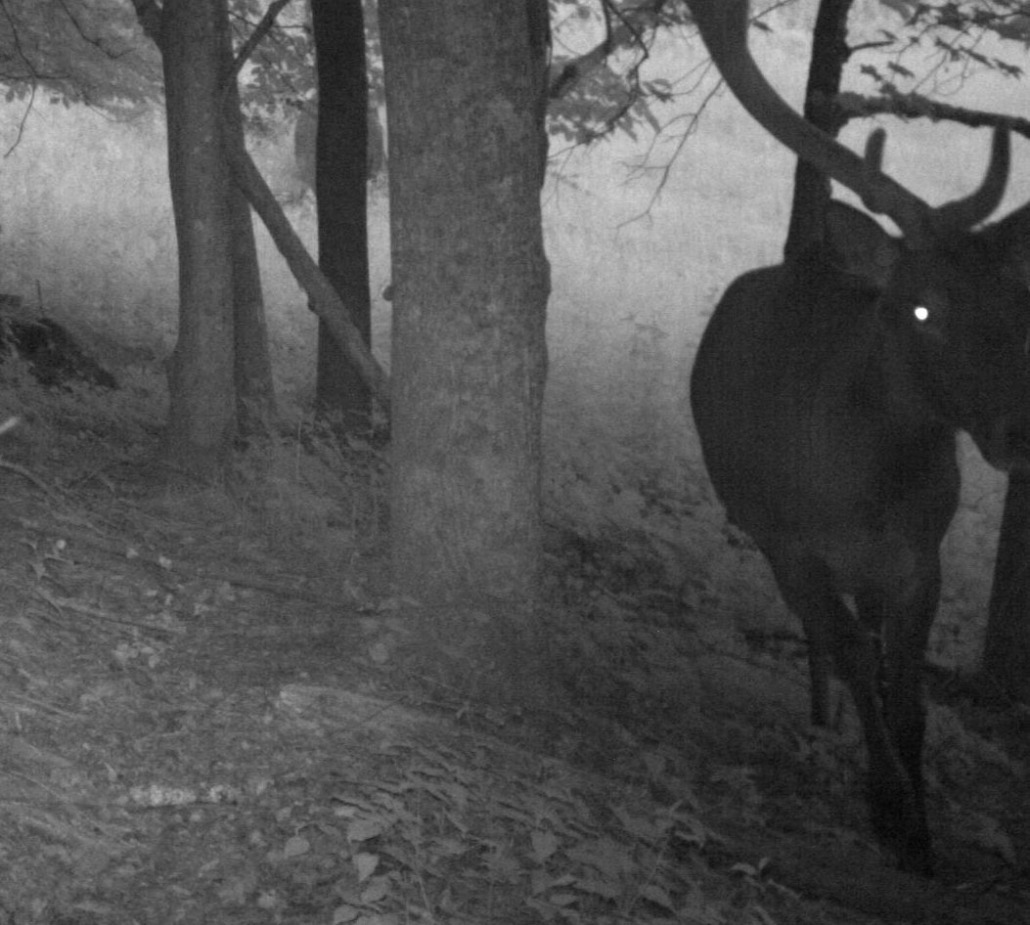
(Above: Bachelor elk on trail camera over the ridge from SAHC property, photo courtesy of Justin McVey, NC WRC).

History of the Site and Elk Release
SAHC conserved the beautiful open and forested 147-acre tract to help protect habitat for elk, turkey, deer and other wildlife. It is surrounded on three sides by the Great Smoky Mountains National Park.
In 2001, Rocky Mountain Elk were released into Cataloochee Valley as part of an experimental program to reintroduce elk to the park. Native elk had been eliminated from the region by over-hunting and loss of habitat. Today, visitors enjoy watching elk, as well as wild turkey, deer, and other wildlife, across the open fields of the valley during early morning and evening hours.
“We had noticed a few elk using the Stevens Creek tract, mostly bachelors,” says Justin McVey, District Biologist with the NC Wildlife Resources Commission (NCWRC). “However, more elk which have been living just over the ridge since the release have not used the tract. We were curious – ‘why not?’ We wondered if the open areas on SAHC’s tract were converted to native grasses and plants, would more female and young elk come onto that property? It’s so beautiful, just a gorgeous little valley, and we’d love to see more elk using that space. The elk population is slowly growing, and we have high hopes that if we continue to create quality habitat we will increase the number of elk.”
With that in mind, NCWRC applied for a grant from Rocky Mountain Elk Foundation to support removing non-native plants in favor of native vegetation on SAHC’s property at Stevens Creek. In conjunction with the grant for habitat management, they secured funds to put radio collars on elk to track their movements and see if more elk use SAHC’s property.
New Partnership Management Efforts
“In the past, all of the grants we have applied for have been to fund habitat management on public lands,” adds McVey. “This is the first time we have secured a grant for management on land owned by a non-profit entity.”
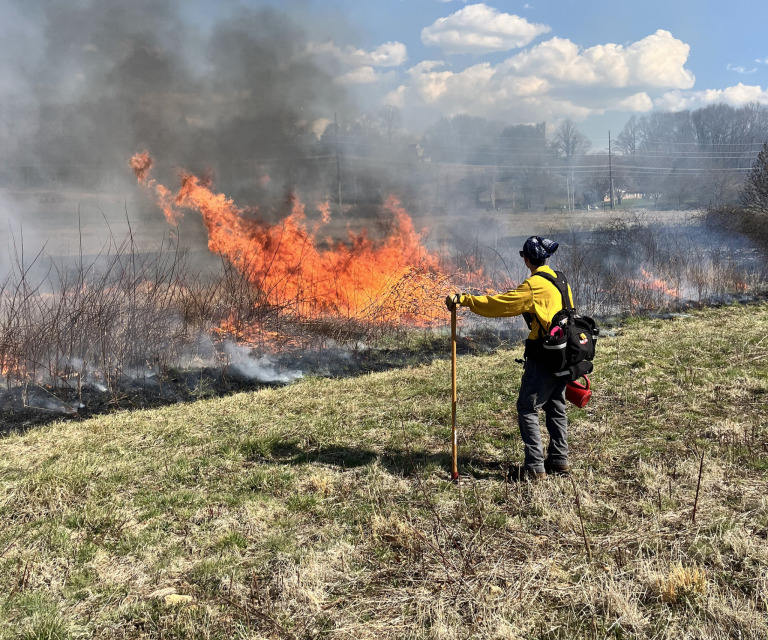
So far this year, NCWRC has used the grant to push back fescue and creeping red fescue and to conduct a prescribed fire on the property.
“We are leaving milkweed, blackberry and shrubs, to create a mosaic of vegetation,” says McVey. “The habitat management is in progress, and it is promising that we are seeing the rebounding of native vegetation. We will start the collaring phase between December and March, and then we’ll be able to track whether or not the elk move onto property.”
“It’s a great partnership for us,” he adds. “It’s the first time we’ve managed private land for elk habitat; working with SAHC has been a phenomenal opportunity.”
We are grateful for all the ways the NC Wildlife Resources Commission partners with Southern Appalachian Highlands Conservancy, and very excited about this new partnership opportunity for managing elk habitat on one of SAHC’s conserved properties!