Land Management with Controlled Burns
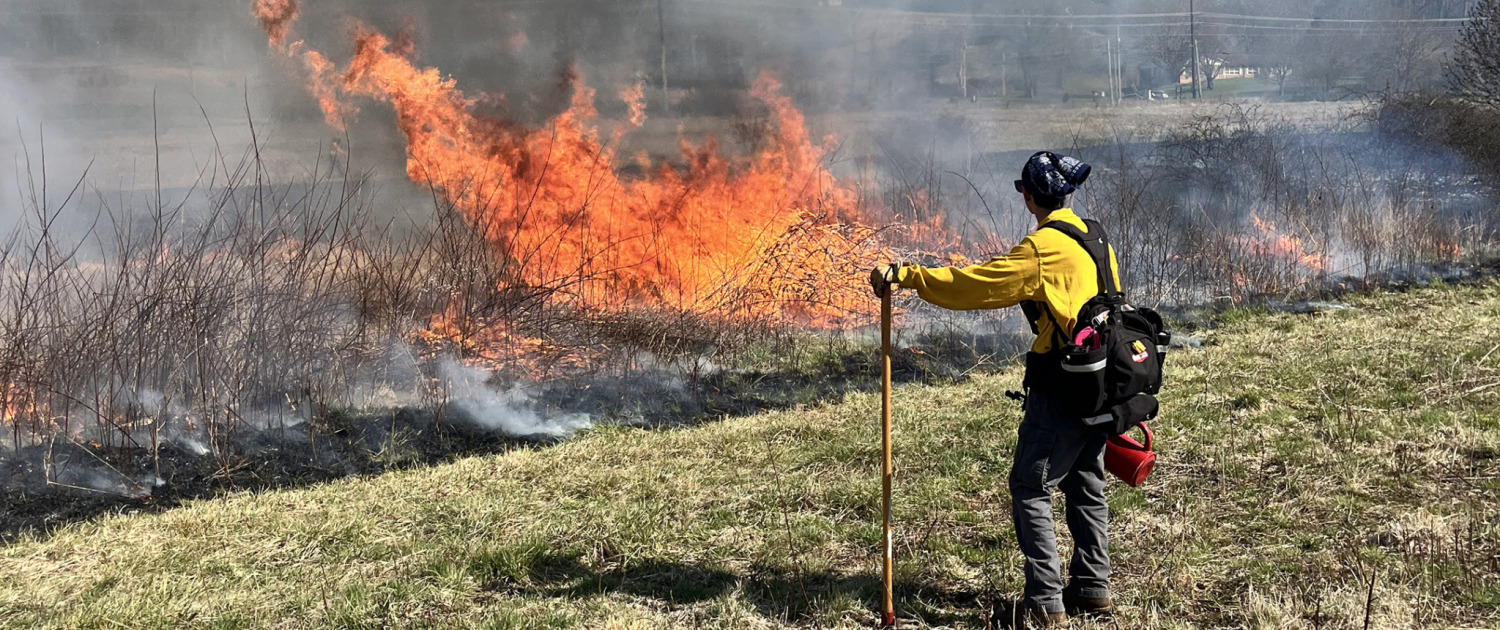
As the winter wanes, SAHC’s land management and stewardship team have been working with partners across the region to conduct prescribed fires on SAHC preserves. Controlled fire provides one of many varied tools that the stewardship team employs in managing open space and invasive species.The timing for conducting prescribed burns can be tricky, as it depends on a combination of weather and environmental conditions. Controlled burns are most often conducted in the late fall and late winter/early spring.
In March 2026, crews conducted controlled burns at SAHC’s Bowditch Bottoms property in Yancey County and at SAHC’s Stevens Creek Preserve, on the northern end of Cataloochee Ridge in Haywood County.
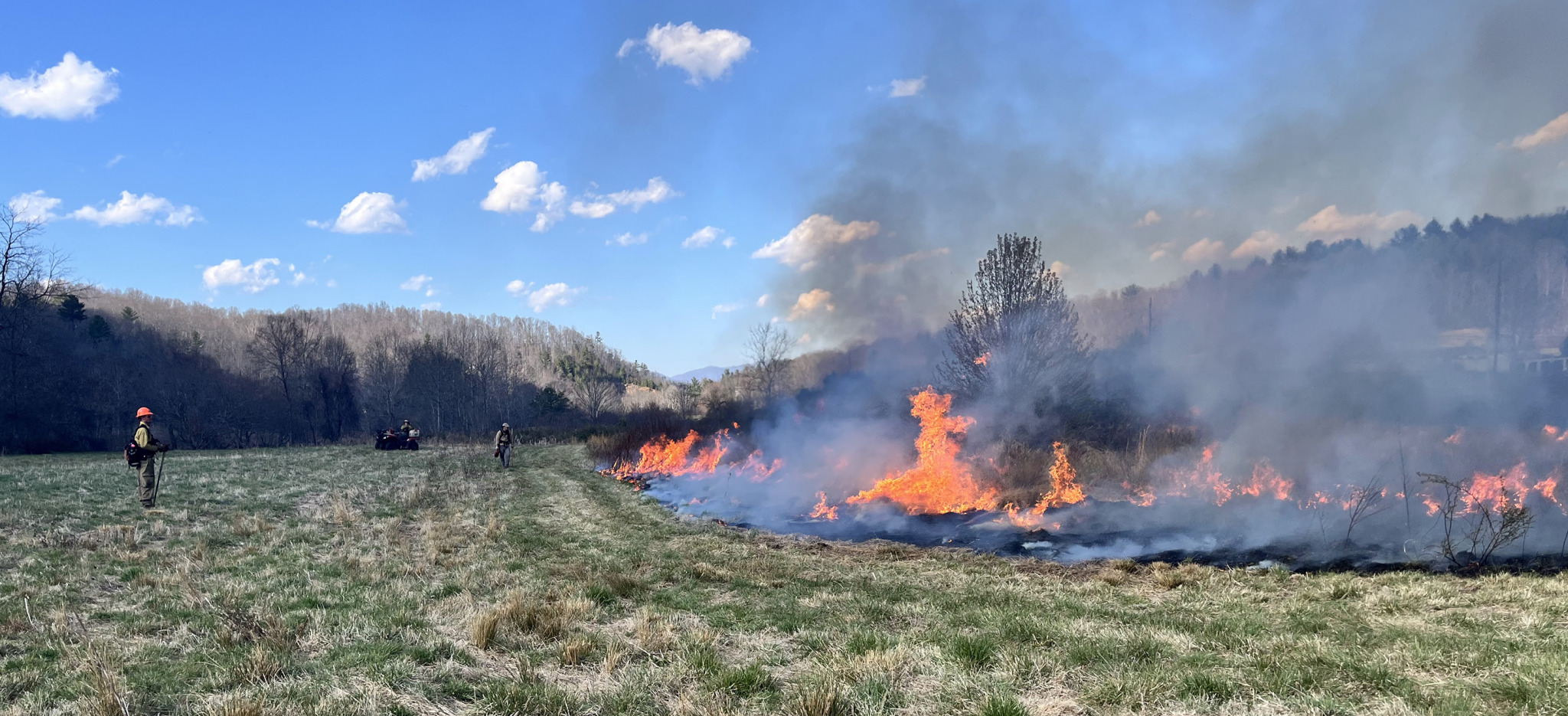
Bowditch Bottoms in Yancey County
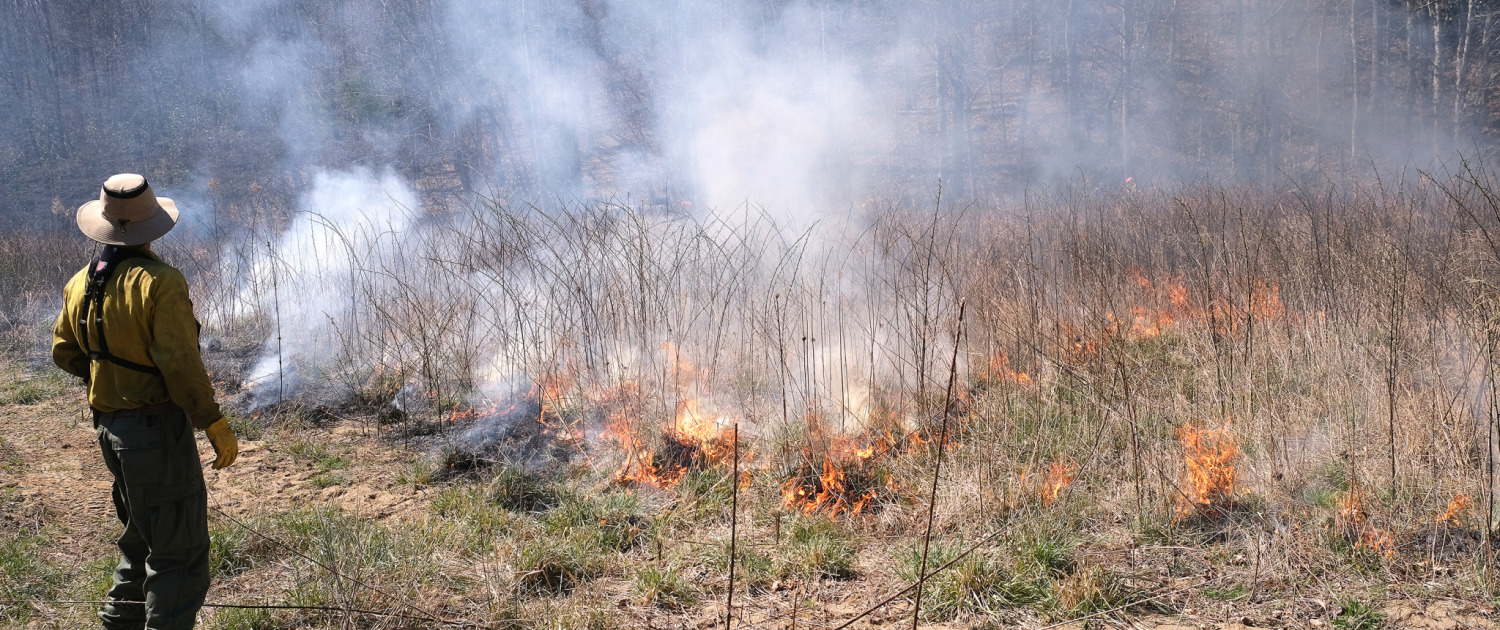
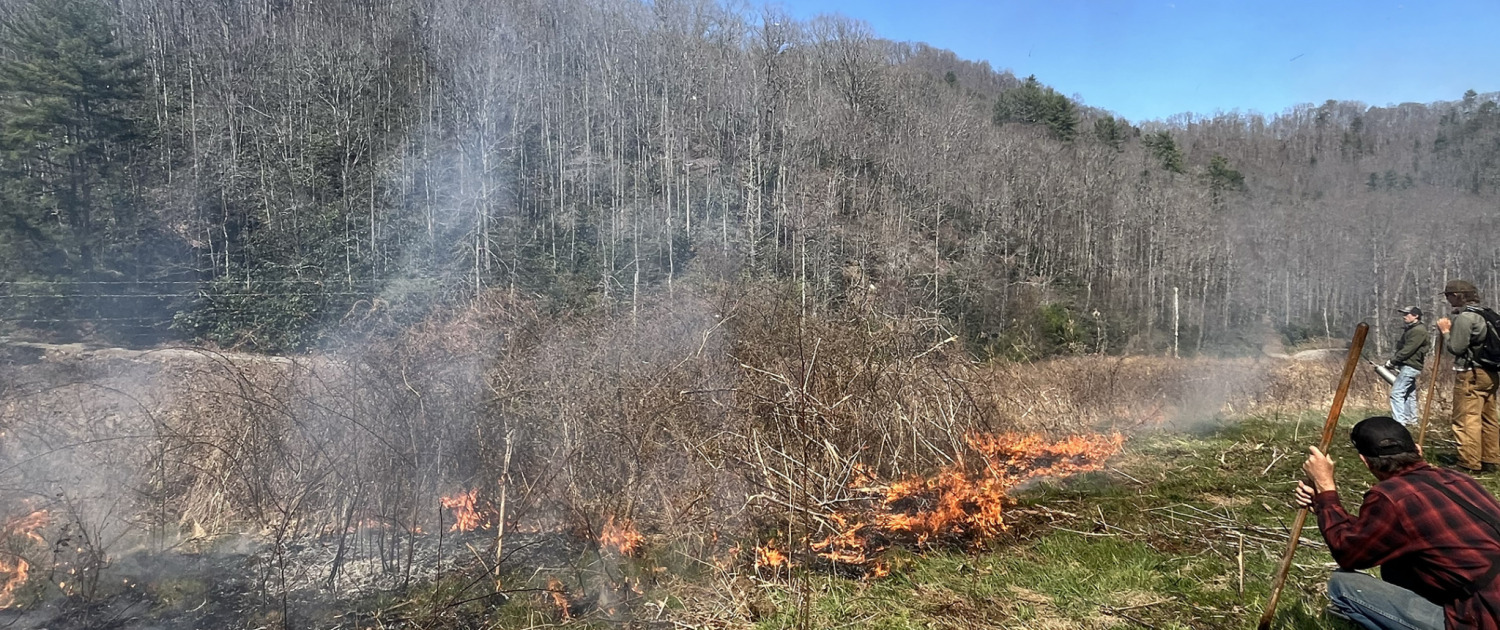
At Bowditch Bottoms, SAHC Stewardship and GIS Manager Chris Kaase joined professional fire crews throughout the day on Sunday, March 22. SAHC contracted with Blue Ridge Resource Conservation and Development (RC&D), the Southern Blue Ridge Prescribed Burn Association, and Black Mountain Field and Forest to conduct the controlled burn.
“Managing conserved land presents a variety of challenges and requires consistent planning with a robust mix of tools and strategies,” says Chris. “Fire is just one tool we are using to manage this property that is helping to reduce materials, control invasive plants as well as improve habitat and soil nutrients.”
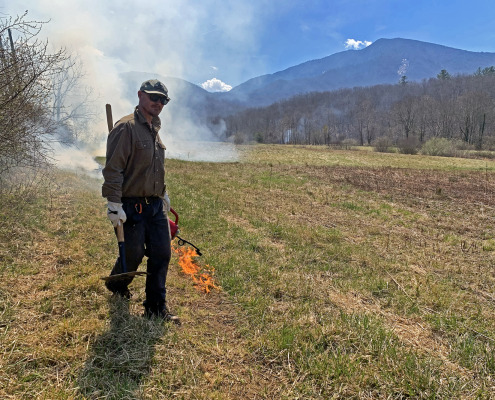
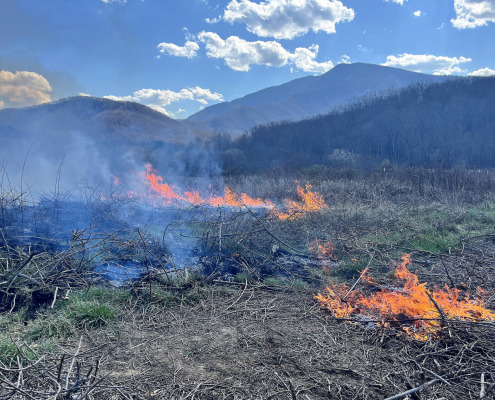
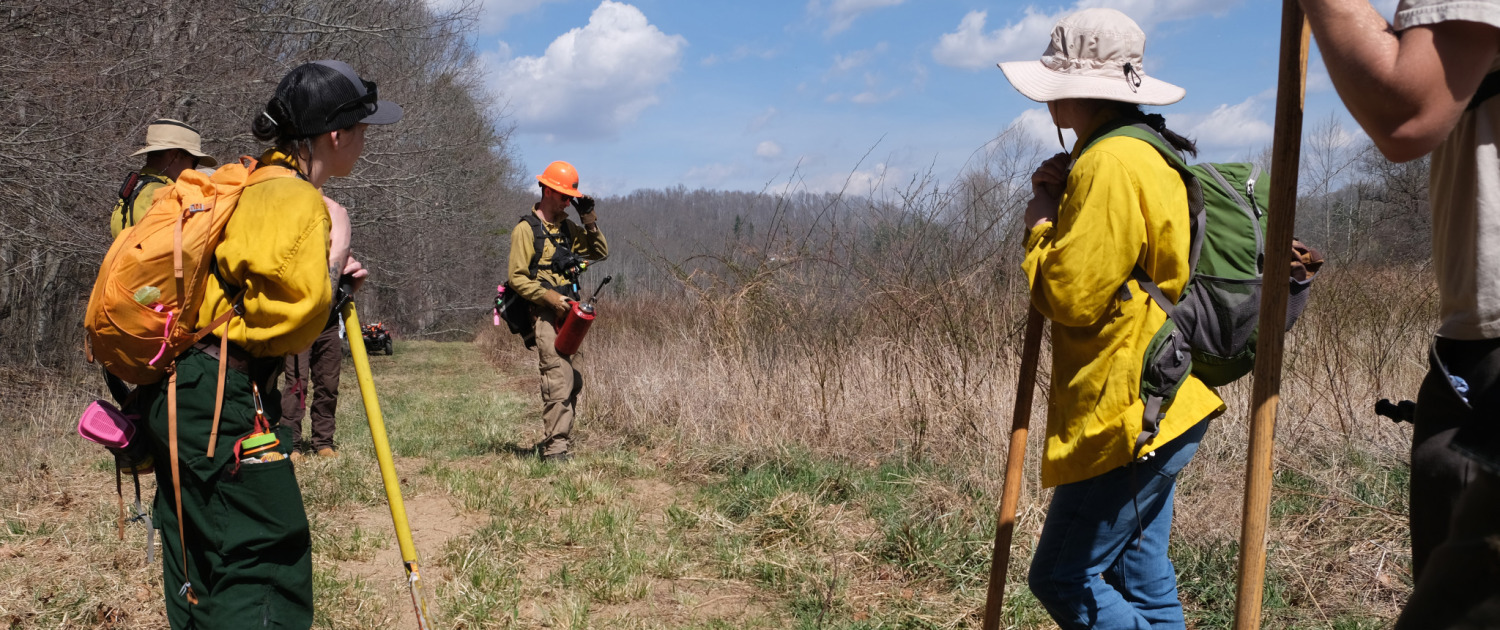
Over the past year, Chris has directed invasive species management and restoration on the Bowditch Bottoms preserve by working with the NC Wildlife Federation to conduct volunteer work days and contracting with EcoForesters to remove and treat invasive plant species. This prescribed burn continues that management work.
“Like many disturbed open areas and farm properties that have grown over, this property has a significant problem with invasive plant species,” continues Chris. “We’ve managed the large open areas here with mowing over the past few years, but the margins, fencelines, and area along the stream have been growing up. Fire provides an effective tool in helping to manage these spaces.”
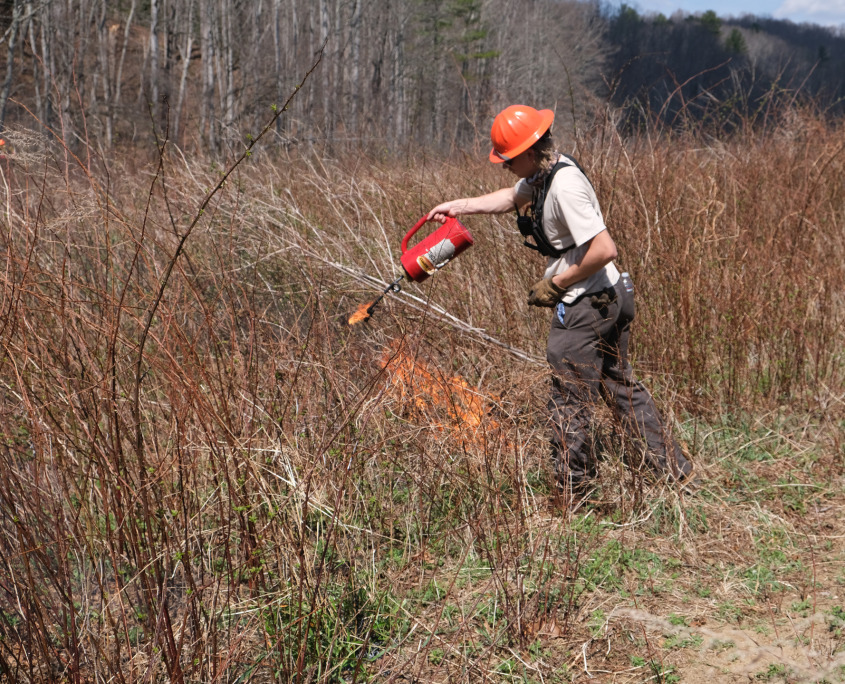
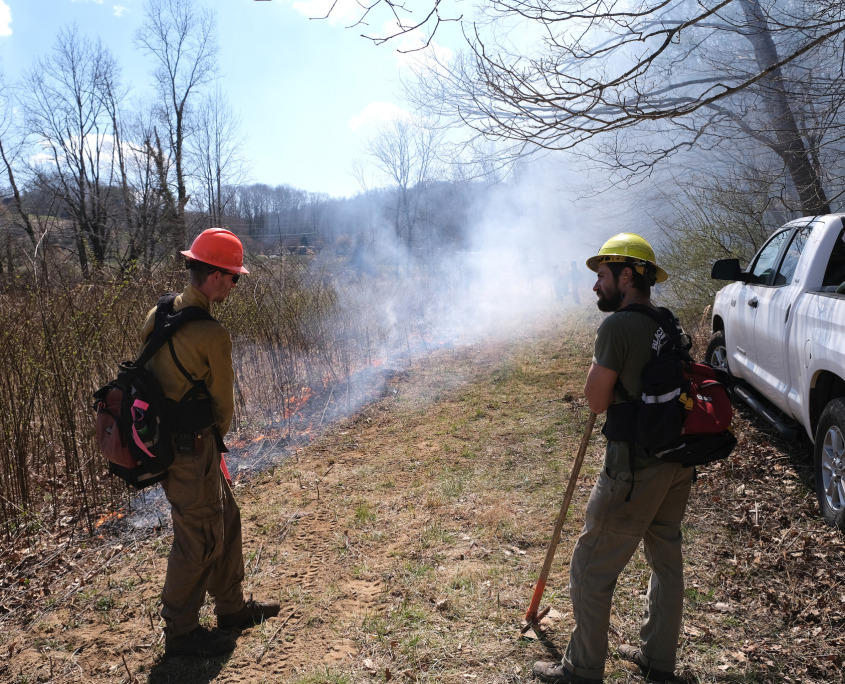
The team worked on three “burn units” on SAHC’s Bowditch Bottoms property. One of these was the 6-acre stream and wetland area, which SAHC and partners have been managing for invasive species over the past year.
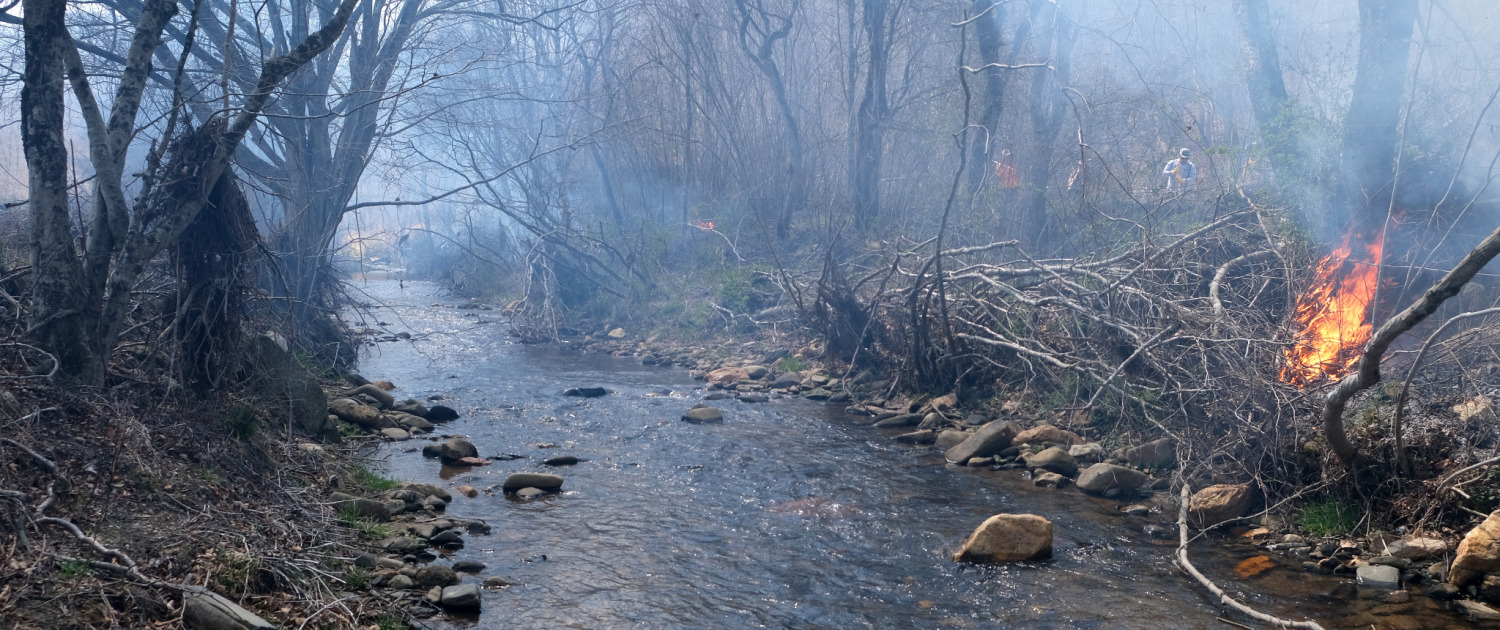
“Conducting the burn in this area helps clear the way for us to conduct native plantings out there this fall,” adds Chris. “The controlled burn helped consume downed material that had been cut back during previous volunteer work days. Burning also helps clear dense mats of previous seasons’ growth, which can inhibit regenerative growth from native seeds and sprouts.”
Stevens Creek in Haywood County
On the opposite side of SAHC’s geographic conservation focus region, Stewardship Technician Josie Cohen joined a professional team from Wildwood Consulting, LLC to conduct a prescribed burn across a total 24 acres on SAHC’s Stevens Creek Preserve on Tuesday, March 24.
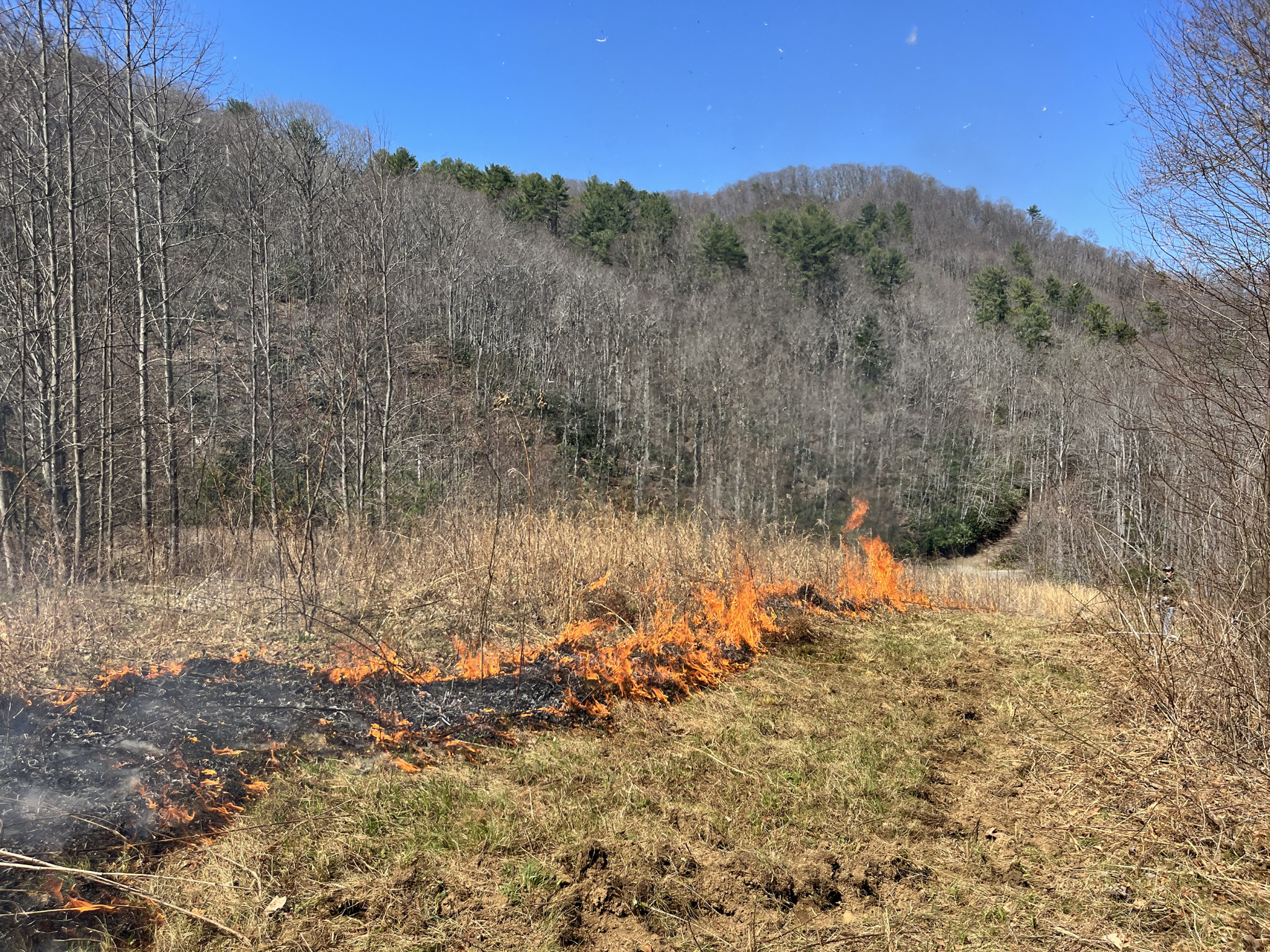
“This burn continues habitat management on the property, which we have been conducting in partnership with NC Wildlife Resources Commission over the past several years,” explains Josie. “Habitat management on the open areas of this conserved land benefits elk, birds, and a variety of other species. The goal on this property, which adjoins the Great Smoky Mountains National Park, is to retain spaces for early successional habitat and help control invasive plant species.”
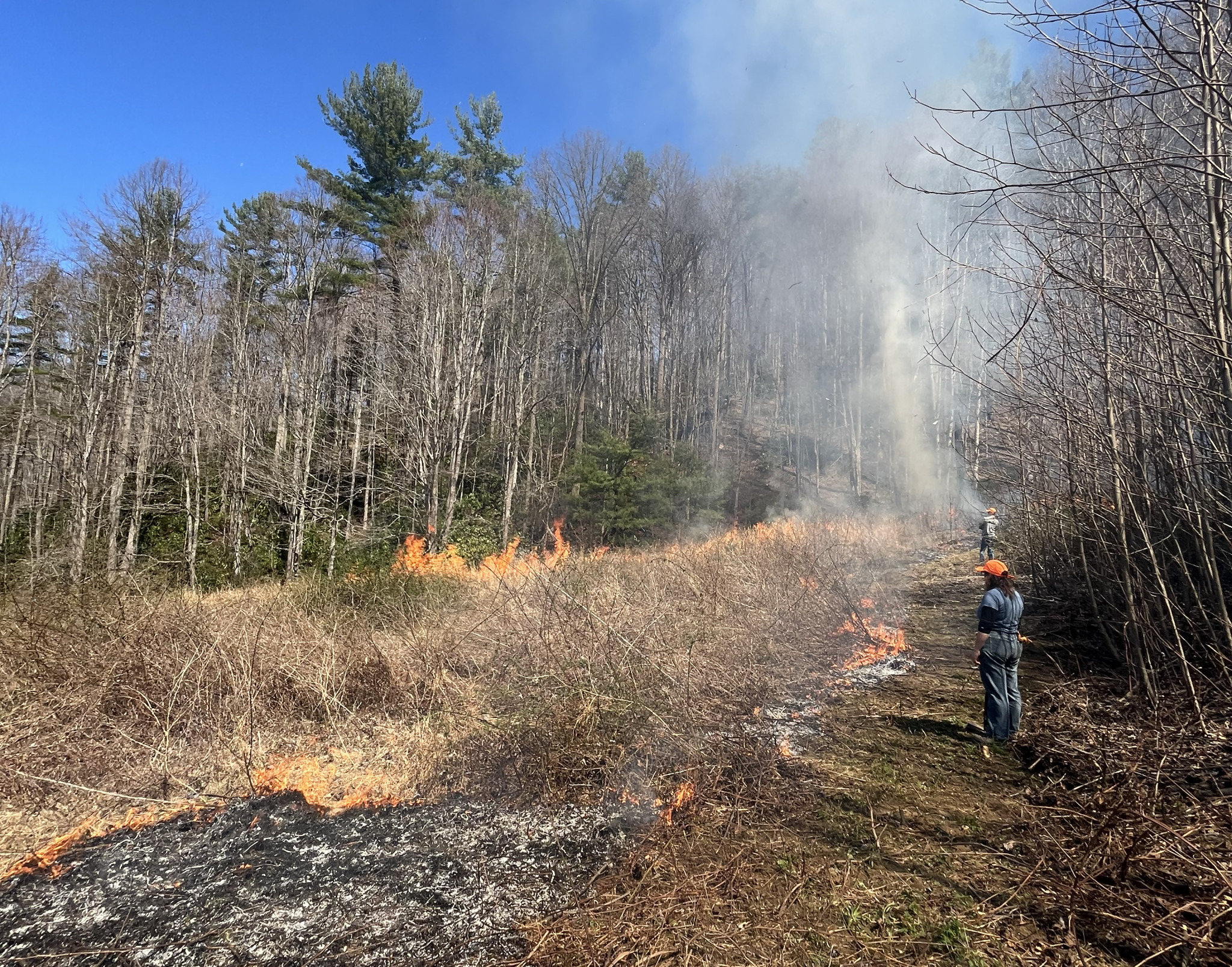
In preparation for the controlled burn, the crew spent several days doing prep work to cut brush lines and dig fire lines to keep the fire contained. On the day of the burn, they blew downed leaves away from the fire lines to reduce fuel and wet the lines to keep the perimeter of the burn area contained.
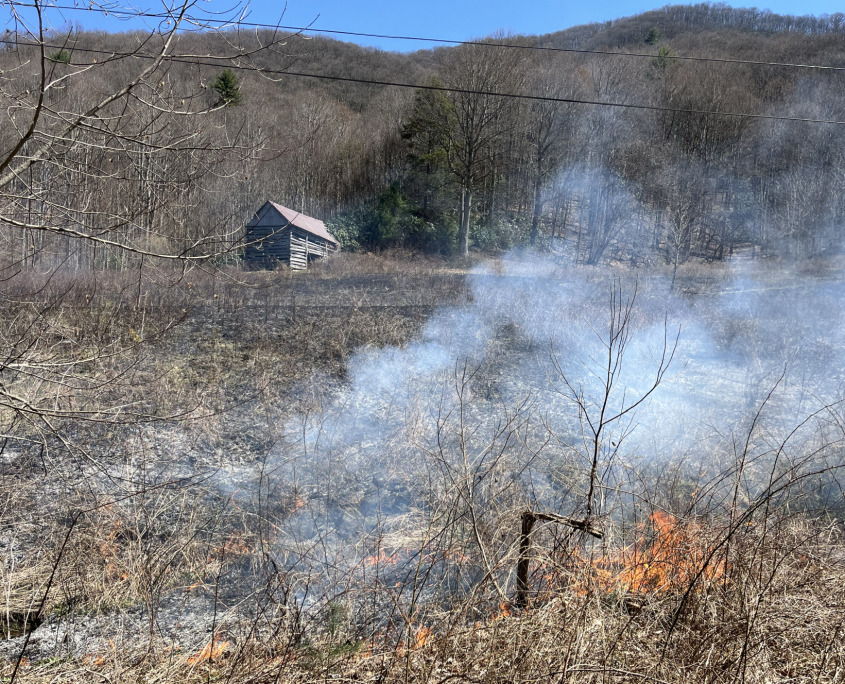
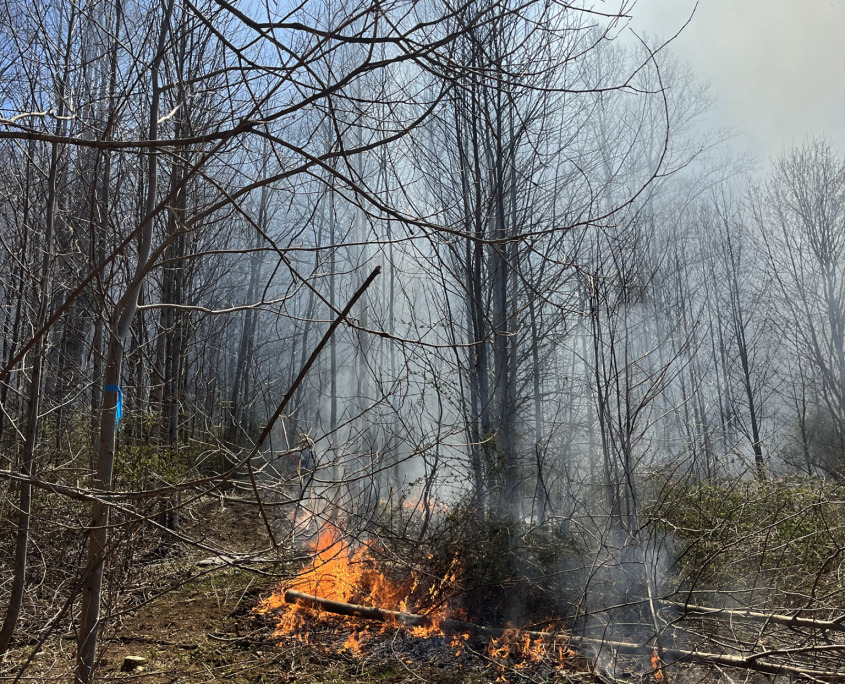
“I appreciated how effective fire can be in quickly managing a large area,” reflects Josie. “It can accomplish more than hand-cutting brush in knocking back invasive plant growth. It was really interesting to witness the professionals in action and see how they are able to manipulate fire and work with it, using different techniques to keep it manageable. It’s important to have a healthy respect for the power of fire, but this felt very well-managed.”
Partner Highlight
 According to the Southern Blue Ridge Prescribed Burn Association:
“Historically, Southern Blue Ridge forests were repeatedly burned by Native Americans and early settlers to maintain a mosaic of diverse forests beneficial for many types of plants and animals. Forest types such as oak-hickory, shortleaf pine-oak, and pine-oak heath depend on fire to perpetuate growth and maintain resiliency.”
Benefits of Managing Forests with Prescribed Fire Include:
- Reducing the amount of woody debris and leaf litter on the forest floor, in turn reducing the potential for catastrophic wildfires
- Creating habitat conditions that attract certain wildlife species that desire features such as open tree canopies, an abundance of native plants for forage, and open ground to move freely
- Encouraging regeneration of oak and hickory and other fire-dependent tree and plant species by decreasing competition from species not well-adapted to fire such as red maple
- Controling tick populations
- Releasing nutrients and increasing soil fertility
Learn more at southernblueridgepba.org