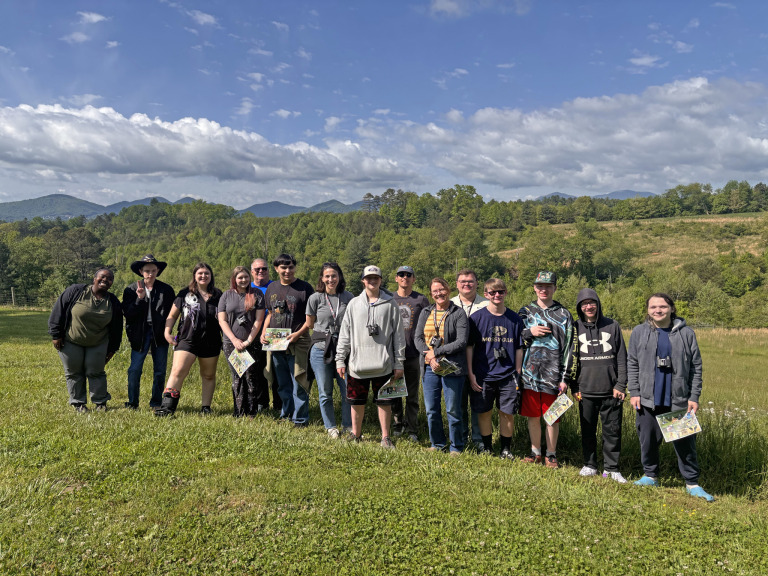
On February 9th, 22 participants set out for a 2-mile hike on the SAHC Community Farm Discovery Trail. With the sunny weather and fresh air on their side, the hikers were eager to get outdoors and make the most of one of the first spring-like days of the season.
First, everyone mingled outside the farmhouse and SAHC Community Farm Education & Event Center, enjoying a striking view of the Newfound Mountains. Outreach Manager Justin Tucker and AmeriCorps Community Engagement Member Alex Russell introduced themselves and reviewed the 2-hour route looping around the property. When the group was oriented and initial questions answered, the hike began with Alex leading the way.
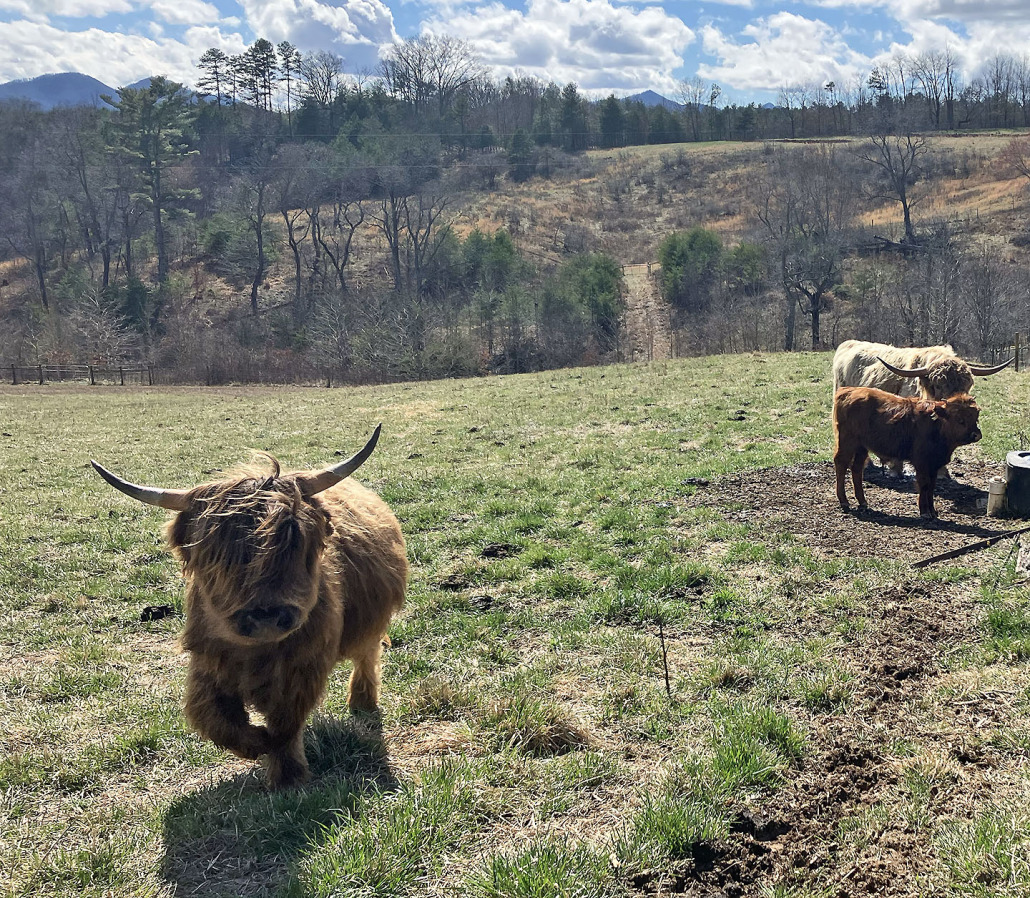
As the group made their way along the trail, they passed the farm’s Highland cattle — a majestic and somewhat out-of-place sight on the property. One curious hiker asked how these cattle, originally from Scotland, have found themselves living on this farm in Alexander, North Carolina. Justin replied, “They were donated.”
These hardy heritage breed cattle have become a favorite fixture at the farm, as their shaggy appearances and charismatic personalities routinely attract attention and comments. Generally even-tempered, disease-resistant, and intelligent, the Highland “coo” would have been a familiar sight for the many Scottish and Scots-Irish immigrants who settled on Appalachian mountain farms in the American colonial period.
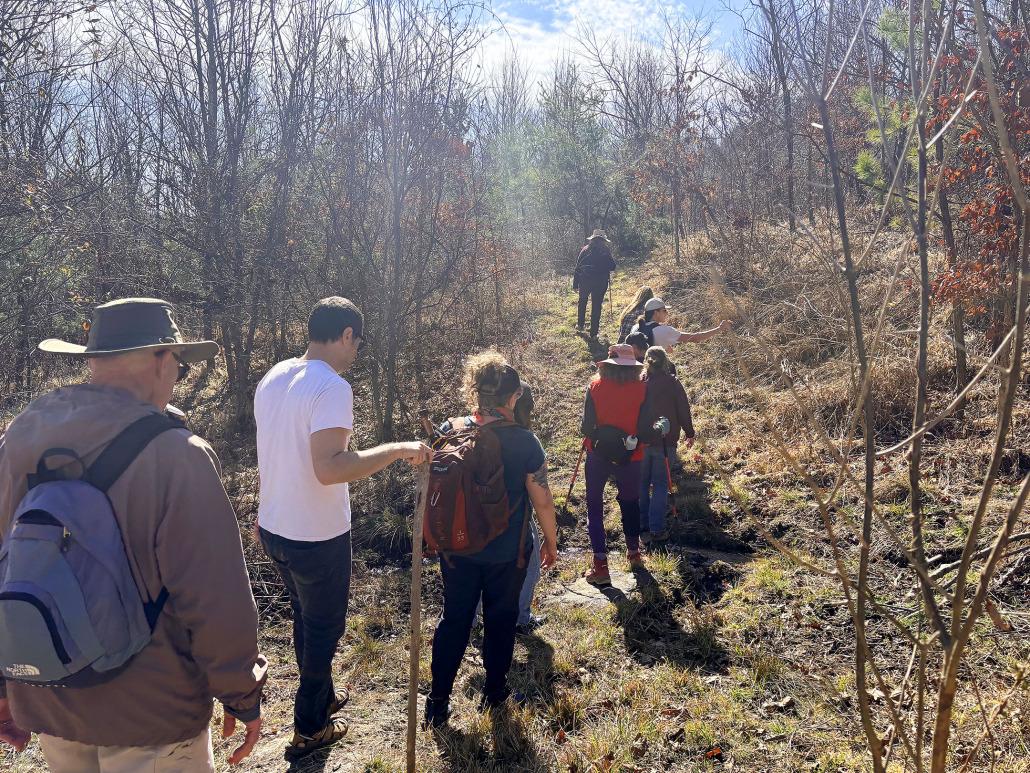
The first stop on the trail was SAHC’s Stream Restoration Project. Alex explained how this initiative, launched in 2013, aims to improve water quality in the French Broad River watershed. Due to logging in the 1900s, stream banks on the property had been destabilized, leading to erosion and sediment buildup. Such excess sediment can harm wildlife dependent on the stream, including frogs, turtles, and fish, as well as water quality downstream. After the farm was donated in 2010, SAHC began exploring solutions to repair the streambanks.
SAHC restored two streams flowing from the farm into Newfound Creek, a tributary of the French Broad River. Steeply incised banks were gently graded away from the stream and stabilized to control erosion. During the restoration, log and rock structures were re-used in the stream channel to help regulate water flow and create natural pools to support local ecosystems. In this project, SAHC restored over 3,000 feet of streams and planted more than 25,000 native trees and shrubs to prevent erosion.
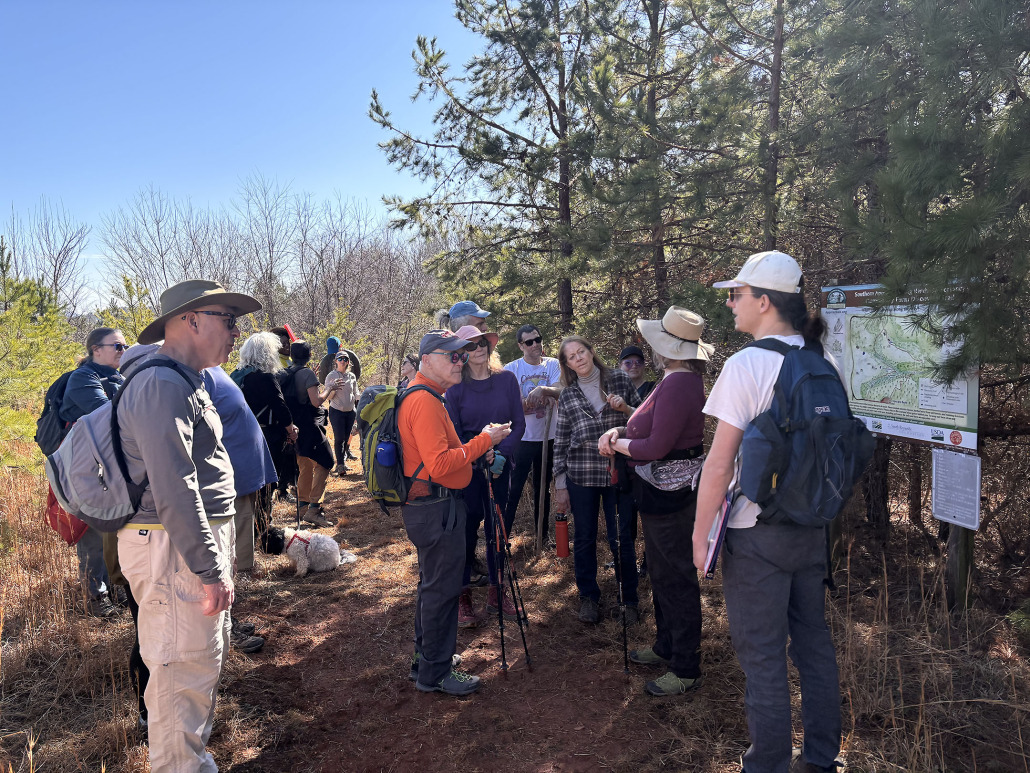
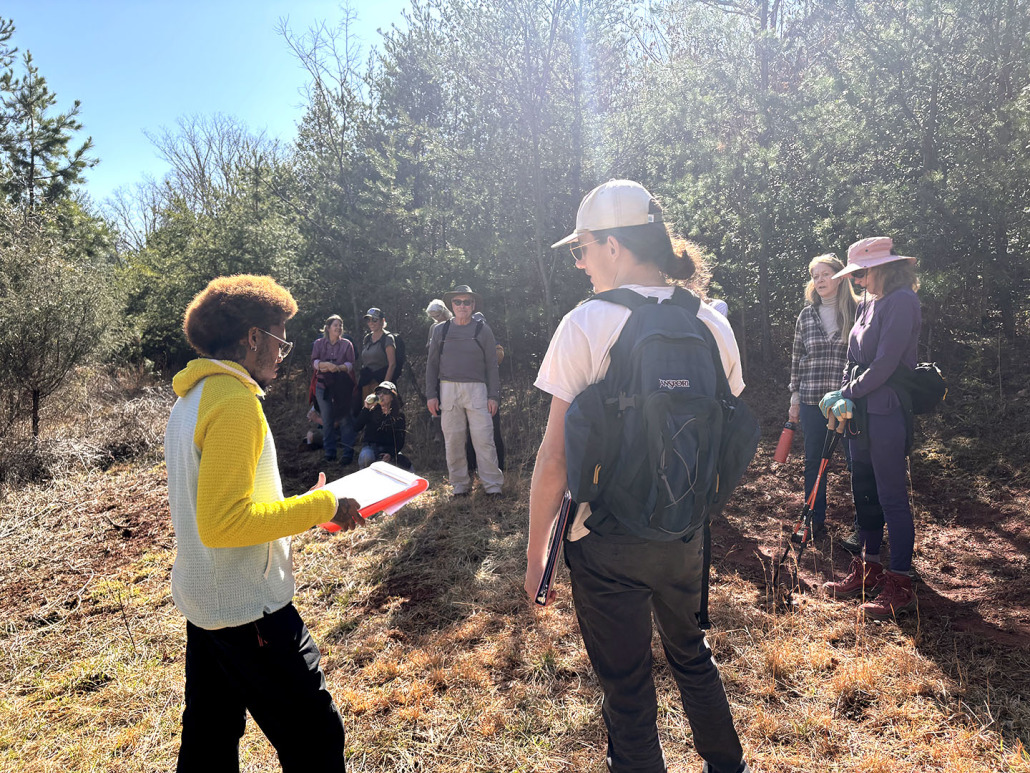
Next, the group visited the Shortleaf Pine Restoration Project. Alex gathered the group at a fork in the trail, the edges of which are occupied by many young shortleaf pines.
“Restoring these pines is an incredibly vital aspect of this property,” Alex said. “The shortleaf pine, with its open canopy, creates the perfect habitat for all sorts of species, helping grasses and forbs grow underneath. We are well on our way with this project, having already planted over 2,500 shortleaf pine seedlings, and with the help of forest agencies, we’ve done controlled burns to get rid of invasive species.”
He explained that these species of pine have adapted to fire-prone environments. With thick bark that protects them from moderate fires and seeds that germinate in nutrient-rich ash, they are an ideal species for restoration.
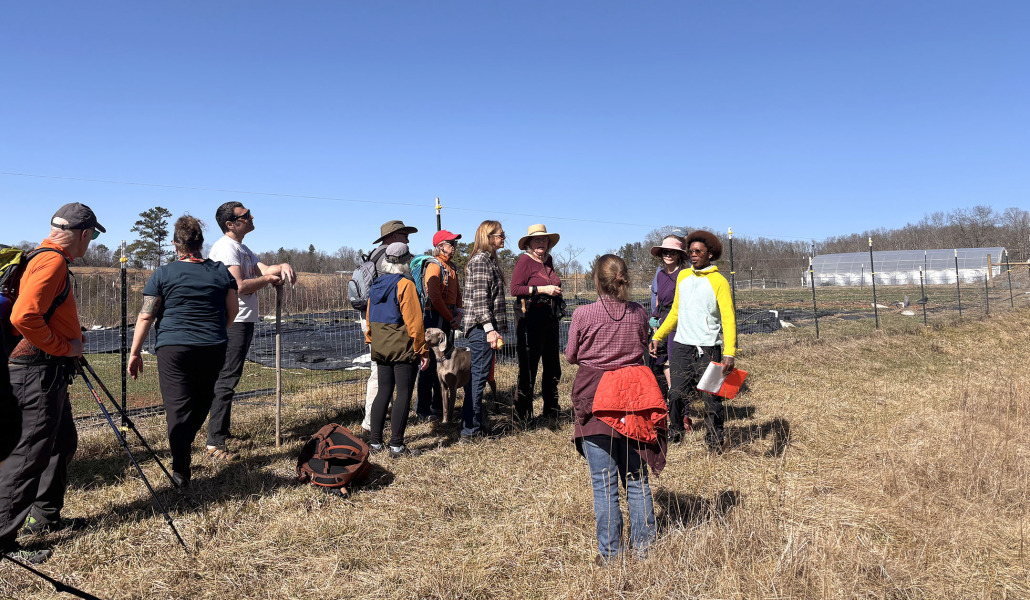
As the group continued down the trail, they arrived at an area on the farm formerly used by SAHC’s Farm Incubator Program participants and now cultivated by our non-profit partners in the Utopian Seed Project.
With land access for farmers becoming increasingly difficult in the U.S., SAHC launched an innovated Farmer Incubator Program to provide access to land for farmers working to grow their agricultural businesses. Entrepreneurial farmers have used different parts of the farm over the years, and current program participants include Blazing Star Flowers and Black Trumpet Farm (who is using a space on SAHC’s Community Farm to experiment with mushroom compost).
In addition to land access, the farmers involved in the program can use SAHC’s certified commercial kitchen located in the Education & Event Center.
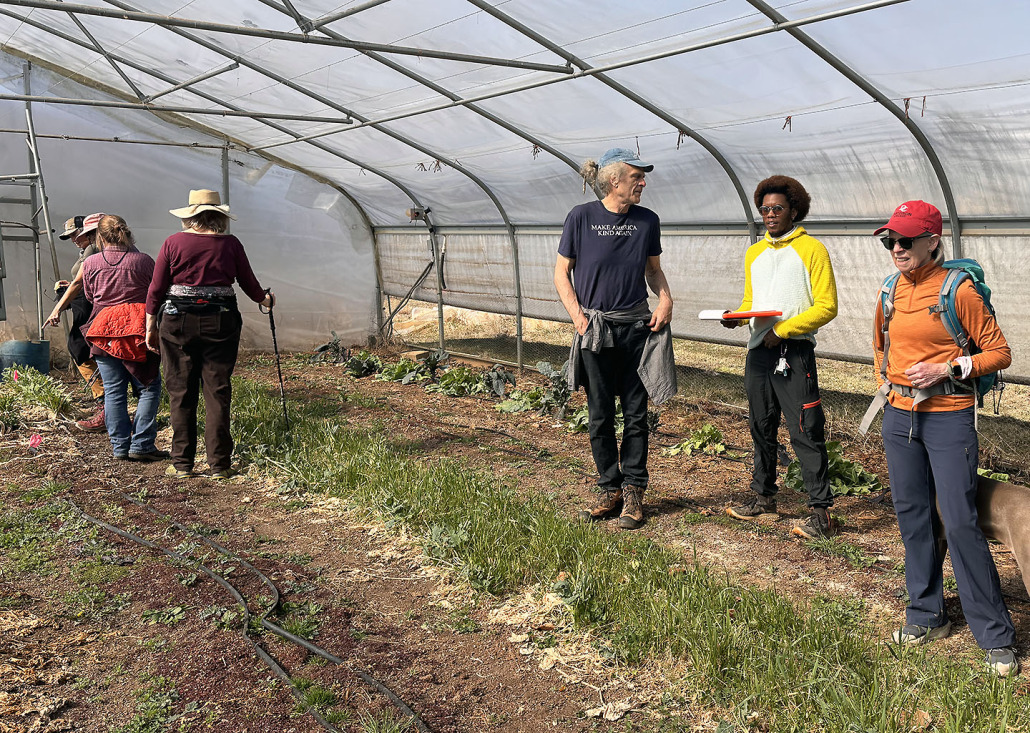
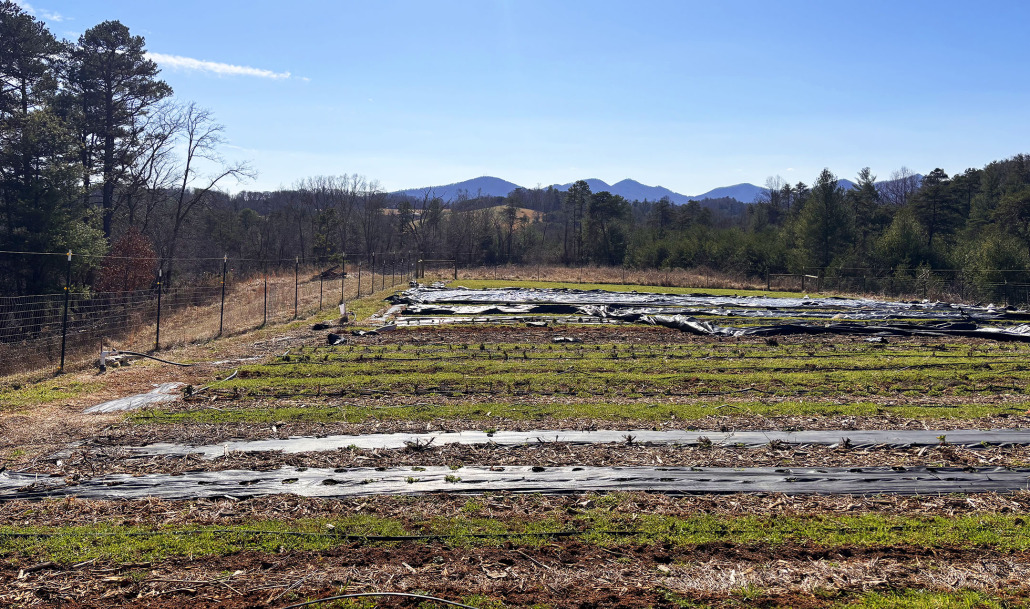
“This area of greenhouses and produce beds on the eastern edge of SAHC’s Community Farm now provide space for our partners at the Utopian Seed Project to conduct crop trials, seed variety testing, and climate resilience efforts,” said Alex. He explained how the Utopian Seed Project, founded by Chris Smith, is set to conduct a large-scale taro trial.
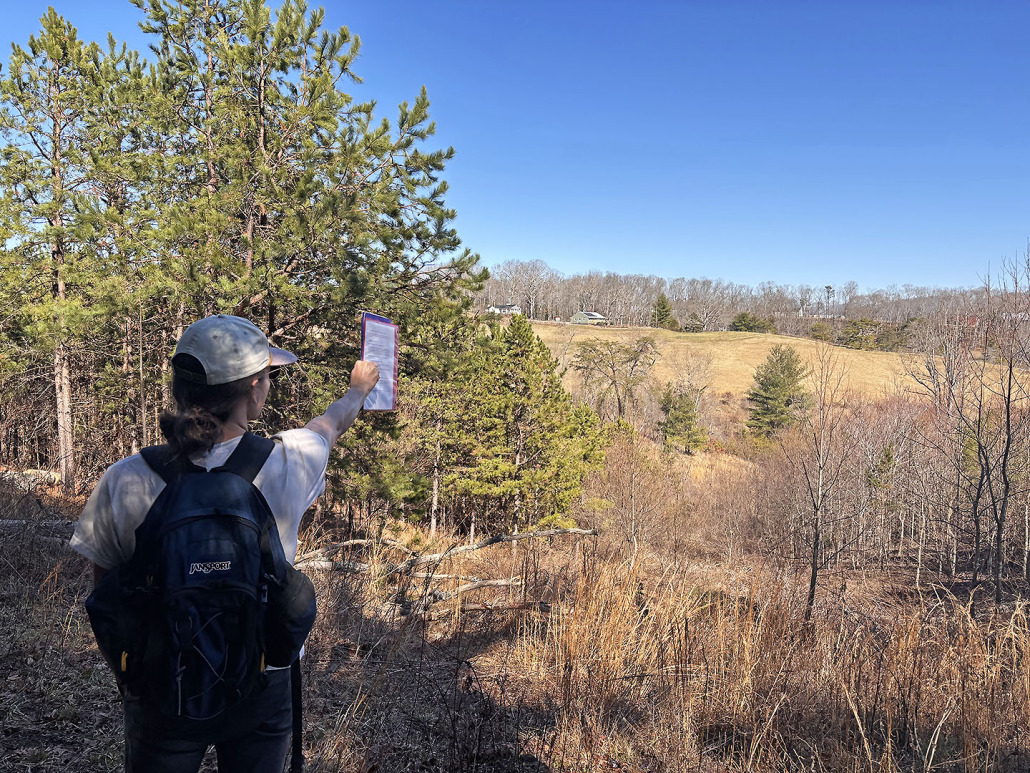
After taking in the views from the project site and wandering through a greenhouse, the group set off on the final stretch of the hike. They looped around for a stunning view of Deaverview Mountain before winding the way back toward the trail start. Along the way, they passed a rolling hill, its surface shaped by deep, wavy trenches that have been filled in and mounded over.
Alex gestured to the slope. “It may not look it now, but what you’re looking at here is a Food Forest that we started in 2024, in partnership with Contour Lines, Inc. We planted a mix of nut and fruit trees, along with native species, that will eventually become a layered canopy that boosts biodiversity. The main idea is to make this a model for sustainable farming, and hopefully, it will support community food programs like U-Pick and CSAs.”
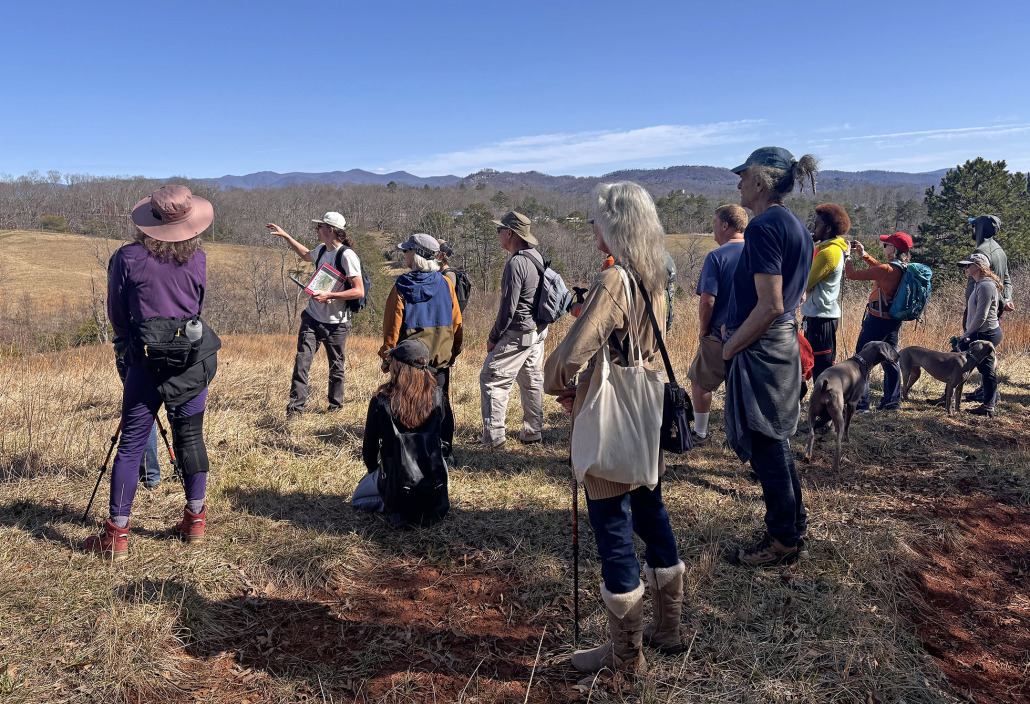
Alex explained that SAHC’s Food Forest is planted on contour across the farm’s slopes to help prevent erosion and improve water filtration. It is one of two demonstration agroforestry projects at SAHC’s Community Farm. On the opposite side of the trail, the larger Silvopasture Project spreads across an area of pasture. In 2023, SAHC converted 8 acres of open, sloped pasture by planting a variety of trees on contour to support soil health and prevent erosion while also benefiting livestock (like the Highland cattle). This silvopasture method has been proven to increase carbon sequestration and reduce greenhouse gas emissions by up to 50%.
“Over 4,000 trees have been planted on these contour lines,” explained Alex. “The scale of this project was made possible by the help of SAHC’s many volunteers.”
The group completed the hike by following a narrow trail along the upper edge of the Silvopasture Project and returning toward the farmhouse and SAHC’s Education and Event Center.
As the hike came to an end, the group enjoyed a moment to refresh themselves in the space used for educational workshops, commercial kitchen, and events. Meanwhile, Justin and Alex paused to answer lingering questions about SAHC’s varied farm projects. The hike and sunny weather left everyone in high spirits — excited and inspired by the many land conservation projects underway.