Spring 2024 Farm Updates
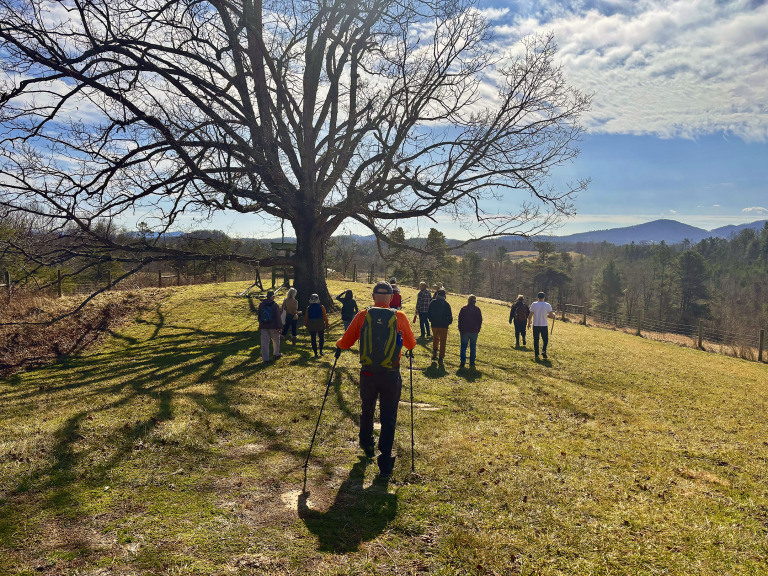
Our ever-evolving 140-acre farm and education center in Alexander, NC continues to expand with exciting new programs and hands-on experiences. Come out to the farm for a guided farm tour (held monthly), or sign up for a session in our Farmer Education Workshop Series. From volunteer work days to hikes and workshops, we have plenty of opportunities to connect with this special conserved property.
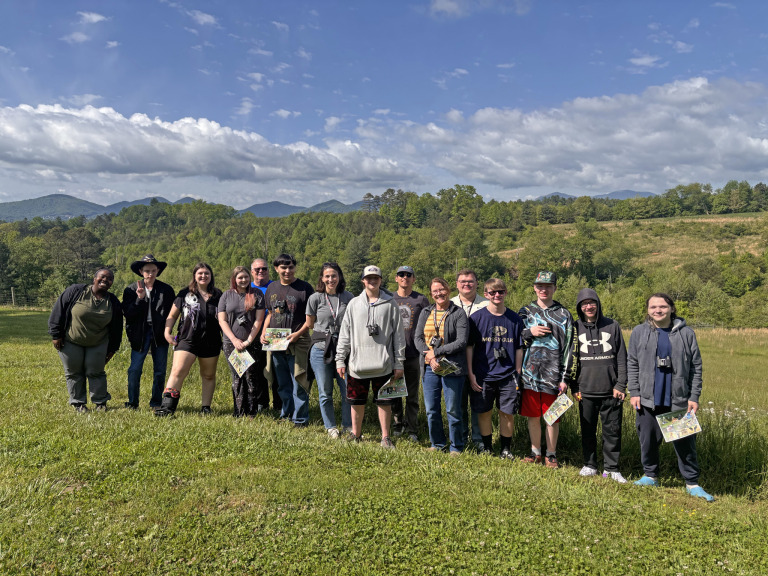
Volunteers from the Asheville REI store staff joined us early in the year for a service work day on the farm in honor of Dr. Martin Luther King, Jr. They helped out in the stream restoration area, and took a farm tour to learn about the diverse projects going on here.
NEW Food Forest
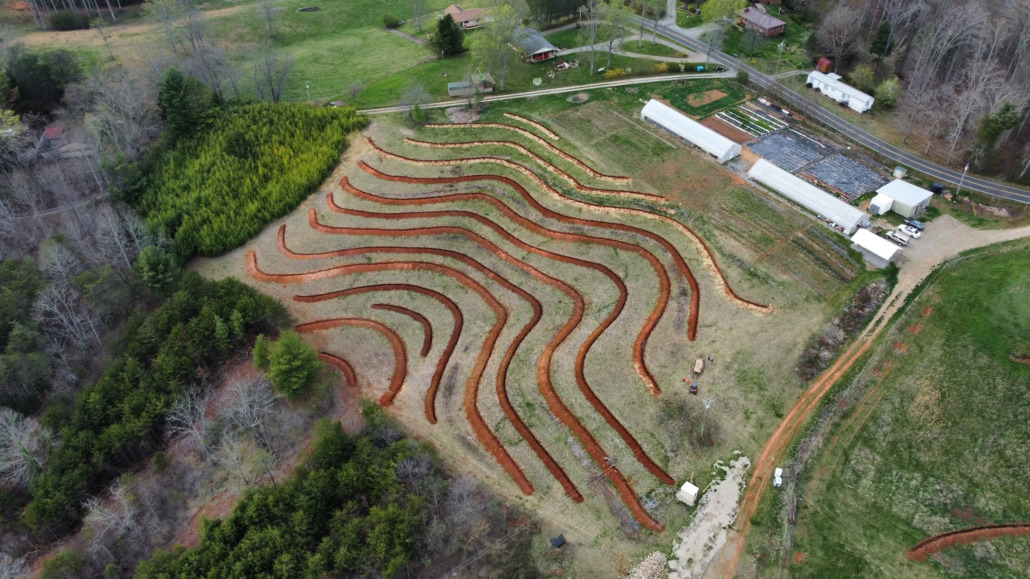
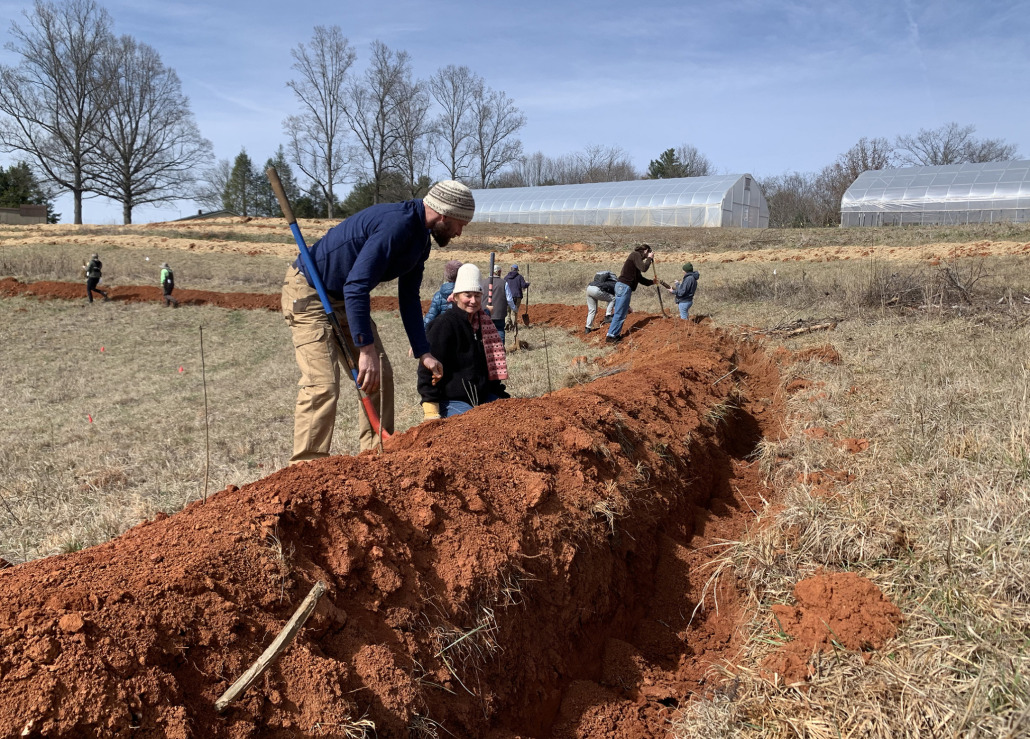
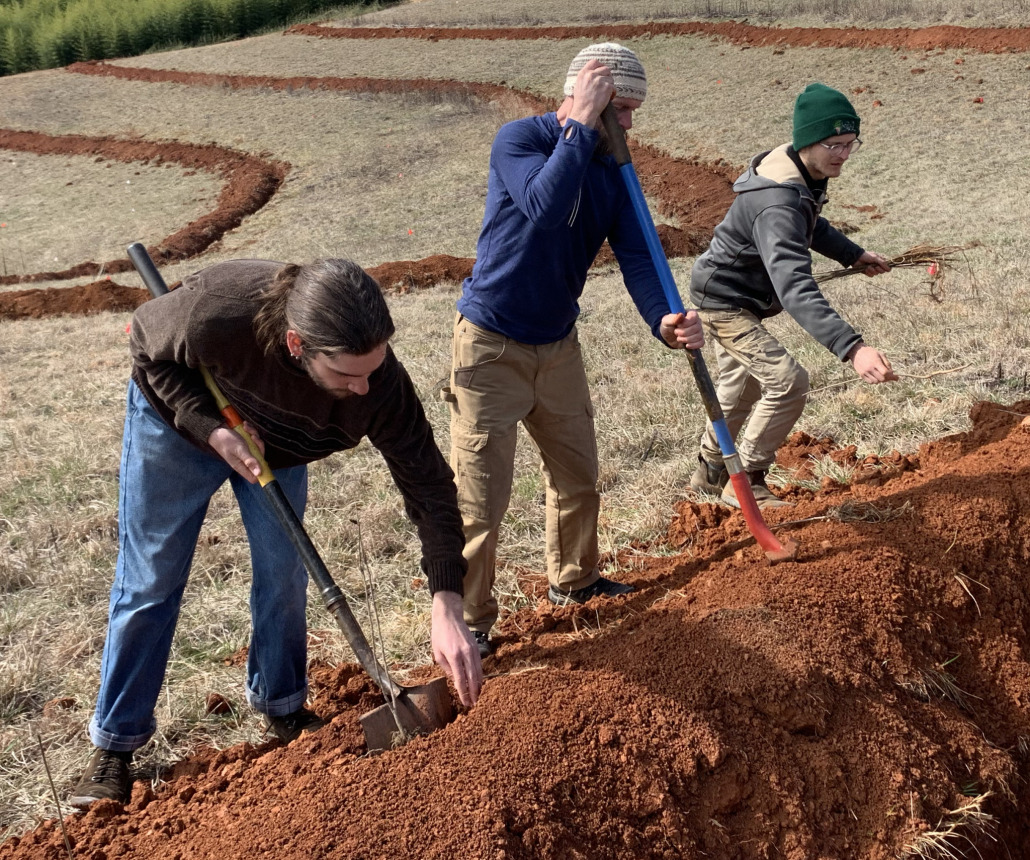
This year we have again teamed up with Contour Lines, Inc. to host an educational workshop and plant 2,000 trees in a new 13-acre food forest project on the farm.
Similar to the silvopasture project which was installed last year, we planted the new food forest on contour to help prevent erosion and protect water quality flowing into the French Broad River watershed. However, in this case, the Food Forest project focuses on space outside the pastures, so there will be no livestock grazing beneath these trees. Instead, we are planting a variety of nut and fruit trees, with native support trees, which will provide multiple levels of production — and potential U-pick or community food programs.
“We are planting the food forest as a stacked canopy system, with different things growing on the ground, at knee height, and in a low canopy,” explains Community Farm Manager Chris Link. “The system acts symbiotically with the different layers, providing more biodiversity and support for each other.”
“These diversified systems on farms are also becoming increasingly important for bird conservation,” adds Stewardship Director Sarah Sheeran. “Farms like the SAHC Community Farm with unique, diverse practices are important for avian species – and also important as a carbon sink.”
Farm Incubator Program
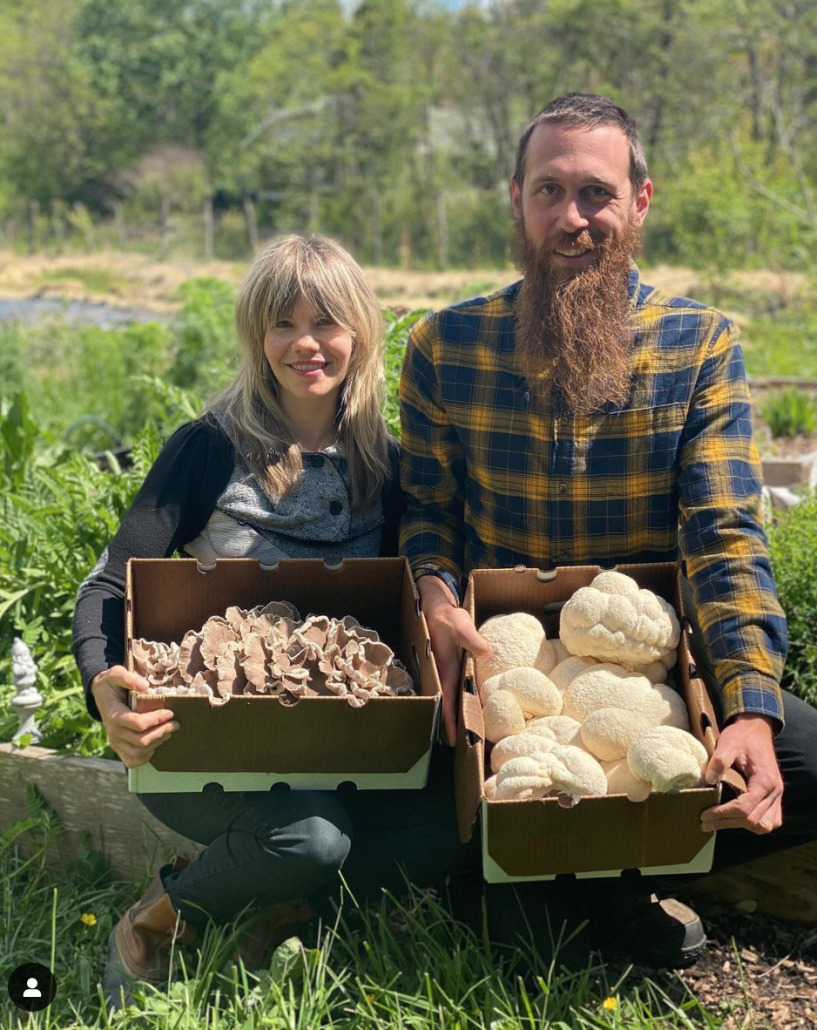
Black Trumpet Farm joined our Farm Incubator Program this year, and farmers Gwen and Jay are experimenting with mushroom compost from their gourmet mushroom growing operation. They produce specialty mushrooms and naturally grown forest products for local farmer’s markets, restaurants, and select wholesalers.
Jay and Gwen have been living in the Asheville area for 15+ years. Their background is steeped in permaculture, agro-ecology, and plant biology. Gwen began her farming career in 2006 with an apprenticeship at the Aprovecho Institute in Cottage Grove, Oregon. She then moved to Asheville to be closer to family. She has certificates in woodworking and permaculture design, as well as a B.S. in Biology with a focus on field botany and plant genetics. She is an Organic Growers School Farm Beginnings graduate and is currently working towards her Master’s in Horticulture from NC State University. Jay grew up in Marion, NC on his family’s homestead. He has a bachelor’s in Photography from UNCA and an associate degree in Civil Engineering. He loves to design earthworks, water catchment systems, and efficient mushroom production spaces.
Visit them at BlackTrumpetNC.com.
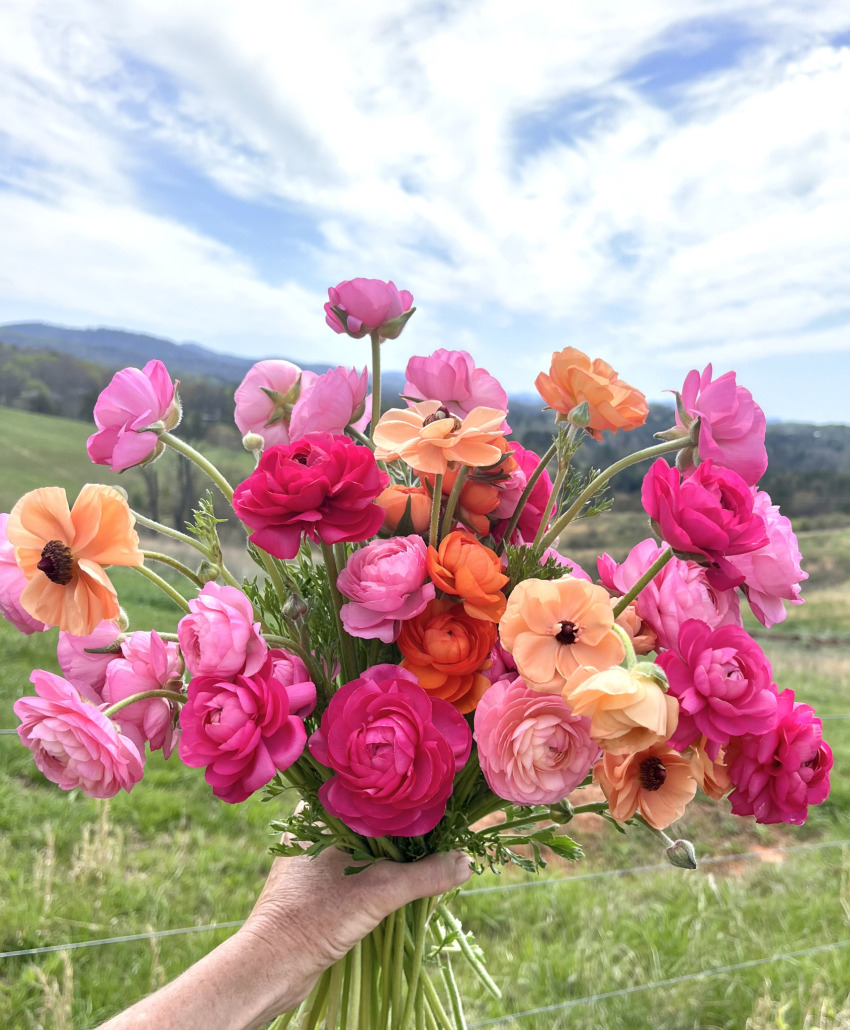
Suzanne Nolter of Blazing Star Flowers is in her last year of production at the SAHC Community Farm and currently seeks land to continue farming. Blazing Star Flowers is a small flower farm and floral design studio serving the Asheville area with sustainable flowers and lush, garden-inspired arrangements.
Find Plant Starts, Dahlia Tubers, and spring cut flowers* here:
Find more info for workshops, weddings, and flower CSAs at BlazingStarFlowers.com.
Utopian Seed Project and the Heirloom Collards Project
A nonprofit partner growing on a portion of SAHC’s Community Farm, the Utopian Seed Project promotes regional agrobiodiversity and cultural connections with food crops. Greater seed variety leads to stronger, more culturally significant and interesting food systems.
“By having more varietal diversity, we have more resilience in the food system,” says Chris Smith, executive director and founder of The Utopian Seed Project. “Plus, personal stories make the different varieties really special.”
According to Chris, there are multiple stories about the origin of collard crops. Seeds likely originated in Europe and migrated with colonists. However, Europeans did not necessarily use collards as a substantial food crop. This changed with the growth of the transatlantic slave trade. Enslaved West Africans utilized the crops and begin including them in recipes.
“In West Africa, there is a deep appreciation for dark, leafy greens, but a lot of those crops were left behind,” Chris said. “We see an enslaved African adoption of collards as a nutritionally important green that Europeans were less interested in, but appreciated by Africans.”
According to Smith, “collards are great because they are tough and adaptable. They were loved in the southeast because you could have a collard patch year-round and produce enough food to provide for your family.”
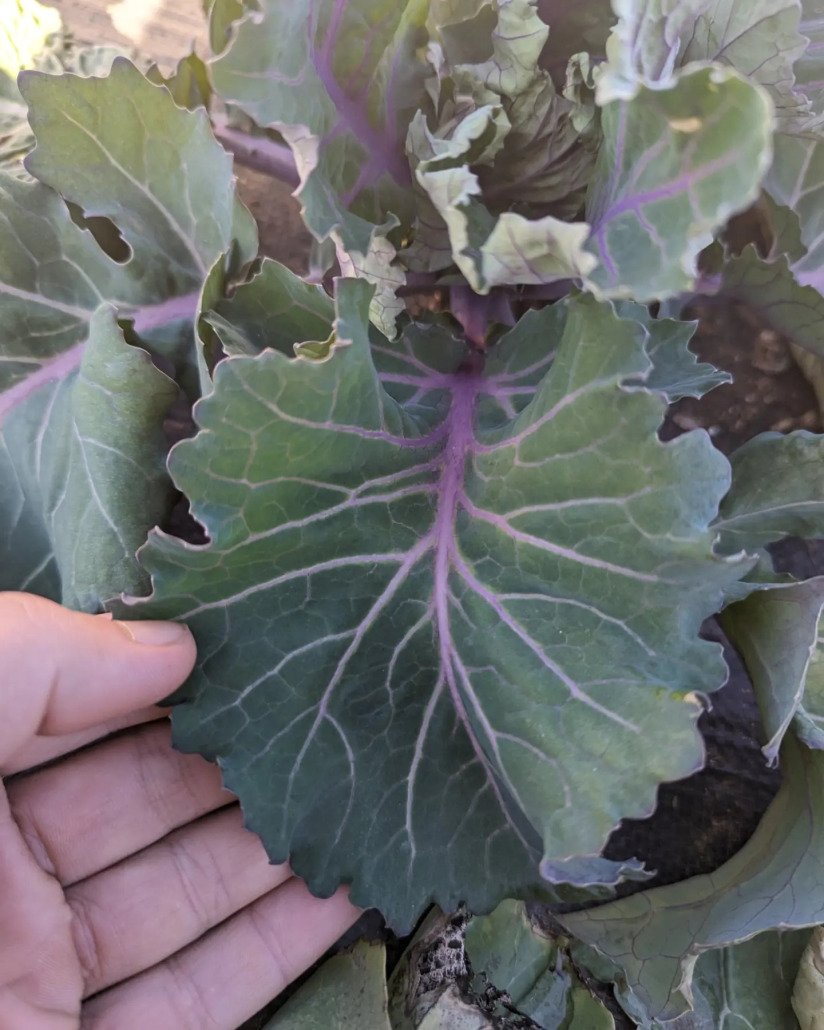
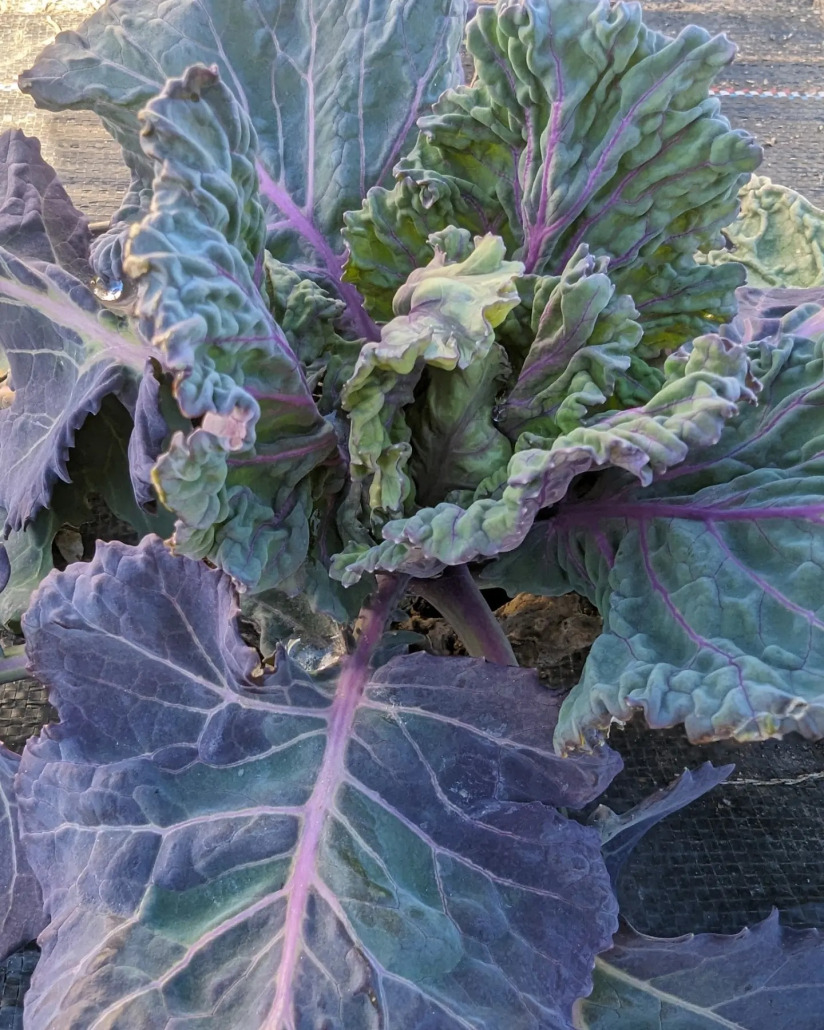
The average person who shops in a grocery store would typically have access to only one type, but Chris notes that there are over 60 different varieties of collards ranging in different colors. Part of the Brassica family, collards are cool-loving greens that tend to taste sweeter after enduring frost – so they are great in the fall months.
Utopian Seed Project is conducting seed trials to help regenerate a diverse collection of collard varieties so more people can enjoy them. Learn more at HeirloomCollards.org.

![]()
SAHC’s Community Farm is funded in part by grants from The Community Foundation of Western North Carolina, the USDA National Institute of Food and Agriculture Beginning Farmer and Rancher Development Program (for Beginning Farmer Success – Farm Pathways to Long-Term Land Tenure), and a cost-share grant from USDA Natural Resources Conservation Service.