
Grassy Balds Management
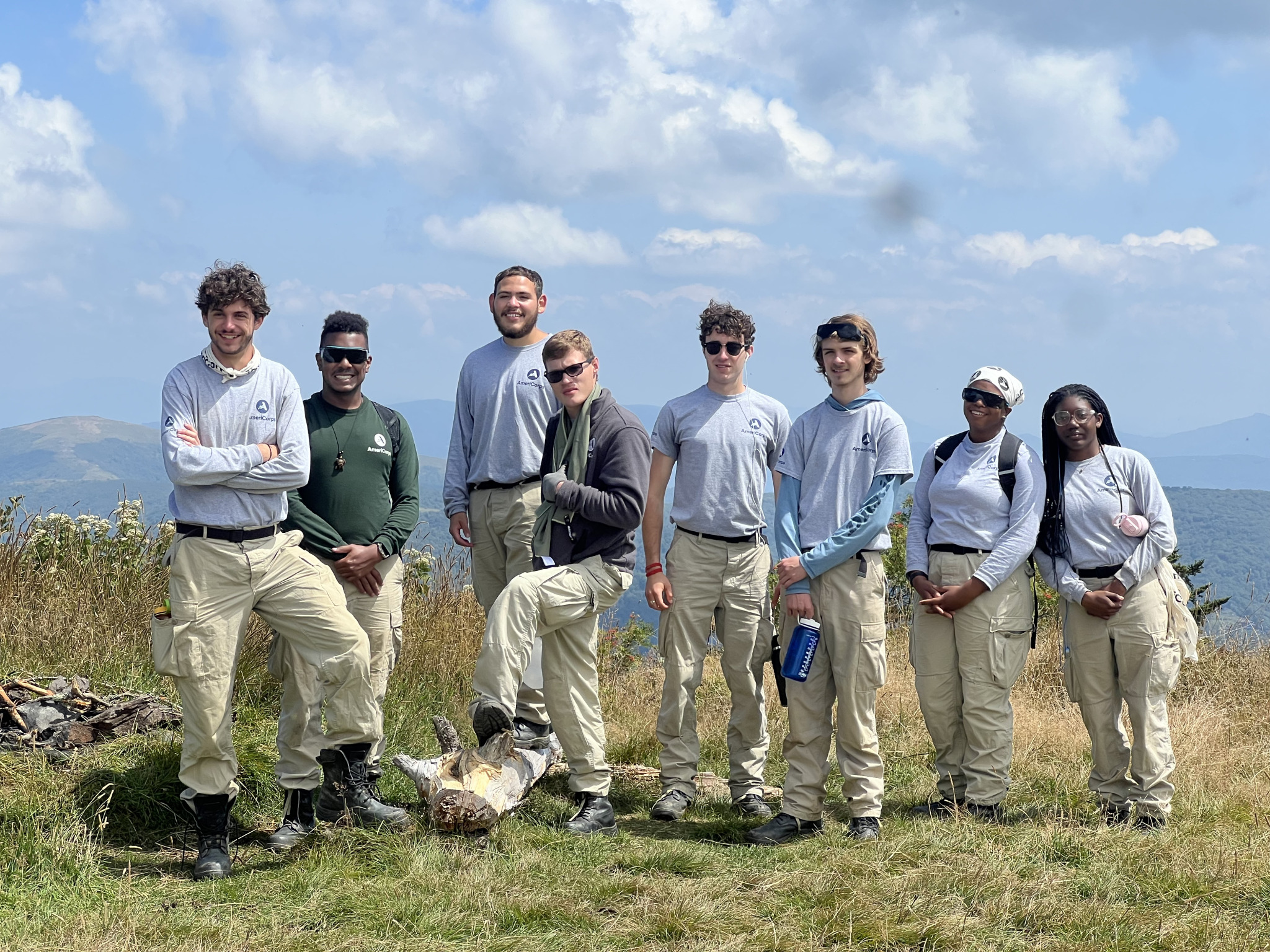
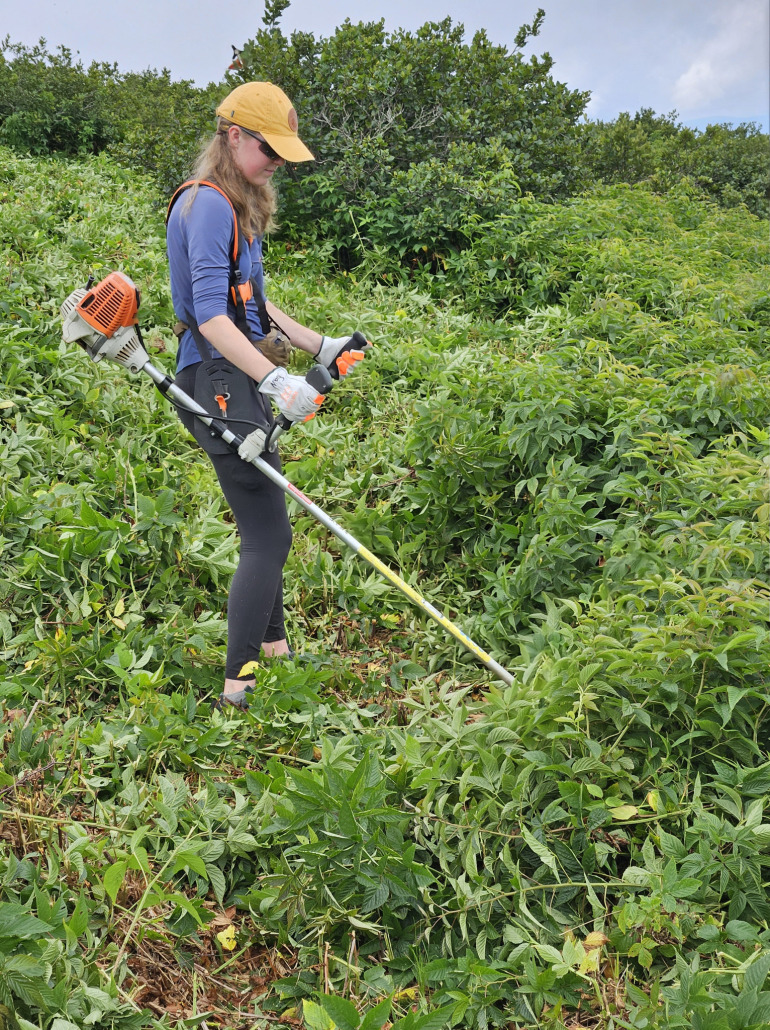
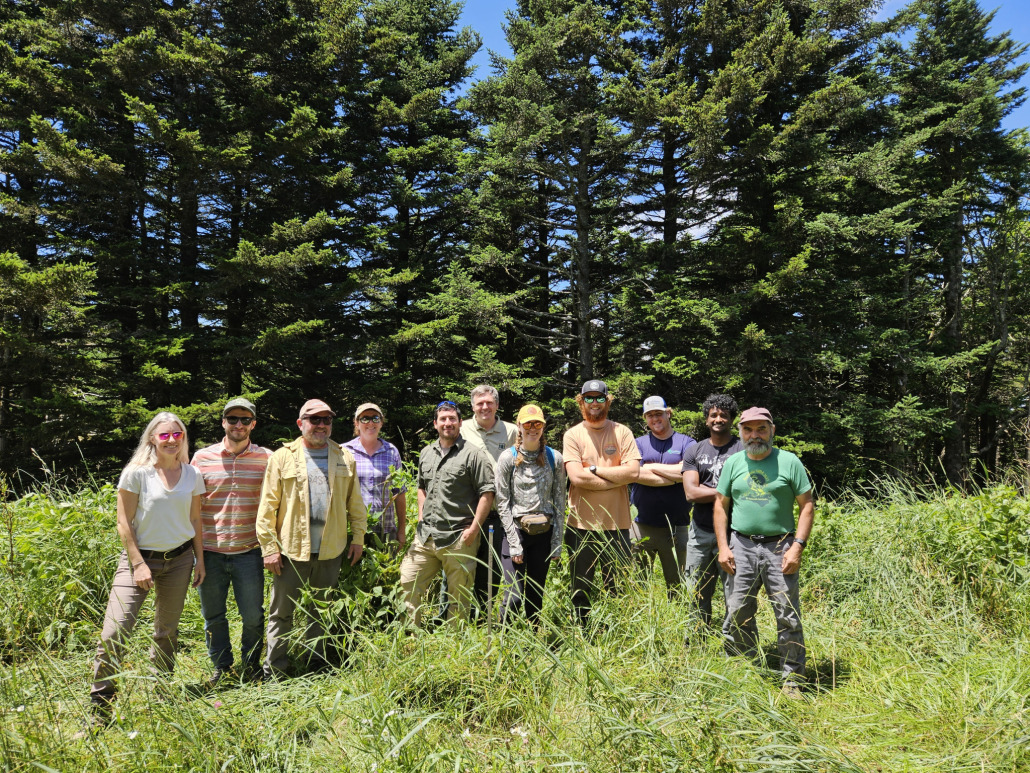
“SAHC staff and volunteers hand-mowed approximately 11 total acres on Round Bald, Engine Gap, Jane Bald, and Grassy Ridge this summer,” says Roan Stewardship Director Marquette Crockett. “We also assisted with planning and mapping for track-mowing 15+ acres on Hump Mountain, which was completed by our partners at the Appalachian Trail Conservancy and Pisgah National Forest. We were particularly pleased to collaborate with Roan Mountain State Park to host an AmeriCorps NCCC (National Civilian Community Corps) crew who cut vegetation and used it to “brush in” social trails created by heavy visitation this summer.”
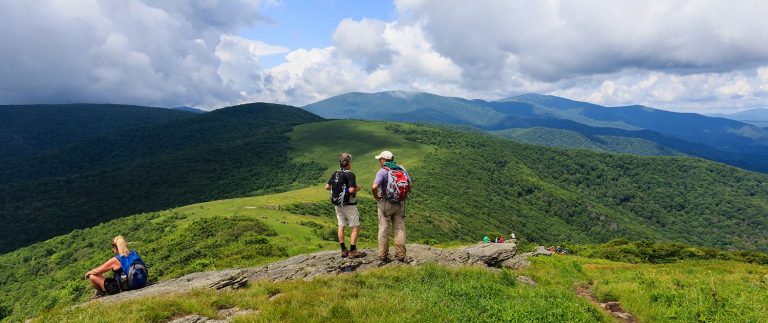
SAHC is grateful to the National Forest Foundation Matching Awards Program (MAP) and the Appalachian Trail Conservancy License Plate Grant Program for supporting Highlands of Roan management work through grant funding and partnership. Thousands of people visit the Roan Massif on summer weekends to hike and experience seasonal blooms and stunning views from open, high elevation grassy balds. SAHC’s grant-supported education and habitat restoration efforts help protect plant and animal species in these special ‘sky islands.’
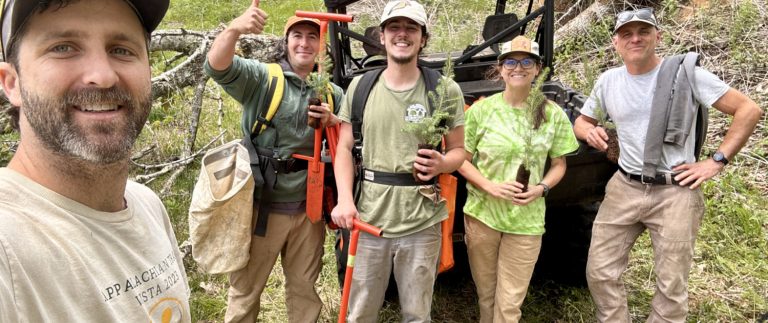
“The National Forest Foundation grant-supported project is focused on managing endangered habitat through hands-on volunteer engagement and outreach opportunities for diverse groups, fostering a sense of stewardship for Roan’s endangered grassy bald habitats,” adds Marquette.
Post-Helene
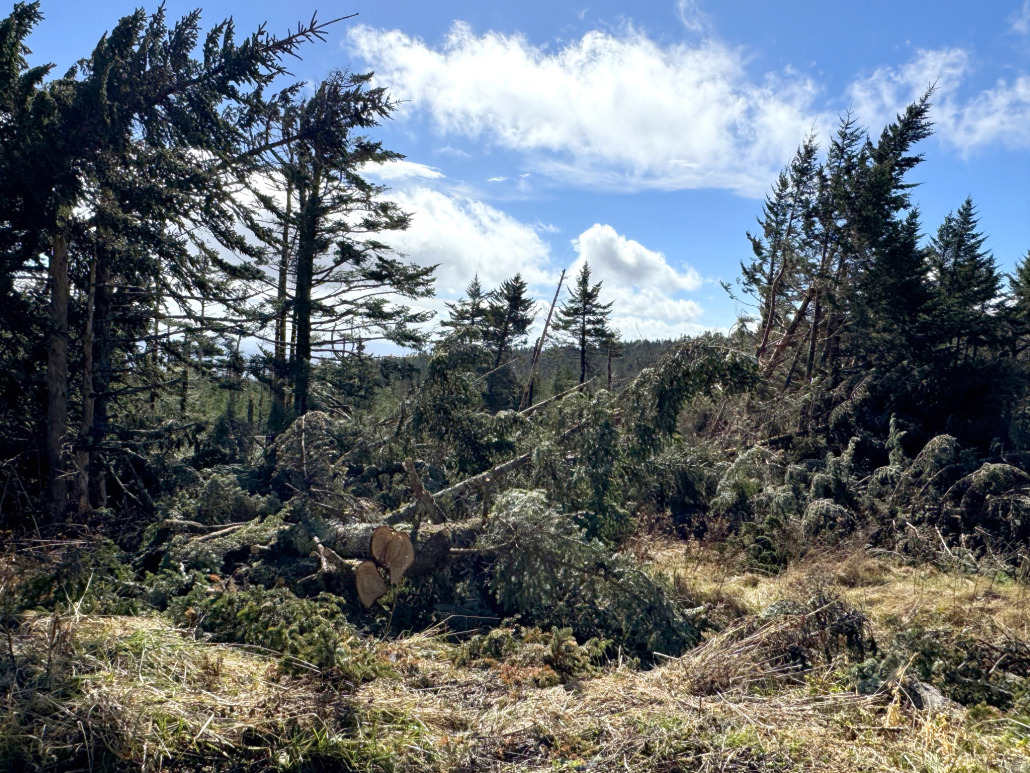
Initial assessments by the U.S. Forest Service suggest that the red spruce – Fraser Fir habitat on Roan Mountain was hit particularly hard by Helene in comparison to other “sky islands” in North Carolina, like Grandfather Mountain and Mt. Mitchell. In Virginia, Mt. Rogers also suffered severe damage to spruce habitat, but on a smaller scale. Damage includes loss of canopy trees through uprooting and snapping off, caused by winds reaching over 100 mph. Current estimates suggest that between 10-20% of the red spruce canopy was lost on Roan Mountain, which will have long term implications for a host of rare and endangered species including Carolina Northern Flying Squirrel, Spruce-Fir Moss Spider, Saw-whet Owl, and others. This loss may make the protection and restoration of these habitats on adjacent SAHC preserves even more critical.
The Southern Appalachian Spruce Restoration Initiative (SASRI) will be conducting site assessments and group planning sessions as a part of our annual meeting in early 2025. These field trips will focus on restoration techniques to protect rare species, while reducing fire risk and promoting forest regeneration in this globally rare habitat.
Visitor Use Management Update
According to the Pisgah National Forest, Helene has damaged more than 6,000 miles of roads including 1,000 bridges and culverts. Over 12,322 miles of rivers and streams have been impacted in North Carolina. On the National Forest, much of the damage was focused on the Appalachian Ranger District (Haywood, Madison, Buncombe, Yancey, Mitchell, and Avery Counties) and the Grandfather Ranger District (Buncombe, McDowell, Burke, Caldwell, Avery and Watauga Counties). Both of these districts are currently still closed for visitation, but hope to begin opening up areas on a rolling basis by Thanksgiving. The Cherokee National Forest was also impacted, but roads and trails are now open – campgrounds and day use areas will remain closed for the rest of the year.
The Appalachian Trail is currently open in sections in the Smokies, Cherokee National Forest, and Virginia, but trail conditions are highly variable and may still be dangerous in most sections. The Cherry Gap shelter was destroyed and the Moreland Gap shelter was damaged. Tennessee Eastman Hiking and Canoeing Club and the Carolina Mountain Club have been working diligently to clear sections of the Trail.
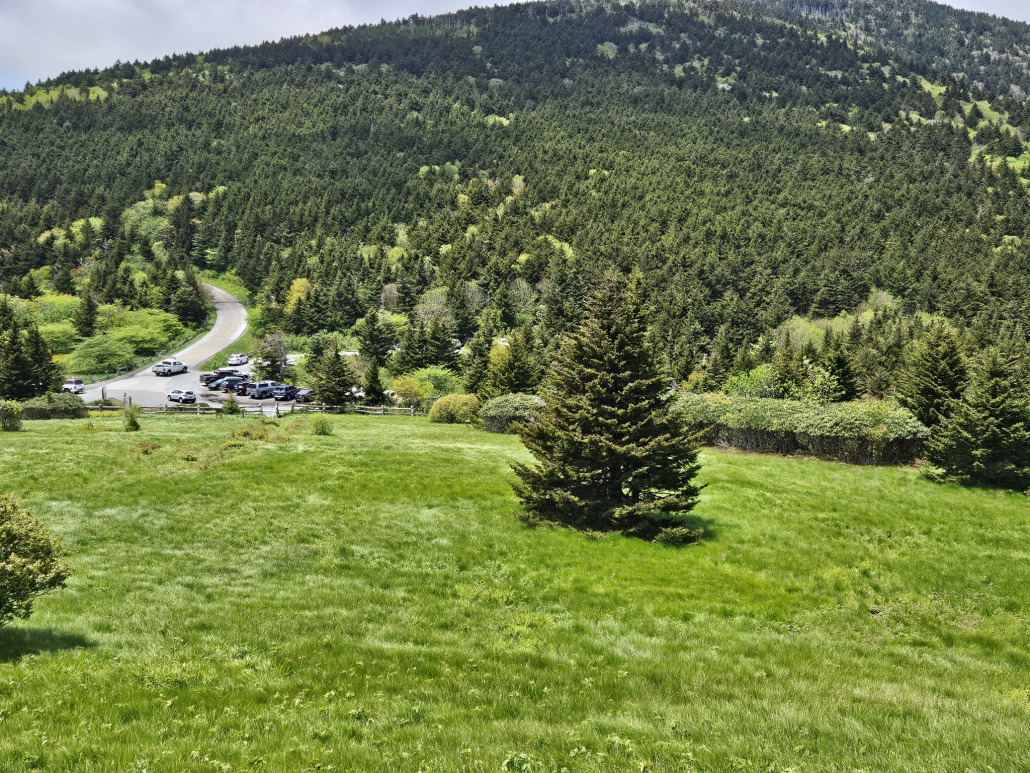
Because of the enormous amount of assessment and restoration work faced by all partners, the Roan Mountain Visitor Use Management team paused our work until late winter 2025, at which time we will reassess and reevaluate the needs for recreation in this area, including trail restoration, parking needs, and natural resource protection.
We are happy to report that while many special places in the Roan were impacted, many others remain much as they have always been. The trail from Carver’s Gap to Grassy Ridge was impacted by erosion, but the balds are unimpacted. SAHC’s Birdhouse and Elk Hollow Preserves stand ready to host spring visitors, and we are working to sure-up access to our Little Cove Creek and Little Rock Creek Preserves, both of which were generally unharmed.