In early February, over 30 participants gathered in the cozy conference room at the SAHC Community Farm, where large windows frame a mountain backdrop. The attendees included permaculture enthusiasts, landscapers, and farmers aiming to incorporate agroforestry pruning techniques into their methods and projects.
“I’m trying to incorporate more sustainable methods of pruning into my landscaping,” shared participant Geneva Bierce-Wilson, owner of West AVL Gardens landscaping. “I want to learn how to prune not only for aesthetics but for the health of the land.”
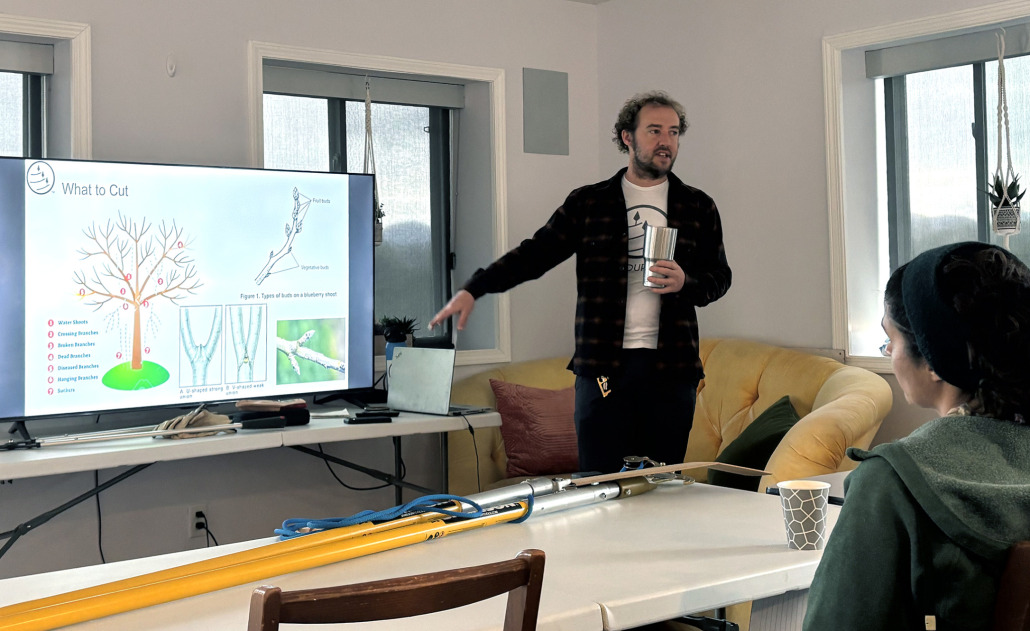
Equipped with coffee and notebooks, attendees prepared to dive into the hands-on pruning workshop led by guest speaker Thomas Leonard. This workshop is part of an ongoing series hosted by SAHC Community Farm Manager Chris Link to promote sustainable land practices.
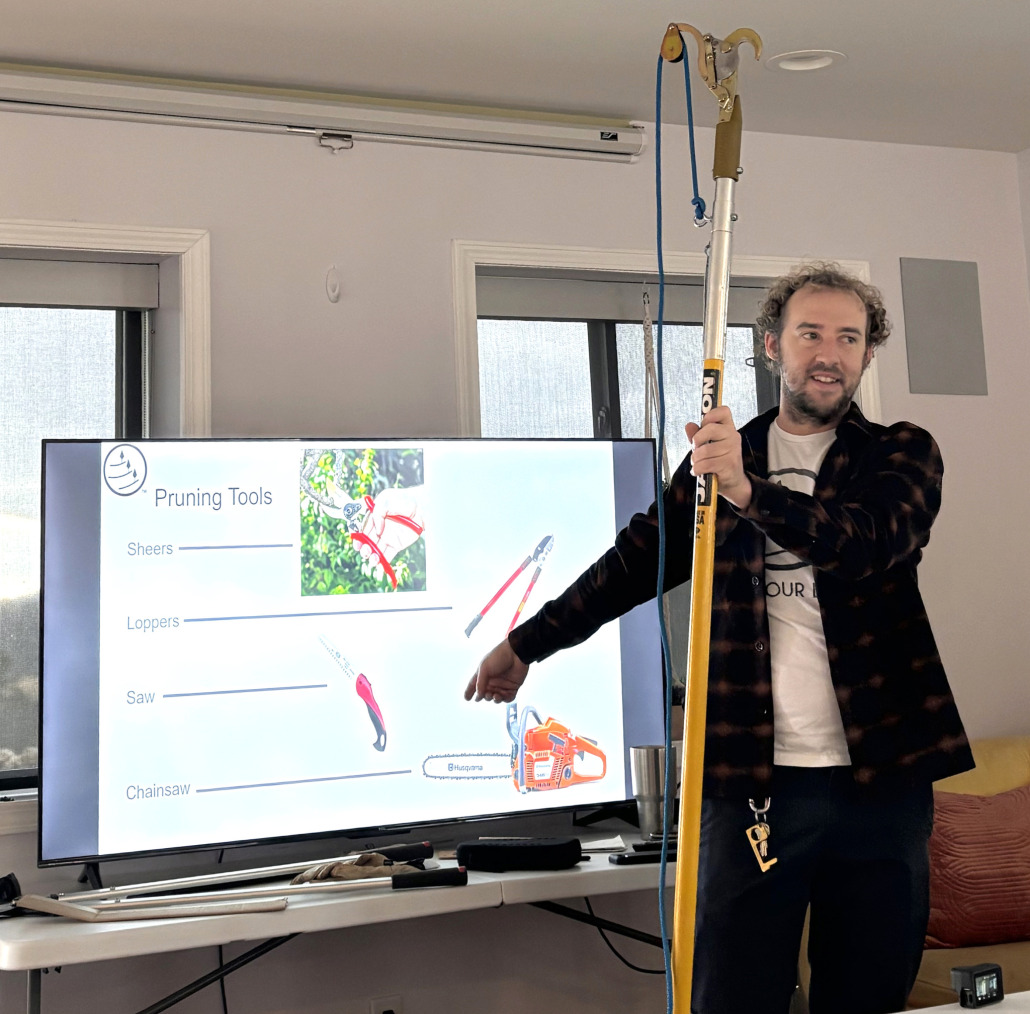
Instructional Workshop
Thomas began the workshop with one key takeaway for participants:
“If you don’t get anything else out of this workshop, the biggest takeaway is that no tree should be pruned without a clearly stated objective. You don’t just start cutting down a tree, you gotta step back, look at it, and come up with a plan. What do you want this scene to look like? What is your plan?”
He explained that agroforestry takes time and requires patience, with fruit trees taking three to five years to bear fruit, nut trees taking seven to ten years, and lumber up to fifty years.
Sharing examples from Contour Lines Corp.’s thriving agroforestry sites in Guatemala, Honduras, and his own site in South Carolina, Thomas illustrated how careful and strategic pruning can replace pesticides and other harmful chemicals. He explained how pruning invigorates growth by stimulating auxin, a plant hormone that redirects energy to promote more vegetation.
Hands-On Experience
After two hours inside, Thomas led the group outside for hands-on practice. Before heading to trees planted in contour lines across the pasture, the group stopped in front of a mature black locust tree to examine pruning cuts. One cut had healed properly, while another, made too close to the trunk, had not.
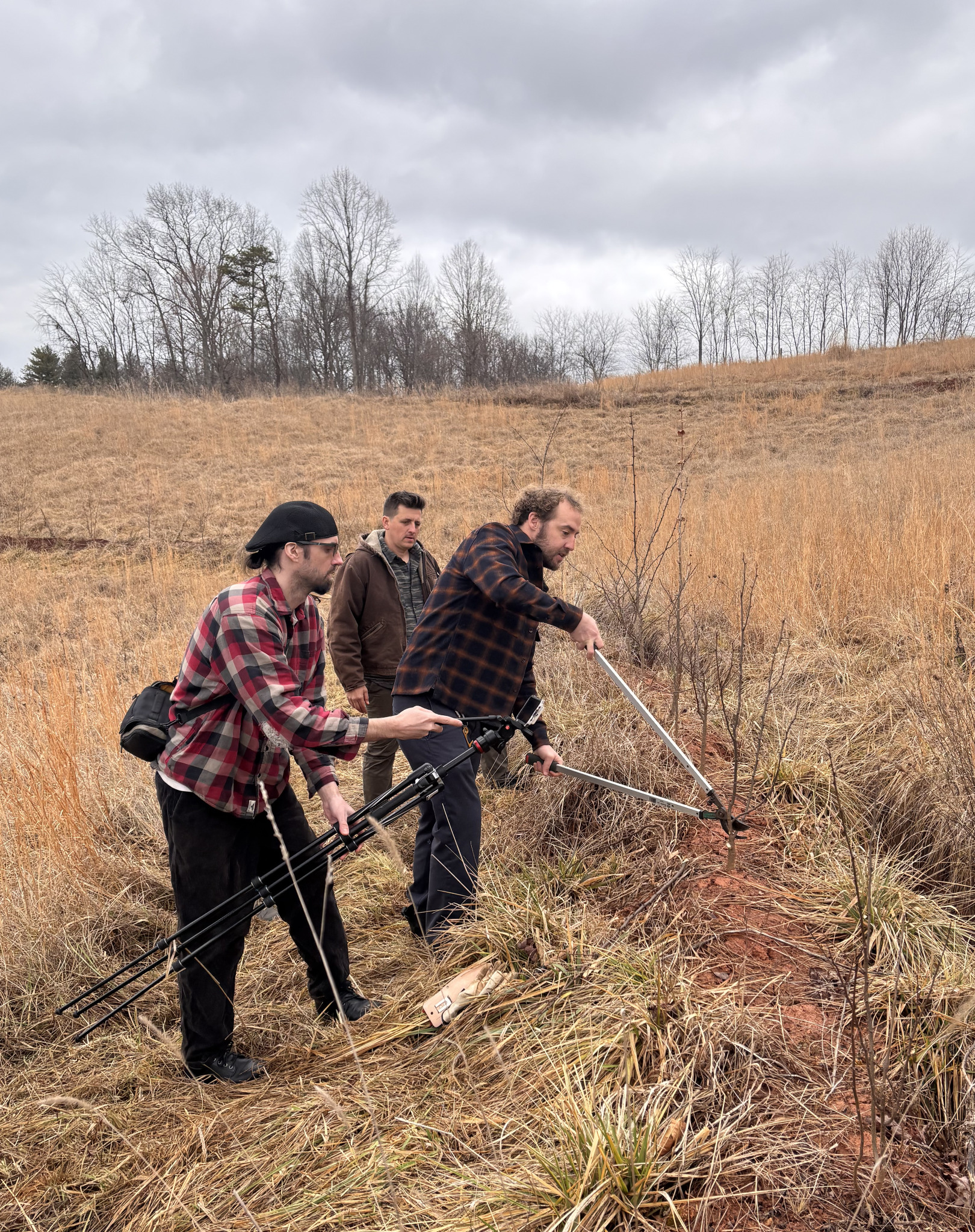
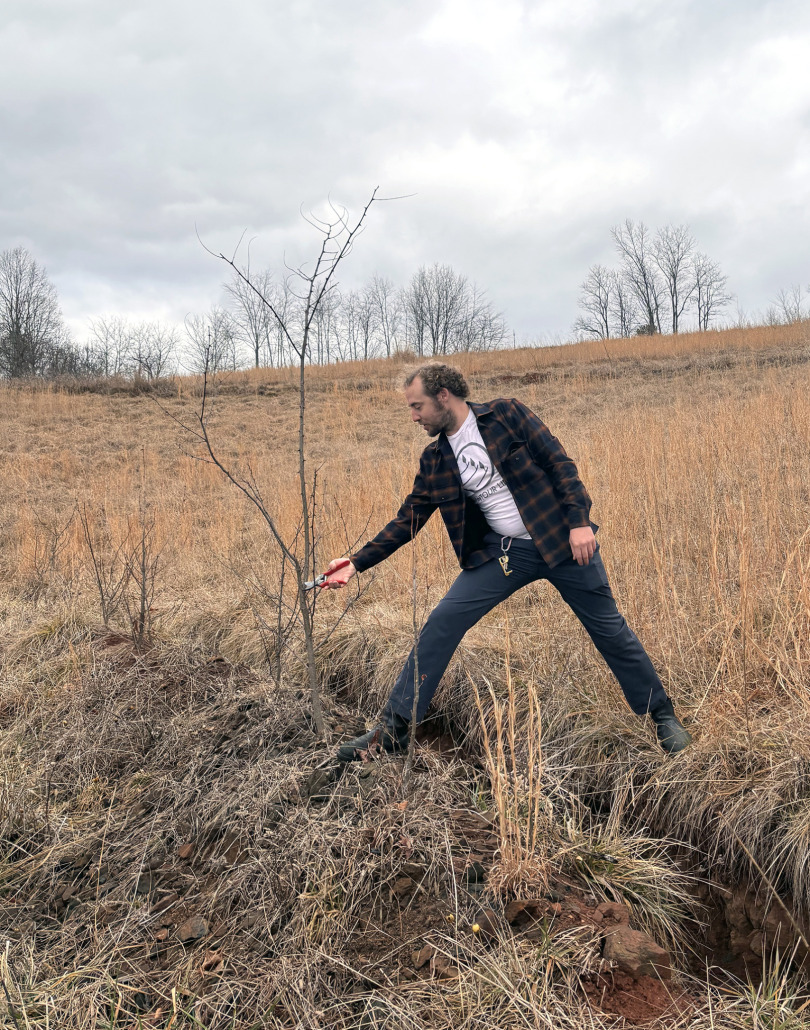
From there, the group moved on to the silvopasture project, where 4,000 trees planted on contour a year earlier had matured into healthy saplings ready for pruning. Thomas demonstrated the first cut before inviting participants to use his 14-foot Corona tree pruner.
Before handing over the pruner, Thomas reiterated, “A good rule of thumb, if you want to keep your tree alive, don’t go and hack down the whole thing, and always cut upwards to prevent bark from stripping out.”
One participant stepped forward and made a precise, clean cut on a black locust sapling.
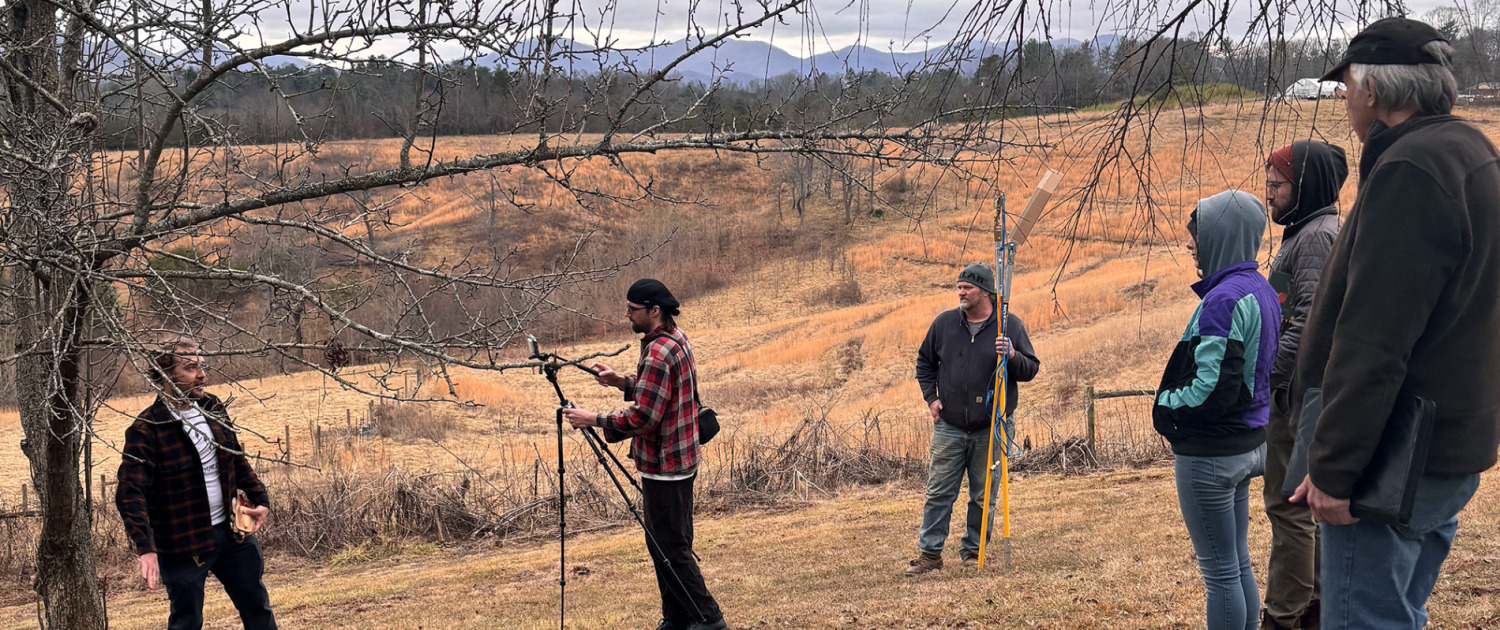

Silvopasture, from the Latin ‘silvo,’ meaning tree, is a form of agroforestry that combines trees, forages, and livestock grazing. The project at SAHC Community Farm became possible through grant-supported work that transformed eight acres of open pasture. A diverse mix of nitrogen-fixing tree species, including black locust and false indigo, were planted on contour lines to benefit livestock while preventing erosion.
About the Guest Presenter:
Looking ahead, Thomas Leonard will return to host another workshop on contour lines and agroforestry principles. The upcoming session will focus on waterway management, berms, and swales, and planting on contour.
Thomas is the Co-founder and Director of Contour Lines USA, a company dedicated to providing grants and education for planting food forests. Contour Lines Corp. has supported farmers in multiple countries, with many international projects based in indigenous communities in Honduras and Guatemala. During the workshop, Thomas announced a new shipment of 60,000 trees to the U.S., expressing both excitement and stress over the task. With a goal of planting 65,000 trees in the U.S. in 2025, the organization is well on its way, having already planted 43,397 trees between 2023 and 2024. To apply for a tree grant, click here.
Thank you to all the participants and instructors in this workshop, and we look forward to welcoming you back for future events!
SAHC received a $6,000 Catalyzing Agroforestry Grant to support the creation of this silvopasture demonstration project. Nonprofit organization Contour Lines Corp. (contourlines.org) donated plant material, design and expertise for hands-on workshops to help execute the silvopasture project on the SAHC Community Farm. The Catalyzing Agroforestry Grants Program is an initiative funded by the Appalachian Beginning Forest Farming Coalition (ABFFC) and Edwards Mother Earth Foundation (EMEF) that is managed by Virginia Tech University in partnership with Rural Action, Appalachian Sustainable Development, The Yew Mountain Center, North Carolina State University.
SAHC Community Farm work is funded in part by grants from The Community Foundation of Western North Carolina, a grant from the USDA National Institute of Food and Agriculture Beginning Farmer and Rancher Development Program (under grant award number 2021-70033-35717), and a cost-share grant from USDA Natural Resources Conservation Service.