Southern Appalachian Highlands Conservancy’s Bull Creek Preserve at Warren Wilson College
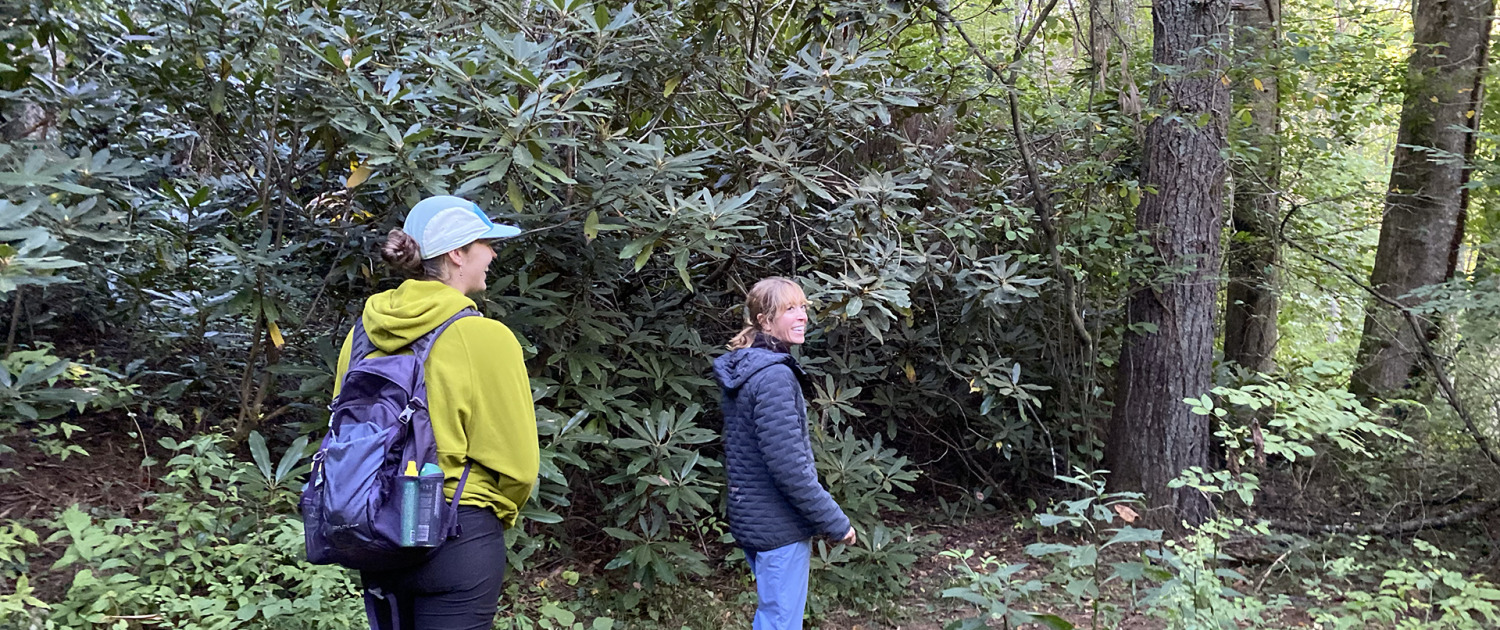
On a bright and clear Friday near the end of summer, an unsuspected chill bites in the early morning breeze. SAHC’s Farmland Program Director Jess Laggis dons an extra layer as she steps to the small gravel parking lot on the side of Riceville Road. Just a few cars can squeeze into the modest space, but Jess notes that many of the folks who enjoy the trails here simply walk over from neighboring communities.
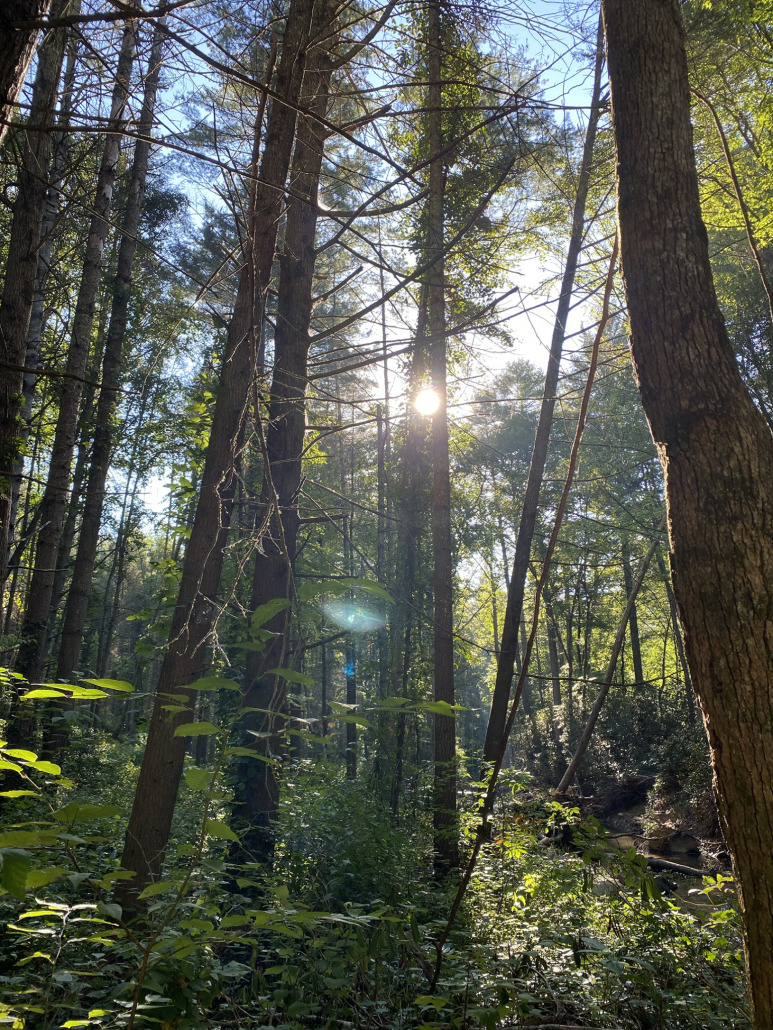
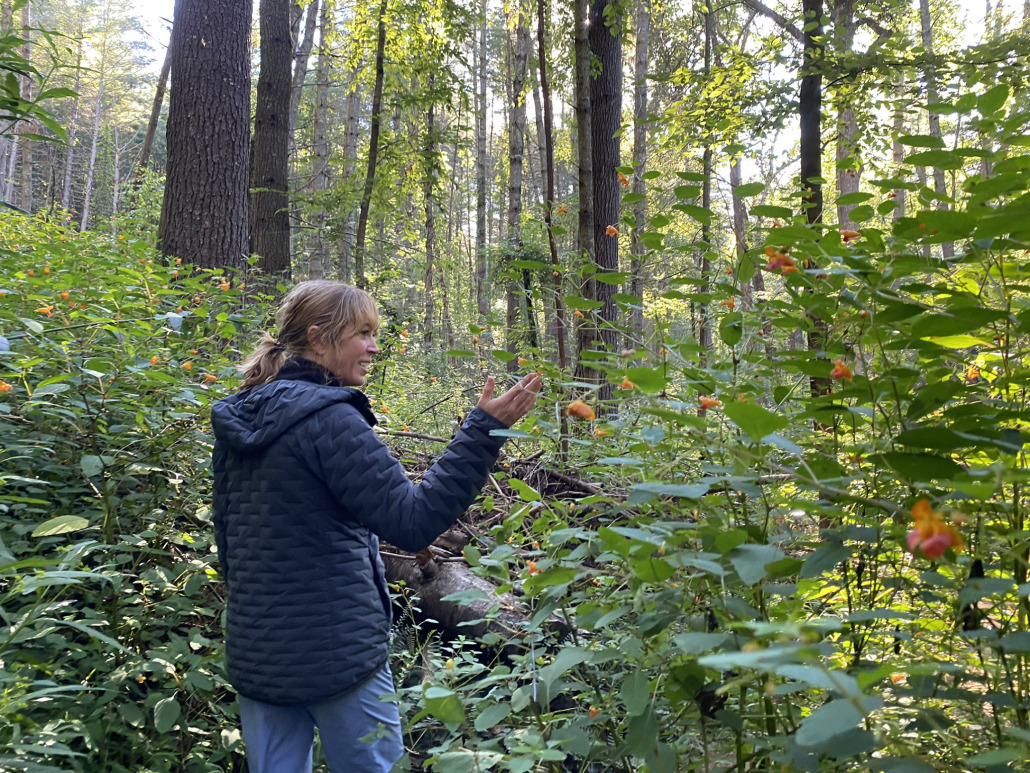
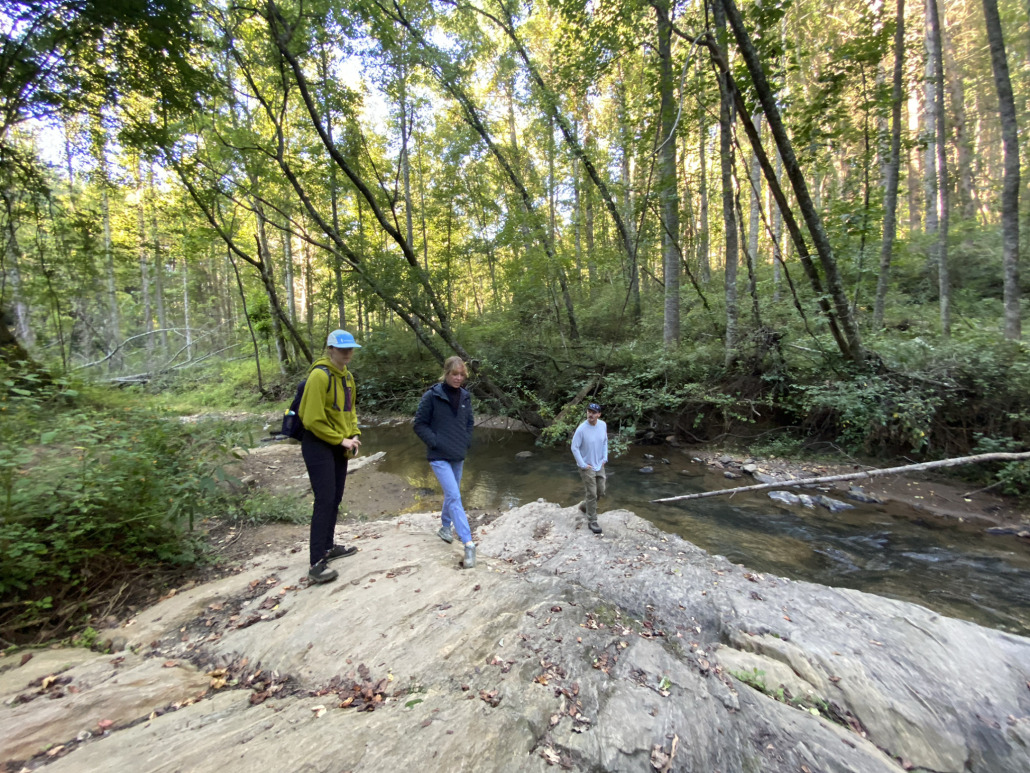
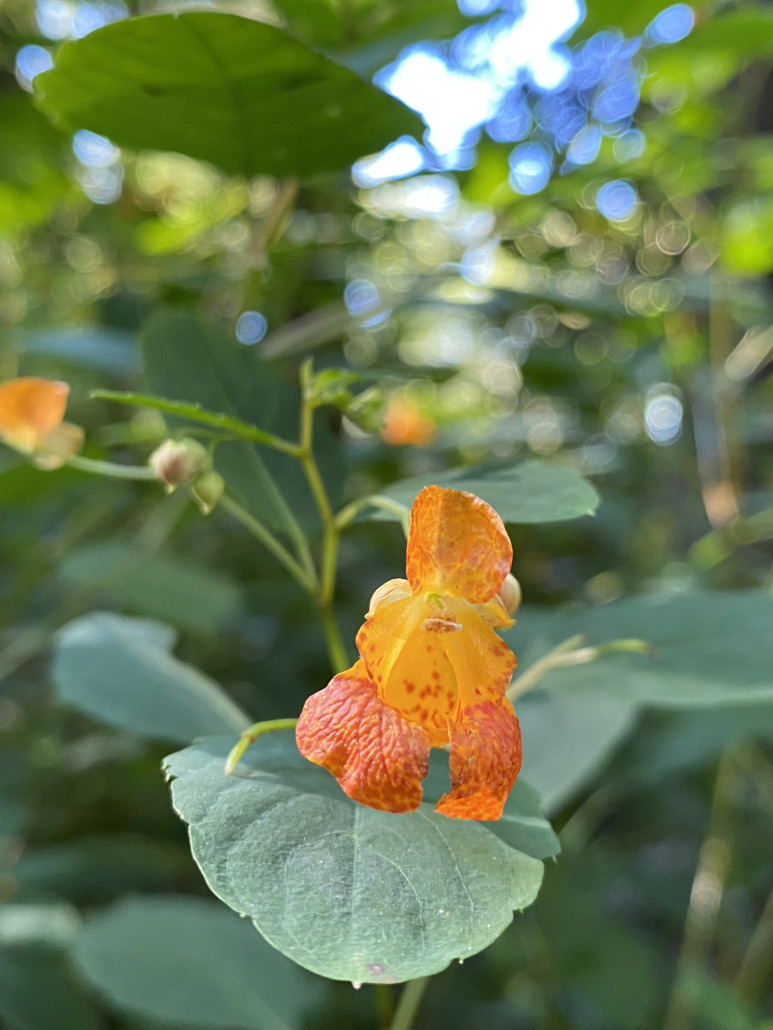
“These trails loop around the preserve, with several different cross segments you can use to create a variety of short hikes,” shares Jess as she zips the jacket and moves onto a well-worn earthen path surrounded by trees. The path skims the sunny edge of an open pasture, known locally as “Dam Pasture.” Just a short way from the parking area, Jess indicates an intersecting trail to the right. Our small staff team steps into the forest to explore a hidden wonderland tucked away in the Swannanoa valley, soaking in the soft susurration of the creek and bedazzled with jewelweed sparkling in the sunlight.
We’ve entered a very special, newly protected place – the Southern Appalachian Highlands Conservancy’s Bull Creek Preserve at Warren Wilson College.
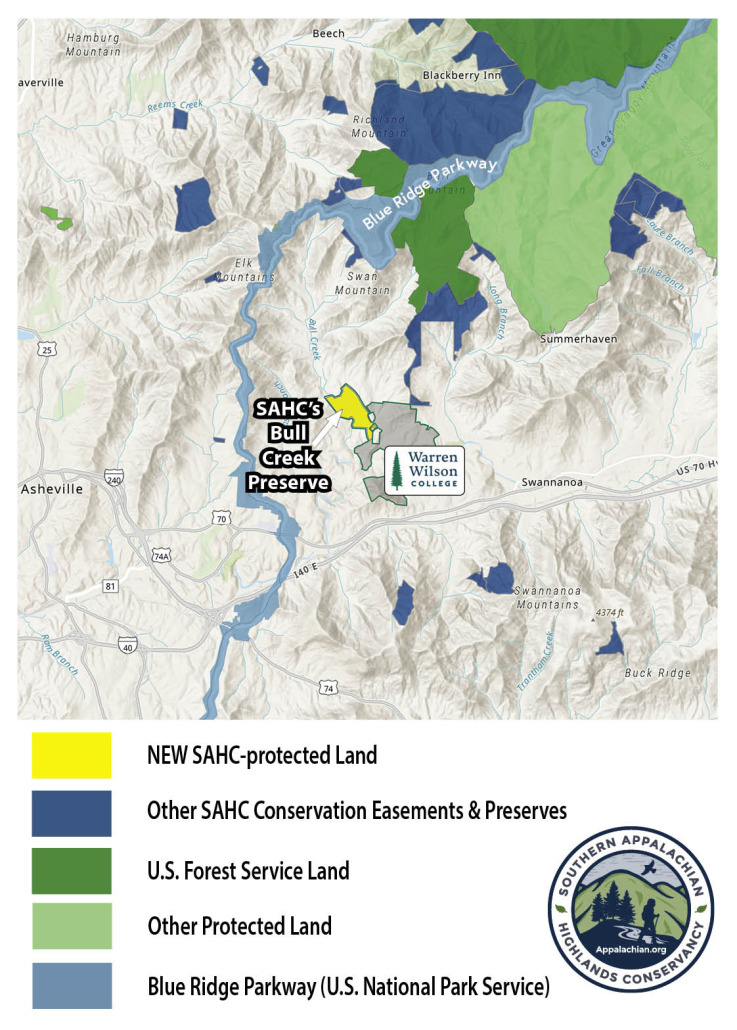
The Southern Appalachian Highlands Conservancy has purchased 191 acres on the shoulder of Warren Wilson College in the Swannanoa valley to conserve a tract of forest, open pasture, and section of Bull Creek. SAHC’s purchase ensures the property will be protected forever from real estate development, preserving its scenic beauty, and its water resources, habitat, and trails for people to enjoy. We will own and manage the land for the long-term as a nature preserve, and partner with Warren Wilson College, which will continue to use the property for education and land-management training.
“This property on Bull Creek is beloved in the Swannanoa community,” shares Jess. “I grew up visiting the trails and bends of Bull Creek with my family. My husband and I hiked here the night before our son was born. SAHC’s purchase of the land conserves a highly-developable property, so that it will remain here for people to enjoy and wildlife to thrive. This acquisition also provides an exciting opportunity to forge a strong partnership with the College. SAHC will own the land for the long term and partner with Warren Wilson College in a cooperative management agreement.”
The partnership between SAHC and the college will support managing the land responsibly, and student learning about land stewardship and sustainable practices.

Preserving the Land
“This acquisition adds to a highly visible legacy of conservation in Swannanoa,” says SAHC Executive Director Carl Silverstein. “We are deeply grateful to the generous conservation leaders who made it possible for SAHC to purchase and permanently protect this important community resource with hiking trails through the working farm and forest.”
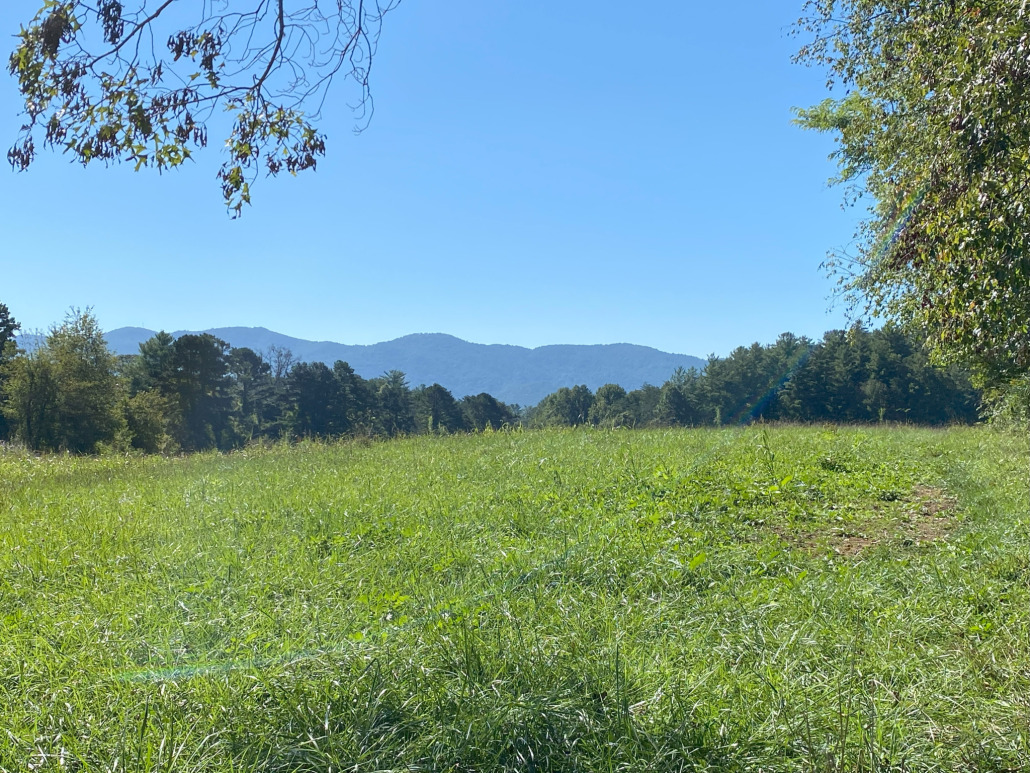
The property, to be known as the Southern Appalachian Highlands Conservancy’s Bull Creek Preserve at Warren Wilson College, consists of a beautiful cove and mixed forest, an open 17-acre pasture with stunning views of the Black Mountains, and lovely sections of Bull Creek with rocky streambanks and wading pools. A tributary of the Swannanoa River, Bull Creek originates in the Black Mountains just south of Rattlesnake Lodge and the Blue Ridge Parkway, draining an area of more than 10 square miles. Approximately 3 miles of single track hiking and biking trails traverse the property in an existing trail system.
“Helene changed a section of the stream bed,” explains Jess, pointing to a deep bow in the creek. “It will be interesting to see how this new area of wetland habitat will change, and what will grow there. Protecting this land around the creek retains a buffer area for the water to flow and spread. Stream changes and impacts could have been worse, if this property had been built upon.”
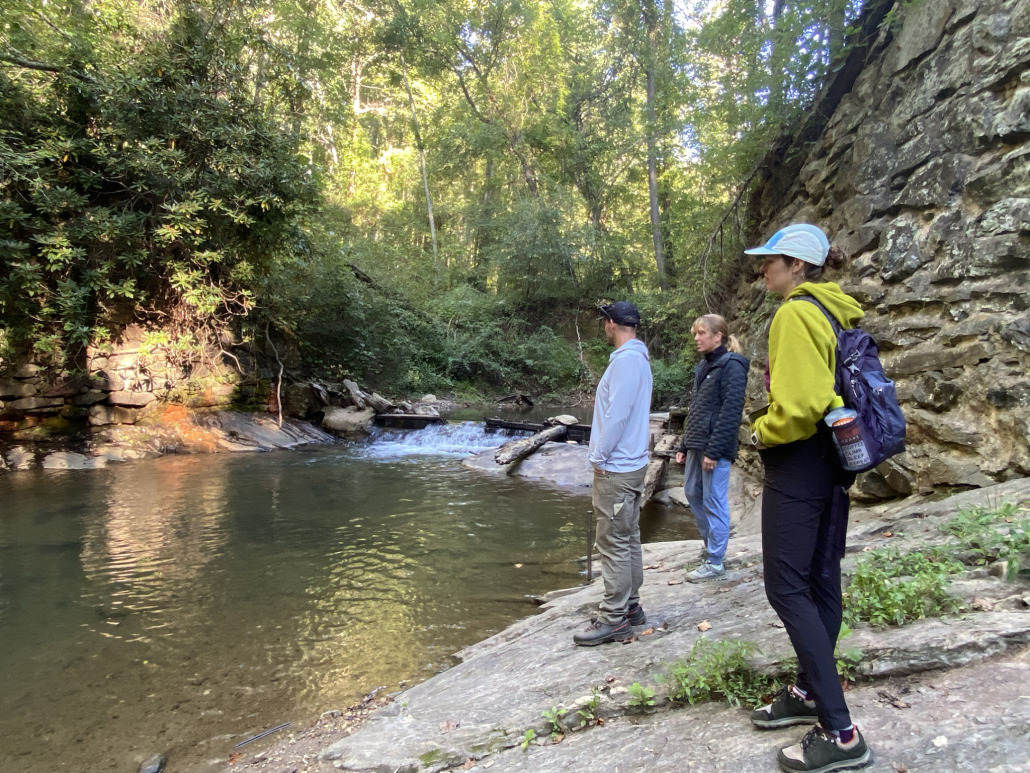
On one section of the Bull Creek Preserve land stands remnants of a decommissioned hydroelectric dam, built in 1910 to supply power and light to the Asheville Farm School (now Warren Wilson College). The dam, which briefly created Dodge Lake, served just six years before it was destroyed by the historic flood of 1916. Local residents still refer to the open field as ‘Dam Pasture.’ Both the forest and open pasture provide habitat for a variety of wildlife and native pollinator plants.
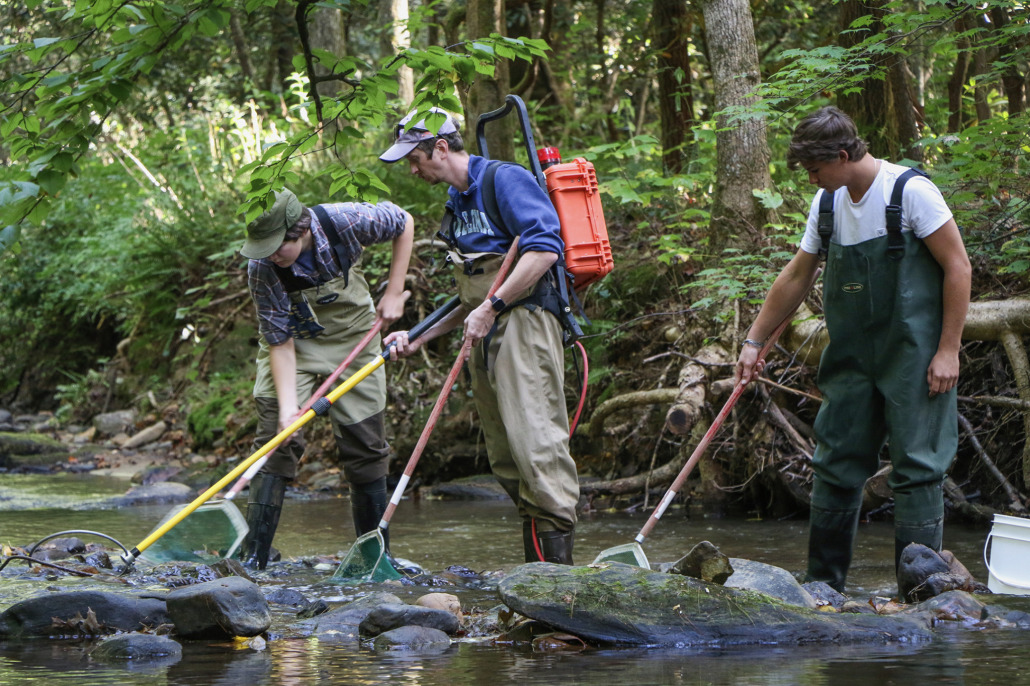
“Warren Wilson College is leading the way in redefining education for our times,” says Damián J. Fernández, Ph.D., President of Warren Wilson College. “We have refined our curriculum to focus on real-world problem-solving. We are engaging students’ hands, minds and hearts through academics, work, and community service for every student in every major. The partnership with SAHC saves forever a treasured piece of land and advances the College’s capacity to invest in high-touch, high impact-experiential education practices that empower our students to be world-ready.”
This land sale is only part of the current partnership between the college and SAHC. The two organizations are in the process of establishing conservation easements on an additional 600 acres of college land, which would take the total number of acres preserved through this partnership in the Swannanoa Valley to nearly 800.
Continuing Trail Access and Education
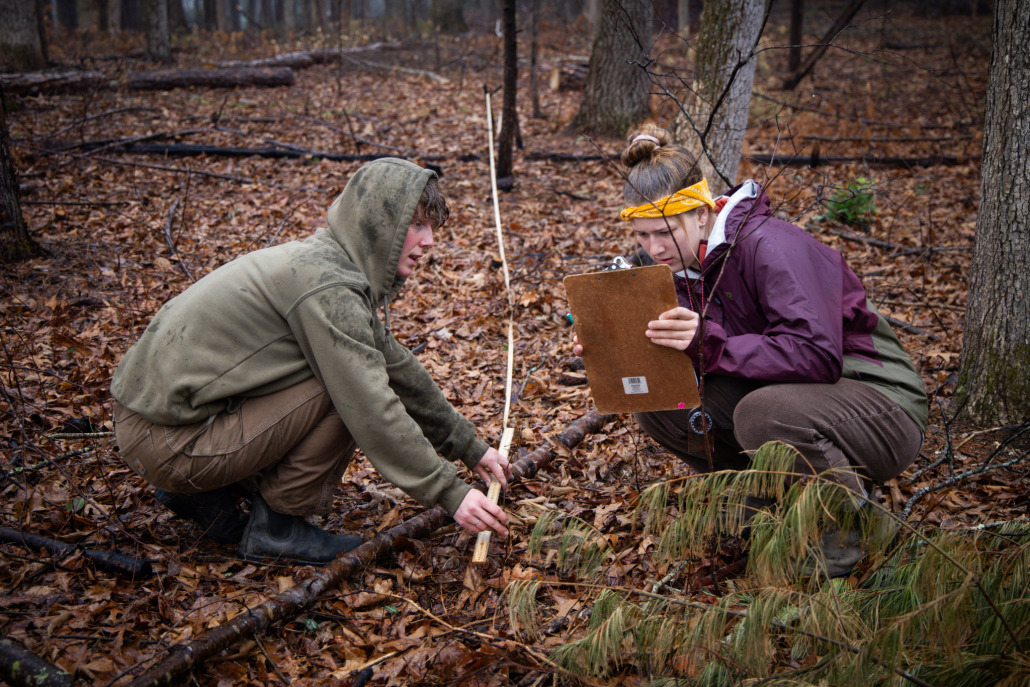
The trails along the Bull Creek Preserve property that have been created and maintained by the College will continue to remain open to the public for daytime recreation. Warren Wilson College will continue to use the pasture area in their rotational grazing program and the forest as part of the “living laboratory” of their campus.
“The preserve is a major win for the College, our neighbors and the natural systems that will be protected from development in perpetuity,” says Dave Ellum, Dean and Director of the Center for Working Lands at Warren Wilson. “The Center for Working Lands will continue to serve our mission of providing students with hands-on, applied learning, skill-building and research in forest management and regenerative agriculture. The preserve will also strengthen our recently launched programs in Animal Science and Applied Climate Studies by serving as an in-situ learning lab. Our neighbors in the region will still have access to recreational activities on the preserve and will benefit from increased engagement with Warren Wilson College and Southern Appalachian Highlands Conservancy. It is not often that a single effort provides this many wins!”
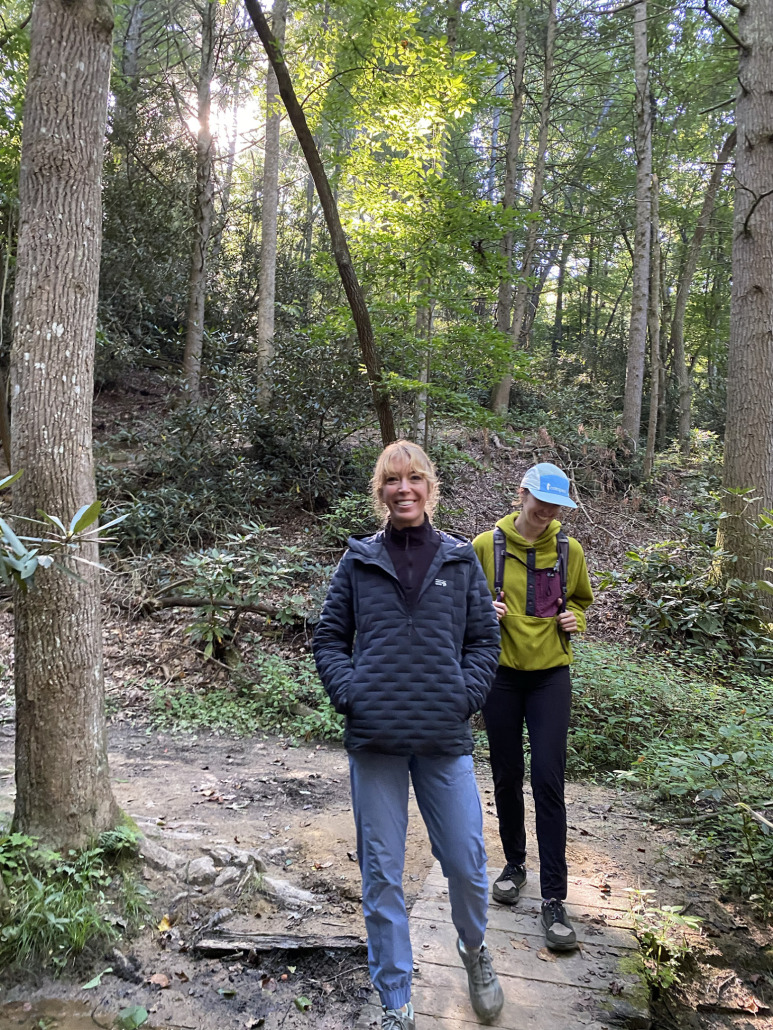
Access to the trails will be through existing entrances, with a small parking area at the Dam Pasture Trailhead off Riceville Road. Parking at the trailhead is limited, and visitors are asked to be considerate of the surrounding community and neighboring church and businesses. Please park only in designated areas, or return to visit another time if these are full. Recreation uses include hiking and biking – no fires or camping. Use at your own risk; visitors are cautioned to be especially careful around stream banks.
Come see the new preserve with us!


Partner in the Landscape: Warren Wilson College
Warren Wilson College is a vibrant, independent college with an innovative curriculum that purposefully integrates the liberal arts with community engagement and work experiences to prepare students for not only professional success, but also a life of meaning. They promise community-engaged courses, an internship, work on a campus crew, a senior capstone project and project-based learning for every student in every major.
The Center for Working Lands at Warren Wilson College (CWL) is a perfect landscape for investigating and demonstrating land management practices that integrate ecological services with economic and social returns. The College’s managed farm, forests and gardens provide students with the opportunity to learn about and experiment with practical and innovative methods that demonstrate the possibilities for multiple outcomes. Through outreach to regional landowners, they are able to collaborate on research and the development of land management solutions that strengthen the ties between human and non-human communities for the benefit of both.
Visit warren-wilson.edu to learn more.