
Virtual Lunch & Learn: Cerulean Warblers and Avian Diversity in the Craggy Wilderness
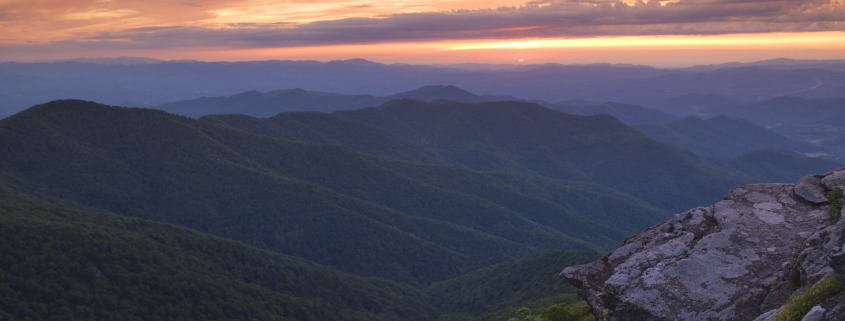
Join National Parks Conservation Association’s Steve Goodman for a Lunch & Learn exploring ongoing avian diversity research in the Craggy-Big Ivy Forest area. Photo of Craggy Overlook by Steven McBride.
Abundance of North American migratory birds is on the decline, experiencing a 58% drop between 1970 and 2017 – a loss of 3 billion breeding birds. Steve’s current research is assessing avian species diversity and abundance in the 15,576-acre Craggy Wilderness and National Scenic Area of the Southern Appalachians. Learn how NPCA and partners are using bioacoustic monitoring and collaborating with SAHC on this research. Listen to audio files collected in the first year of research highlighting species like Cerulean Warblers, the Veery, Yellow-billed Cuckoo, Brown Creeper, and more!
Further Context on Steve’s Ongoing Research Project on Avian Diversity
Abundance of North American migrant birds has declined 58% between 1970–2017, a loss of three billion breeding birds (Rosenberg et al. 2016, 2019). Eastern forest birds have declined 64% including Cerulean Warblers (72%), Canada Warbler (62%), Veery (40%), Wood Thrush (60%) and Yellow-billed Cuckoo (54%). Additionally, in NC there are other several species of greatest conservation need (e.g., Brown Creeper) and those with knowledge gaps (e.g., Yellow-bellied Sapsucker) (NCWRC). Even common species have declined, with some experiencing 50–90% range-wide declines including Chimney Swift (67%) and Eastern Towhee (43%). Sustainable forest-interior bird populations in the Southern Appalachians are dependent on contiguous mature forests with structural complexities shaped by natural disturbance. The proposed 15,576-ac Craggy Wilderness and National Scenic Area and its diverse natural communities, elevation gradients, and primary forests are home to these and many other breeding neotropical migrants.
 Using passive bioacoustic monitoring NPCA is conducting a two-year study to assess bird species richness and avian assemblages in the Craggies to fill in knowledge gaps and provide best available information for sound decision making. Further, NPCA and partners seeks to raise awareness and support for permanent protection of the area, ensuring healthy bird and other wildlife populations, long-term climate resiliency, and protection of one of the most outstanding (and photographed) viewsheds along the Blue Ridge Parkway.
Steve and the National Parks Conservation Association are excited to collaborate with SAHC on this project. SAHC has been acquiring critically important parcels and easements throughout much of this region, including several parcels directly bordering the proposed Craggies National Scenic Area. We look forward to expanding our avian bioacoustic monitoring and other wildlife surveys on these properties. During the Lunch & Learn, Steve will be sharing summary data from year one of NPCA’s study and highlighting some of the amazing bird diversity found throughout the Craggies.
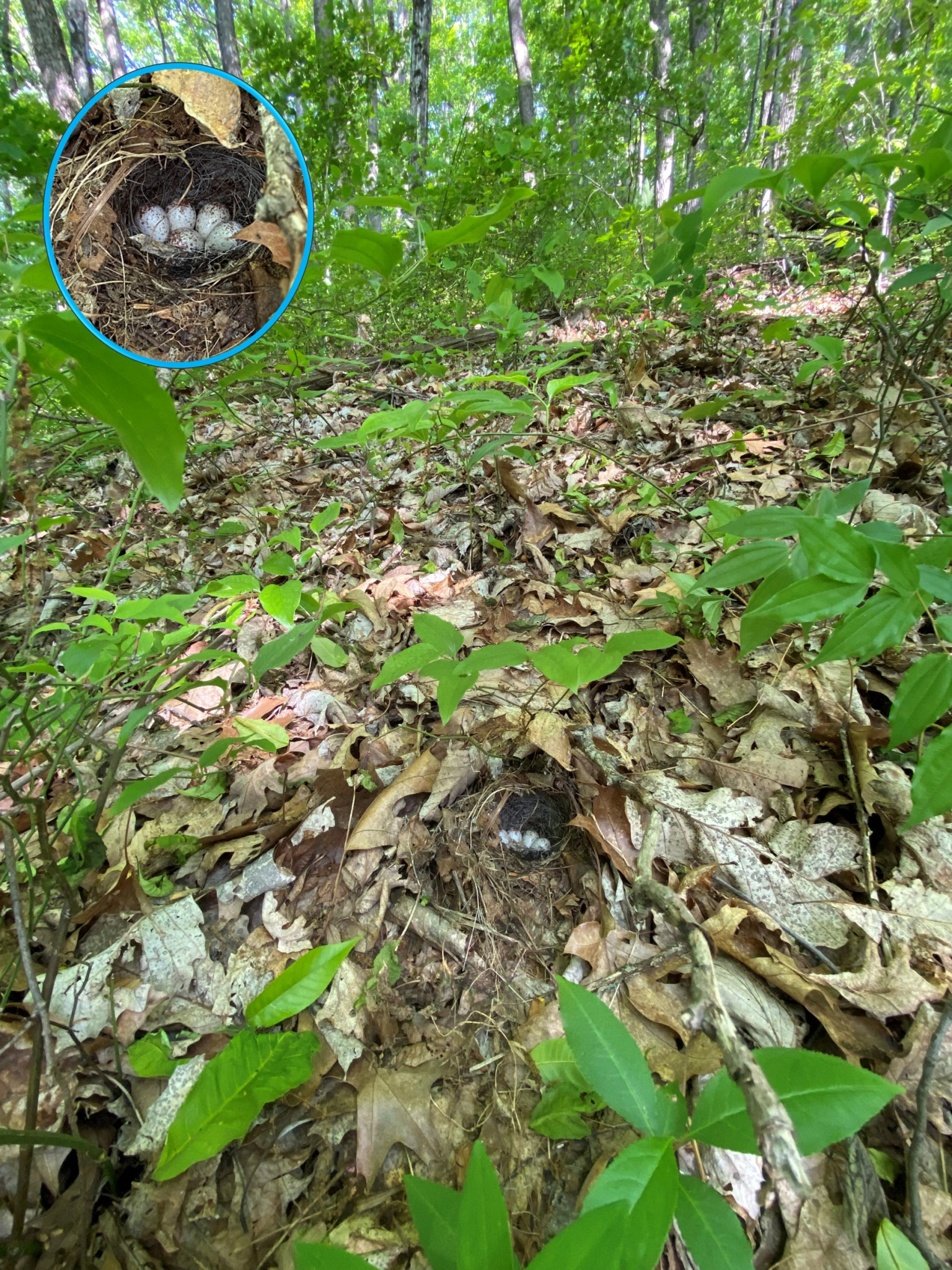
Pictured to the left, a warbler nest, likely Black and White Warbler.
Steve Goodman | National Parks Conservation Association
Conservation Biologist, Wildlife Research Program Coordinator
With 20 years of experience studying sensitive wildlife and habitats, his aim is to find the balance between the need for novel research and using existing, best available information to make timely decisions to conserve wildlife and landscapes. He has worked as a wildlife biologist for Virginia Tech, Arizona Game & Fish and Washington Fish & Wildlife and holds BS degrees in biology and finance from the University of South Florida and a MS in biology from the University of West Florida.