
Silvopasture and Food Forest Projects
Silvopasture and Food Forest
Beginning in 2023, SAHC initiated exciting new agroforestry projects at the SAHC Community Farm, which serve as both active production sites and demonstration projects to encourage agroforestry techniques in the region. The creation process included educational workshops with hands-on components, open for the public to participate. We also host periodic volunteer work days to gain hands-on experience in managing food forest and silvopasture projects. We look forward to sharing these pilot projects as educational resources for the community for many years to come!

Silvopasture Project
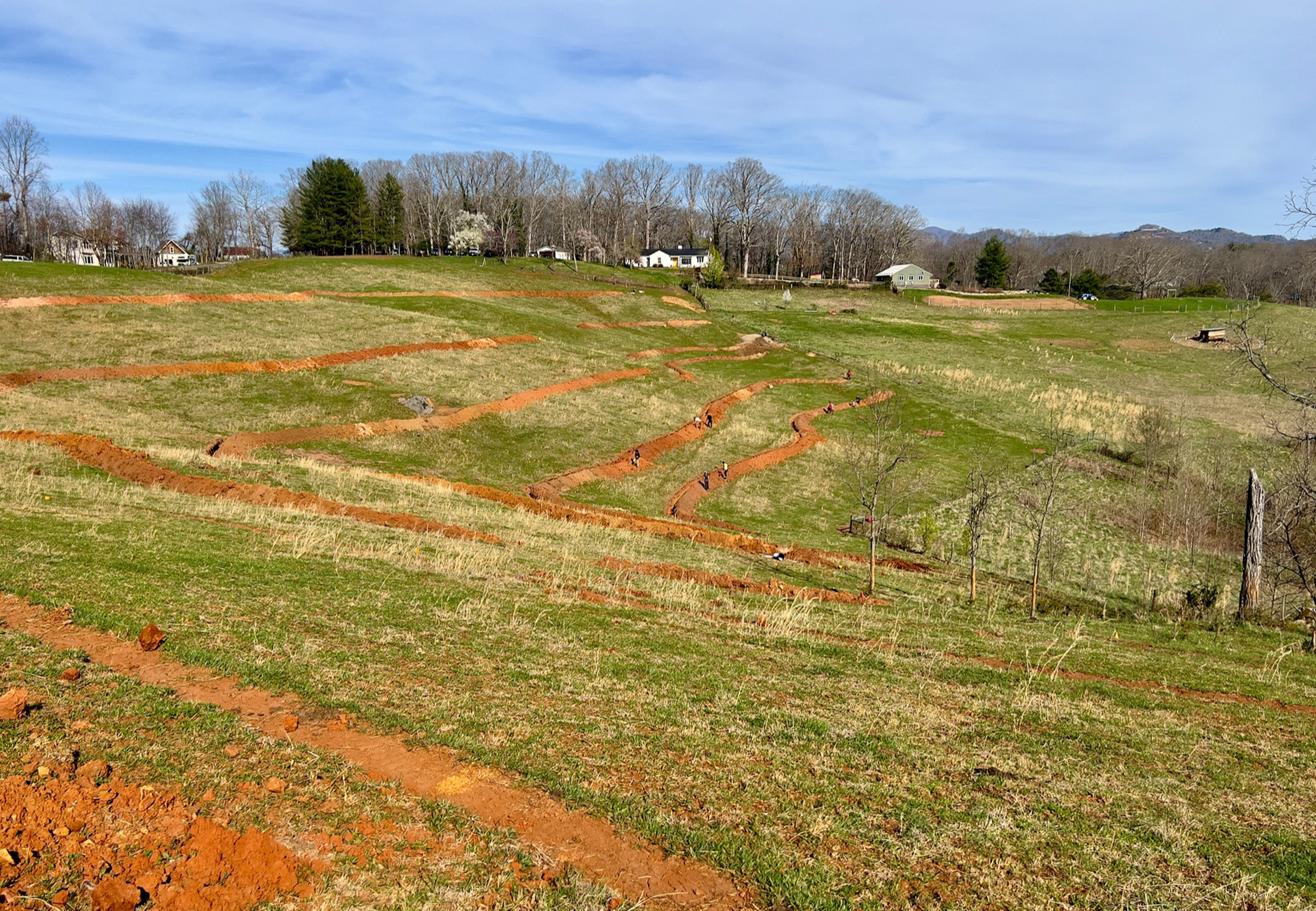
In 2023, we successfully transformed eight acres of pasture fronting Mag Sluder Road into a silvopasture demonstration project.
Silvopasture integrates trees, pasture, and forage into a single system. Incorporating trees into agriculture improves land health and increases carbon sequestration. Silvopasture is shown to reduce soil greenhouse gas emissions by 35-50 percent over open pasture, to build soil, improve water quality and increase rates of annual tree growth.
With support from Contour Lines, Inc. and assistance from multiple volunteer groups, we planted over 4,000 trees and shrubs on contour to create a wooded pasture area that will benefit livestock and prevent erosion. Cover crop plantings will help protect water quality and prevent erosion as the trees mature.
“This is a one-of-a-kind agroforestry project in our area, and continues our focus on using the Community Farm for both education and productive agriculture,” says Associate Director Kristy Urquhart. “We presented two informational workshops during the establishment phase of this new silvopasture area, and it will continue to serve as an educational demonstration plot. Guests on our Discovery Trail hikes, workshop participants, and folks who are interested in establishing their own agroforestry projects will be able to see how the silvopasture area matures and creates multiple layers of benefits.”

Food Forest Project
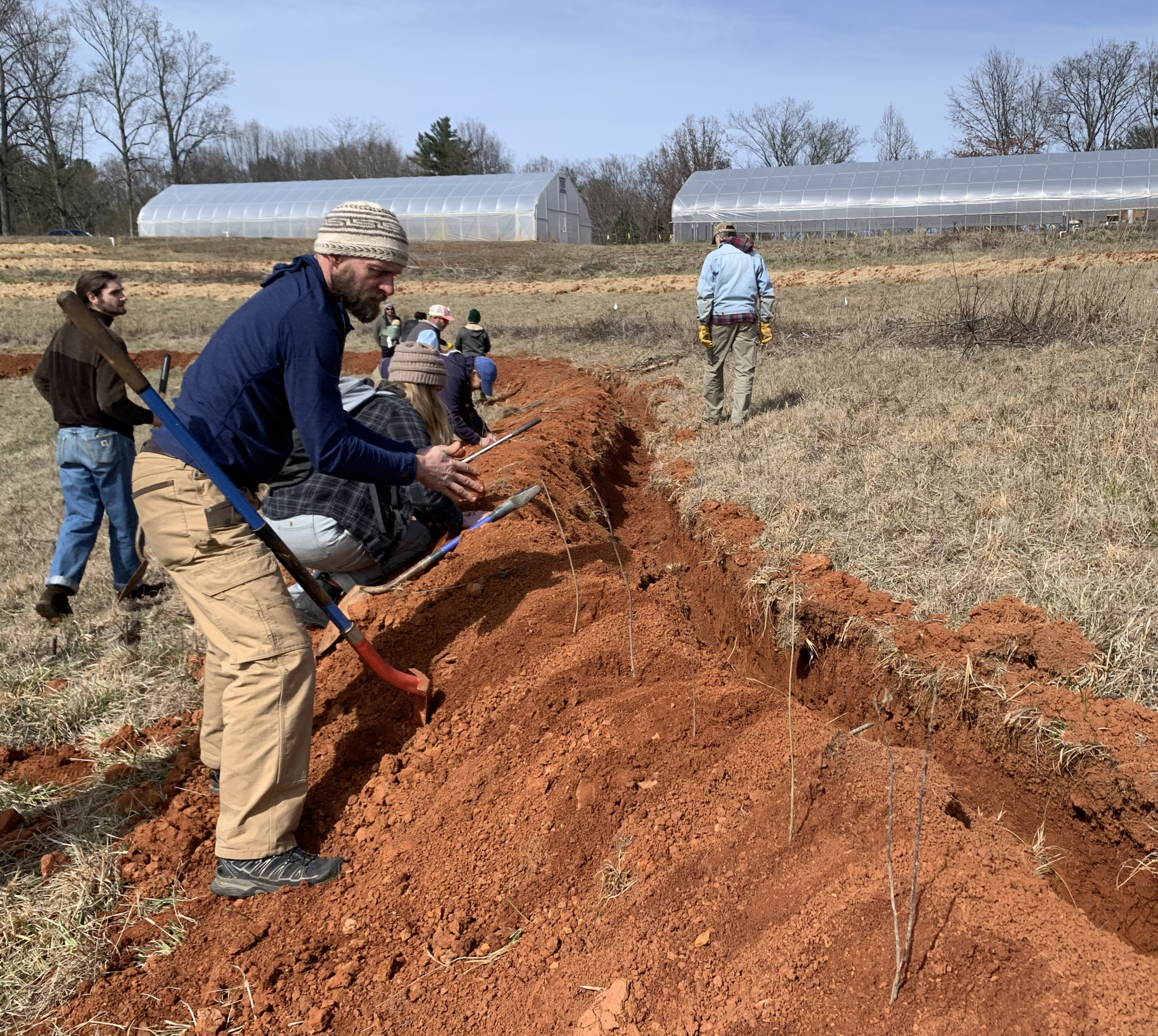
In 2024, SAHC teamed up again with Contour Lines, Inc. to host another educational workshop and plant 2,000 trees in a new 13-acre food forest project on the farm.
Similar to the silvopasture project which was installed last year, we planted the new food forest on contour to help prevent erosion and protect water quality flowing into the French Broad River watershed. However, in this case, the Food Forest project focuses on space outside the pastures, so there will be no livestock grazing beneath these trees. Instead, we are planting a variety of nut and fruit trees, with native support trees, which will provide multiple levels of production — and potential U-pick or community food programs.
“We are planting the food forest as a stacked canopy system, with different things growing on the ground, at knee height, and in a low canopy,” explains Community Farm Manager Chris Link. “The system acts symbiotically with the different layers, providing more biodiversity and support for each other.”
“These diversified systems on farms are also becoming increasingly important for bird conservation,” adds Stewardship Director Sarah Sheeran. “Farms like the SAHC Community Farm with unique, diverse practices are important for avian species – and also important as a carbon sink.”
SAHC’s Community Farm is funded in part by grants from The Community Foundation of Western North Carolina, the USDA National Institute of Food and Agriculture Beginning Farmer and Rancher Development Program (for Beginning Farmer Success – Farm Pathways to Long-Term Land Tenure), and a cost-share grant from USDA Natural Resources Conservation Service.
SAHC received a Catalyzing Agroforestry Grant to support these agroforestry projects, an initiative funded by the Appalachian Beginning Forest Farming Coalition (ABFFC) and Edwards Mother Earth Foundation (EMEF) that is managed by Virginia Tech University in partnership with Rural Action, Appalachian Sustainable Development, North Carolina State University and SilvoCulture.
We Can't Do It Without You
Together, we can protect Appalachia’s lands and secure a healthier future for generations to come.