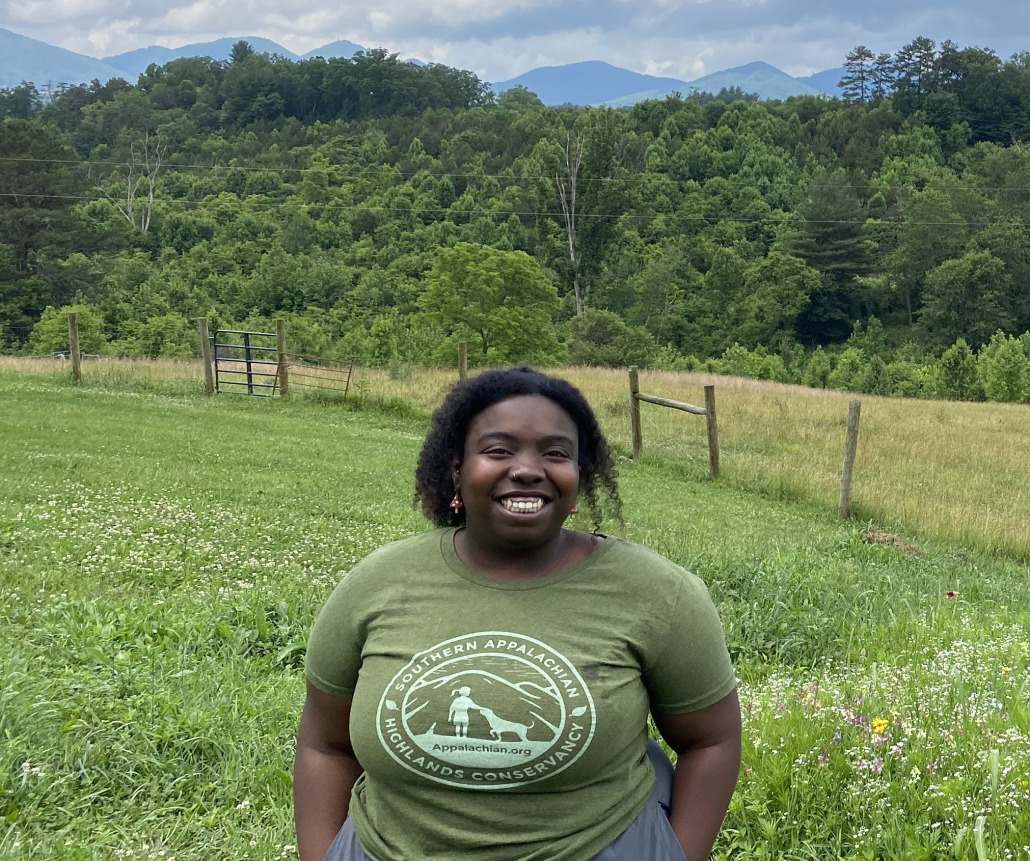
Asheville has a reputation for being an environmental enthusiast’s dream. With gorgeous views, countless trails, and convenient waterways, many assume everyone who comes to Western North Carolina and East Tennessee can connect with the outdoors. Since moving to Asheville in 2018, it has become clear to Equity and Education Manager LaKyla Hodges that this is not the case.
“Like several other places around the U.S., access to enjoying the outdoors in our region is a privilege that not all people are granted,” says LaKyla. “Populations most likely to be excluded from access to nature are often limited due to aspects of their identity such as race, income, and physical ability. SAHC is one of the local organizations interested in exploring these gaps and working to create and support pathways to access and leadership in environmentalism and conservation.”
In Part 1 of a series, Equity and Education Manager LaKyla Hodges and Board member Allison Williams reflect on their journeys of connection to nature and discuss how their career pathways were formed.

Both Allison and LaKyla have had a love for the outdoors for as long as they can remember. As children, they remember just being happy to be out in nature. It wasn’t until they got older that they both realized the inequalities in outdoor recreation and environmentalism.
Allison’s family was very passionate about spending time outdoors together.
“This allowed me to have the comfort of being introduced to outdoor recreation with people who looked like me,” she says.
Between family outings and Girl Scout activities, spending time in green spaces became second nature to her. Allison has had several roles in the environmental field, including being an aquatics director for a Girl Scouts camp, a NOLS (National Outdoor Leadership School) student in Tanzania, an AmeriCorps member serving with the Appalachian Trail Conservancy and U.S. Forest Service, and a professional member of the NRPA (National Recreation and Parks Association). Most recently, Allison has transitioned from a career working directly in outdoor recreation to be an operations specialist for U.S. Forest Service International programs. In addition, she teaches free yoga courses on her YouTube channel, Sunflower Collective Outdoors.
Like Allison, LaKyla also grew up with a love for the outdoors.
“Although my family didn’t necessarily share that love, they were extremely supportive of my hobbies and career aspirations around environmentalism,” says LaKyla. “I grew up attending Junior Park Ranger camps, working at the Smithsonian’s National Zoo’s summer camp program, and traversing through the woods. As I got older, I was fortunate enough to intern in several areas of environmental education and advocacy with different organizations.”
Though their paths differed, both LaKyla and Allison ended up with a strong passion for outdoor education and recreation.
However, in pursuit of their careers and hobbies related to the outdoors, it also became obvious to them that accessibility and representation are often overlooked in green spaces. In recent years, equity and inclusion have become more mainstream concerns for influential environmental organizations such as the National Parks Service, Sierra Club, and National Wildlife Federation. Although this is a huge step in the right direction, Allison and LaKyla agree there is much work to do to “close the gap” in green spaces.
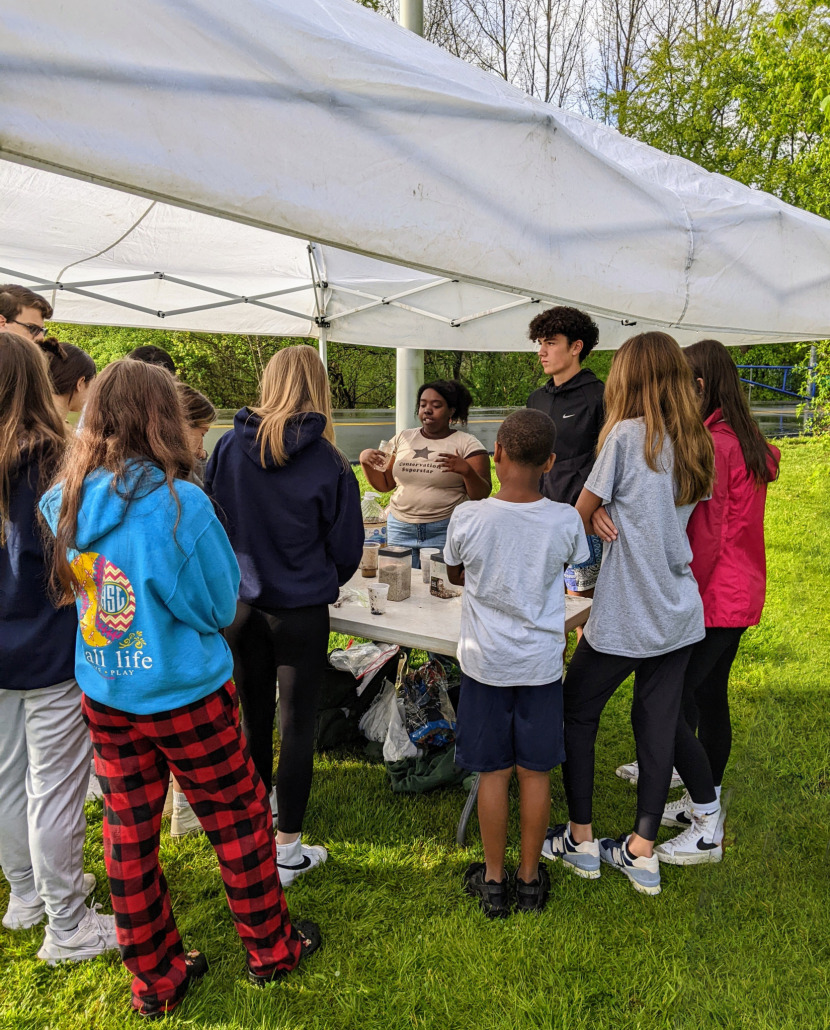
“Overarching themes in our conversation on how to bridge this gap include comfort, patience, and community engagement,” says LaKyla. “The outdoors can be a daunting concept for those who don’t have a strong or positive relationship with it. The importance of a slow, warm welcome to green spaces should not be overlooked. Meeting people where they are, accessing their comfort levels, and providing conservation-related opportunities at several different levels can be exactly what many people need to discover their love for the outdoors.”
LaKyla has seen this in practice in her work with SAHC, providing on-site environmental programming to communities around Buncombe County, as has Allison in her direct and indirect outdoor recreation work. Holding space for challenge by choice, needs assessments, and relationship building allows people to form positive memories with green spaces gently and to forge their own paths into the environmental world, just as Allison and LaKyla were able to do.